
We were visited today by Luca Montanelli, Lucia Mondini and Giacomo Grassi from Stefano Pallanti’s team at the University of Florence. The aim is to start a pilot of our internetbased CBT for OCD in Italy soon. 
Author: Christian Rück
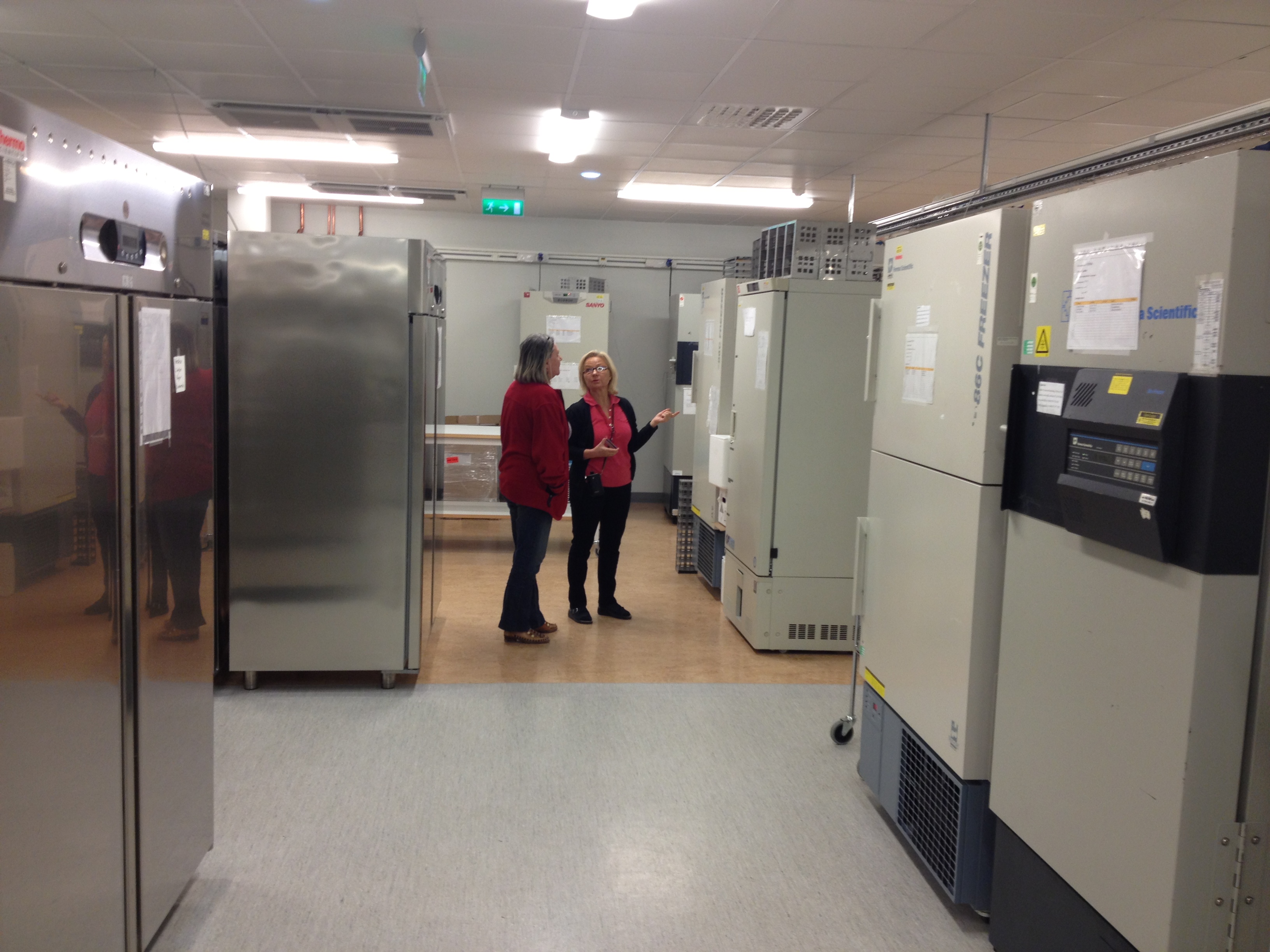
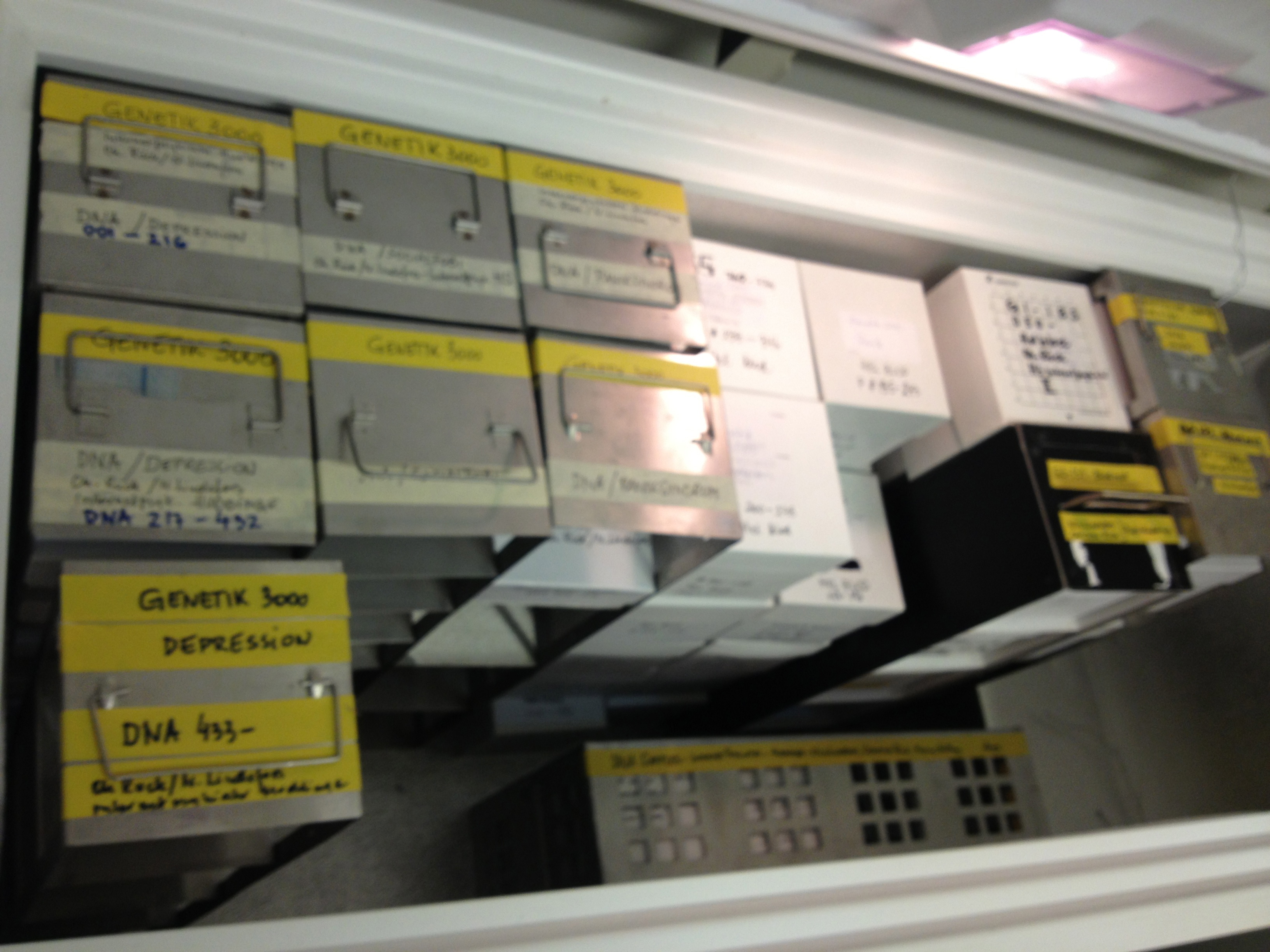
If you ever wondered where all the DNA in our studies end up, this is for you. As you may know, Rucklab has several genetical studies and one of the goals is to identify genes that are relevant to treatment response in CBT. We are now at more than 1000 patients that have left us their DNA and the collections is ongoing, some results are already published. Anyway, it’s all safely stored in a large freezer room underground. And thanks to our patients, nurse Monica Hellberg and lab technician Alexandra Tylec we hope to fill up another freezer soon. …
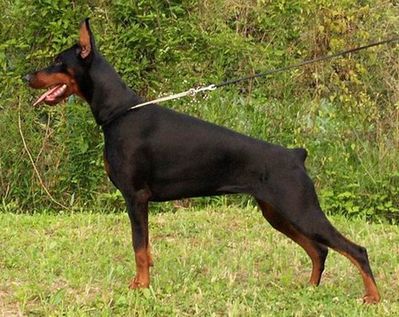
Dogs sometimes suffer from behaviors such as tail chasing, flank or blanket sucking and other repetetive behaviors that can be harmful and that are diagnosed as Canine Compulsive Disorder and considered an analog to OCD in humans. The extraordinary phenotypic diversity of dog breeds has been sculpted by a unique population history accompanied by selection for novel and desirable traits. These wanted traits may also lead to an accumulation of a disorder within one breed and may be of special interest when studying the genetics of certain traits.
Dodman and collegues studied 92 doberman pinchers (pet dogs) that had flank or blanket sucking and controls with a genome wide association study (GWAS) and found a new canidate gene; CDH2. CDH2 is widely expressed,
mediating synaptic activity-regulated neuronal adhesion. Dogs showing multiple compulsive behaviors had a higher frequency of the risk allele than dogs with a less severe phenotype. Kerstin Lindblad-Toh and others at Broad Institute and Uppsala University are continuing to investigate this and other candidate genes. A recent Finnish study by Tiira et al of tail chasers but in 3 other dog breeds than Dobermans failed to find an association with CDH2.
For those interested in a more detailed review of animal models in OCD we recommend a review by Albeleda and Joel in Neuroscience 2012 (see below for full reference).
Diana Radu Djurfeldt is a psychiatrist and the head of Ångestenheten, the OCD clinic at Karolinska in Solna. She defended her thesis “Aspects on the psychopharmacology of cholecystokinin ” in 2005 (read it here). Her current research interests include Deep Brain Stimulation and Body Dysmorhic Disorder. Welcome in our group, Diana!
We are starting research on Body Dysmorphic Disorder also known as Dysmorphophobia, a very under-researched condition. Psychologist Jesper Enander will be the project manager of the studies. We received 300000 SEK for this research line from the regional agreement on medical training and clinical research (ALF) between Stockholm County Council and Karolinska Institutet.
Evelyn Andersson presented our poster “Psychological Treatment Response of Cognitive Behaviour Therapy for Social Anxiety Disorder and Genetic Polymorphisms in Three Candidate Genes” yesterday.
Läs mer och anmäl dig här.
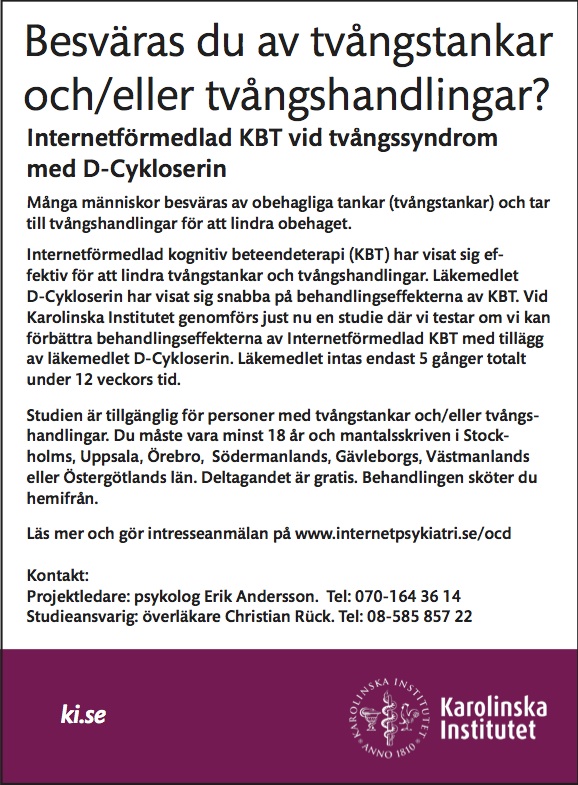

Volen Ivanov was interviewed on Swedish Vetenskapsradion (click to read more and listen) on the differnce between OCD and Hoarding disorder and discussed a new fMRI study by David Tolin et al just published in the Archives of General Psychiatry.
Volen will also appear on Swedish Radio P4 Extra at 3:45 pm today and tomorrow at 9:15 am on TV4.
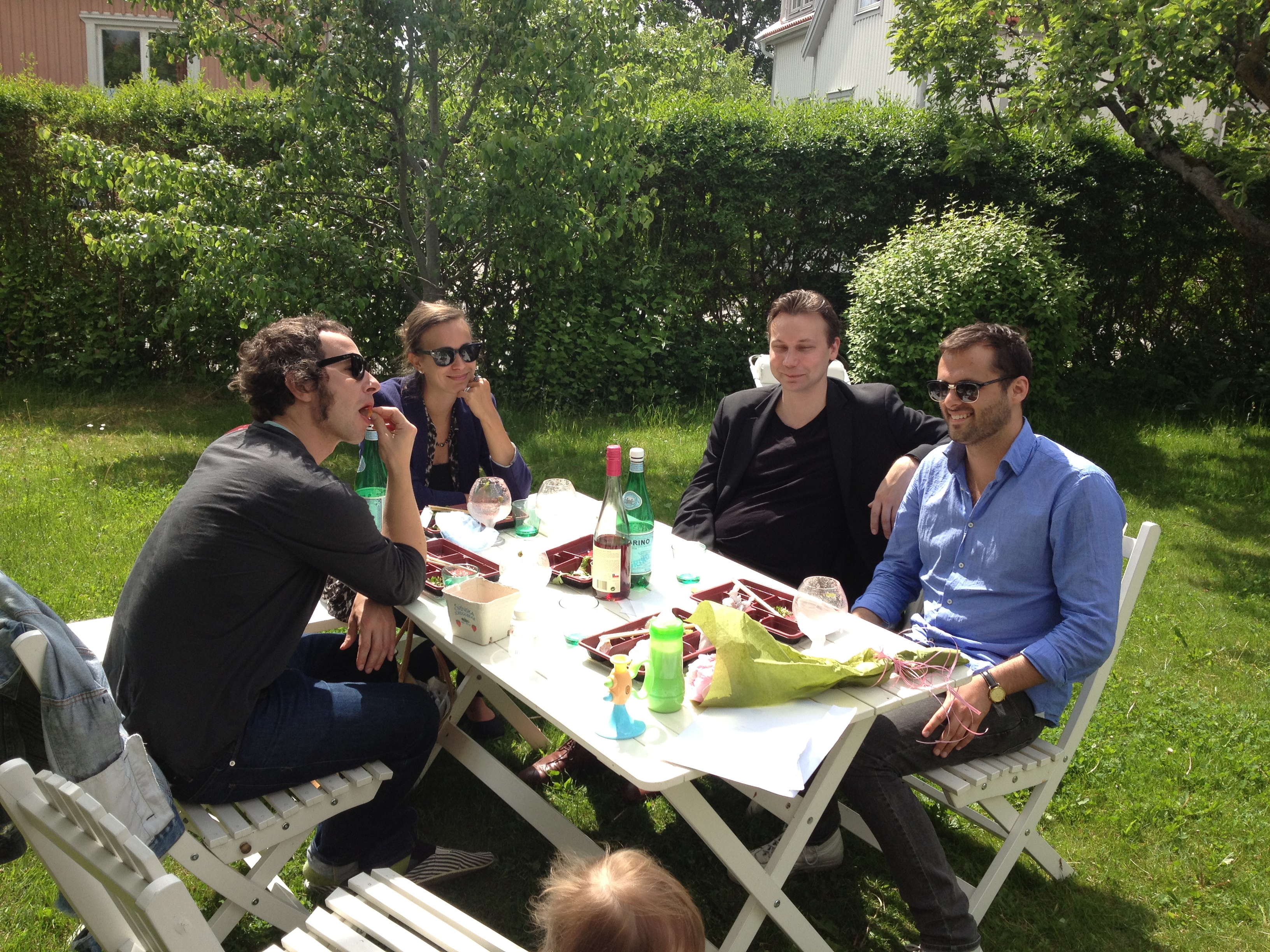
Our research group met the other day to sum up our first year of existence as a research group. So, what have we been up to in the last year? Well, we’ve been part of 12 scientific papers, 2 new Ph D students have been enrolled, we showed that internetbased CBT works for OCD and we have been writing 3 big grant applications. And we started this site. And the next year looks even better with a lot of good things in the pipeline. We’ll keep you posted!
 Rücklab - Psychiatry research at Karolinska Institutet