We are excited to welcome Hanna Weyler to the group!
Hanna is an industrial PhD student employed by Save the Children Sweden. She is a licensed Psychologist and Specialist in psychological treatment/psychotherapy mainly working in the field of trauma related mental health issues in children and adolescents. She is a certified international trainer in Trauma Focused Cognitive Behavioral Therapy for children (TF CBT) and has prior clinical experience from Child and Adolescent Psychiatry and Social Services.
Hanna will be working with main supervisor Maria Bragesjö in the iTF CBT project (Efficacy and cost effectiveness of Internet-delivered trauma focused CBT for children with PTSD).
We are happy to have her on board and wish her a warm welcome! 🥳
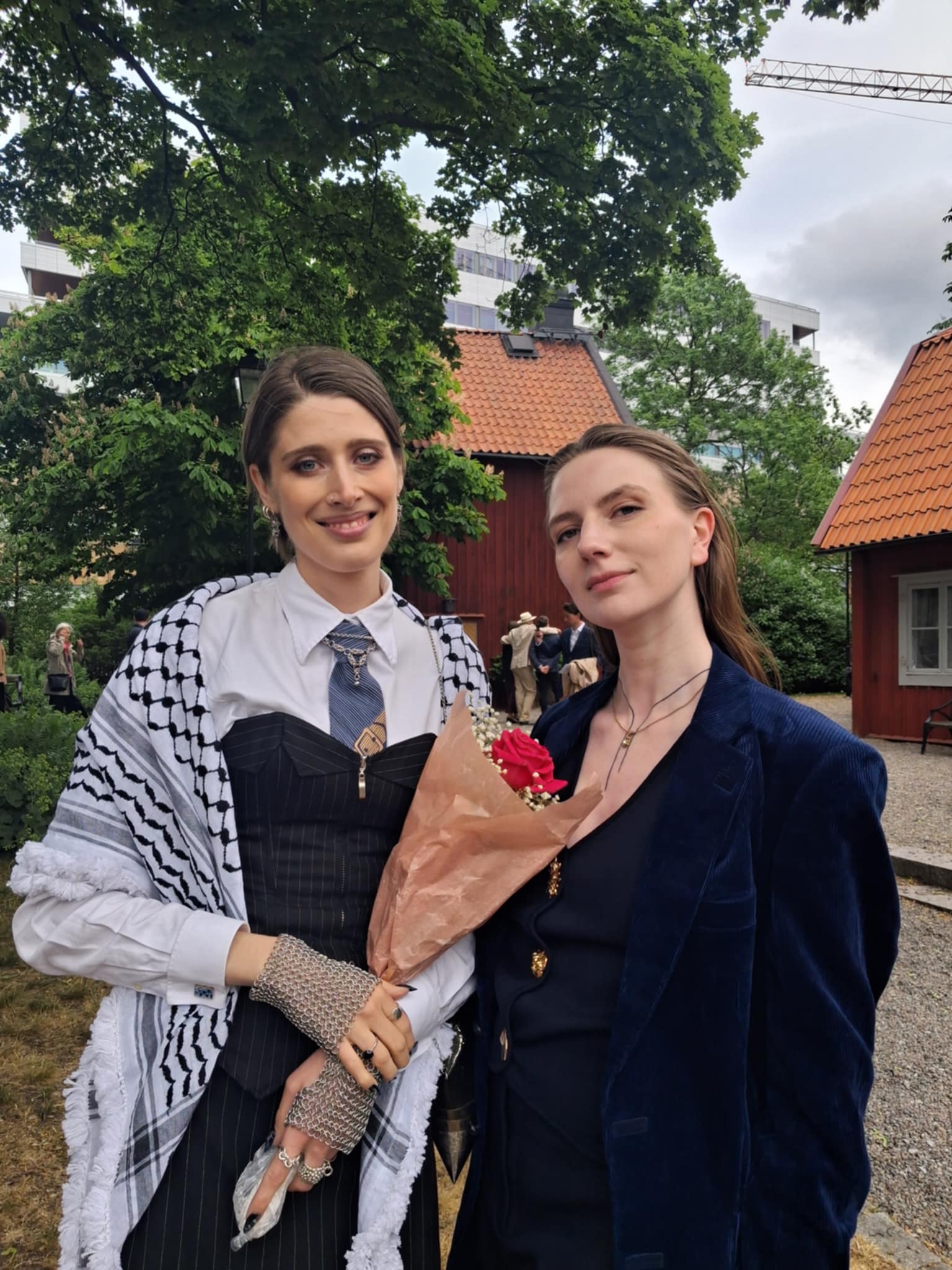
At the end of the spring semester, psychology students Victoria Ruud and Hanna Rolfsdotter defended their Master’s thesis—a project on therapists’ experience with intense Prolonged Exposure therapy as a treatment method for PTSD—carried out under the supervision of Maria Bragesjö and Sim Jamil. We recently asked them to share insights from their work and were excited to learn more about their topic as well as their methodology.
Their findings cover fascinating insights into the efficiency of this kind of therapy, as characterized by fast results and higher levels of motivation among patients as well as therapists. However, for such positive effects to be reaped it is also of utmost importance that patients have a say in the choice of their treatment, that both patients and therapists believe in the method, and that therapists have a supportive team to share the burden of such intense trauma treatment with. What’s interesting is that these effects seem rather intertwined. As Hanna describes it:
“The pros and cons stem from the same origin: the intensity is rewarding due to the fast results, but it’s also the intensity that can end up being overwhelming or feel like a burden as the therapists have insight into many cases of trauma treatments simultaneously due to group sessions, guidance meetings, and daily check-ins with their team. It’s gratifying because you learn a lot about the diagnosis and the treatment, but it can also be burdensome since you find yourself in so many traumatic stories at the same time.”
As for their research approach, the two students used reflexive thematic analysis in order to investigate this matter. Such methodology requires a high level of thematic reasoning so as to avoid simple topic summaries, as well as extensive consideration and acknowledgement of the subjective qualities and approaches of the researchers when going into a project like this—something that differs from previously established notions of perceived objectivity in qualitative and quantitative research alike. Victoria talked about the importance of recognizing the subjective influence of the researcher, what form it takes, and how it interacts with the material at hand:
“We kept shared logbooks as well as separate reflexive diaries in order to give ourselves the space to reflect on the experiences we had and the work we did throughout this project. We discussed a lot with each other, and weren’t scared to challenge ideas and conclusions. We come from different backgrounds, have different personalities, and different strengths and opportunities for improvement. All of this was important to keep in mind and to remember when we carried out the analysis.”
As such, Hanna and Victoria have mapped highly important aspects to take into consideration when designing and implementing effective treatments for PTSD, while simultaneously demonstrating a great example of the reflexive thematic analysis approach. We congratulate them on work well done, and look forward to following them in the future! 🎉
We have recently seen several familiar names pop up in Psykologtidningen! Both Volen Ivanov and Maria Bragesjö have been quoted about various treatment methods, and Elizabeth Guest has together with co-authors contributed a debate article about the need to investigate whether the current format of the Swedish psychology program fits the needs of clinical mental health care.
We are happy to announce that Fredrik just received financing from the Karolinska Institute’s Center for Innovative Medicine!
Fredrik Johansson – Restraint, seclusion and forced medication in involuntary psychiatric in-patient care: Who are exposed and what follows? (2 400 000 SEK)
Restraint, seclusion, and forced medication may be used in in-patient involuntary psychiatric care when patients refuse necessary treatment and are assessed as posing a danger to themselves or others. These involuntary measures are controversial, yet the scientific evidence base remains limited. Swedish authorities have set goals to improve patient safety and legal security for individuals receiving involuntary psychiatric in-patient care. Achieving this requires knowledge of which patients are at greatest risk of being subjected to involuntary interventions. Government reports have identified significant knowledge gaps concerning the long-term effects of coercive measures and have called for more research in this area. This project investigates which patients are at highest risk of being subjected to involuntary measures, as well as the long-term consequences of such interventions, with the aim of enabling safer care for psychiatric inpatients.
Last week we were happy to learn that two of the group’s projects have received funding from Forte! We are excited to see the interest in and support for our research and look forward to pursuing the following projects:
John Wallert – A population-based risk calculator for negative outcomes following discharge from involuntary psychiatric care (5 940 000 SEK)
Involuntary psychiatric care (IPC) patients are at particularly high risk for suicide, self-harm, and acute readmission after hospital discharge. Deciding on discharge after IPC is therefore critical, yet today it is based on subjective judgement and limited data. The overarching purpose of this project is to develop and validate a novel risk calculator for IPC patients when planning for their discharge. The calculator will add a novel and transparent evidence-base that can improve the decision process and reduce adverse events.
Christian Rück – Psychological treatment for suicidal patients in psychiatric inpatient care (5 956 000 SEK)
Suicide is a critical public health issue, causing over 700,000 deaths globally annually, with around 1,600 in Sweden. Psychiatric inpatients face a significantly high suicide risk, particularly following recent discharge. Given that prior suicide attempts and self-harm are strong risk factors, there is an urgent need for suicide-specific interventions specifically for those hospitalized after suicide attempts. Brief Cognitive Behavioral Therapy (BCBT) has shown promising results in reducing suicide attempts and psychiatric readmissions in a recent U.S. trial. However, key questions remain regarding its replicability, long-term impact, and scalability. This project therefore aims to answer whether BCBT is feasible, effective both short- and long-term, and cost-effective in Swedish inpatient care.
Maria Bragesjö and Sim Jamil are currently attending the 18th European Society for Traumatic Stress Studies Conference in Tbilisi, Georgia, to present their research.
On Thursday, Maria gave a masterclass on Prolonged Exposure (PE) therapy, during which she discussed imaginal exposure and strategies for its effective application in PE therapy.
Sim presented a poster on intensive prolonged exposure therapy in a Swedish setting. Her results show promising effects, and we look forward to continuing to follow her work!
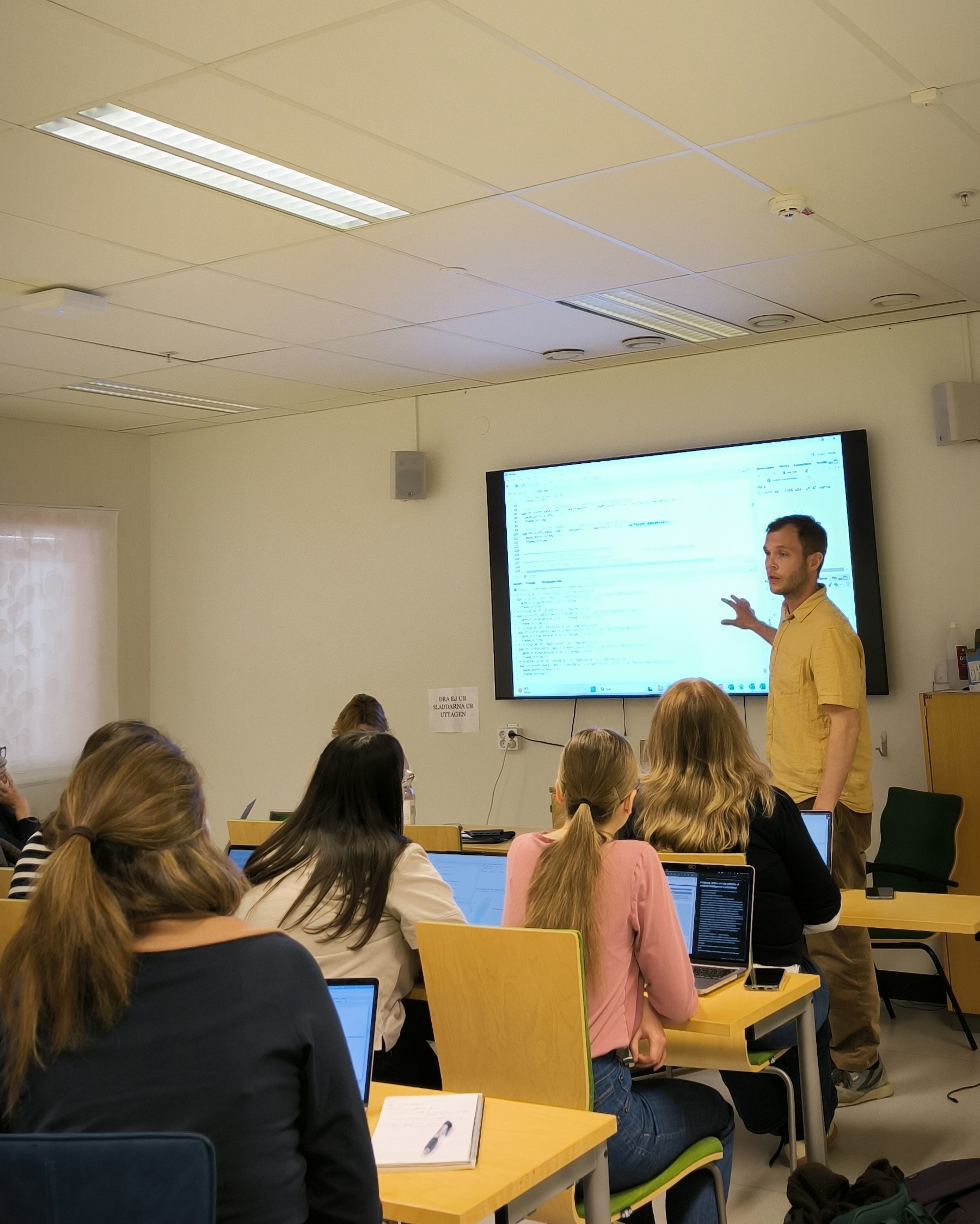
Our course AI in Mental Healthcare is now up and running! Over two intense weeks, the interdisciplinary course brings together students from near and far that together will explore both the exciting possibilities and the complex challenges of applying AI in mental healthcare.
Last week, the magazine Medicinsk Vetenskap featured an extensive interview with our very own Maria about her work with ptsd. Read the full issue here!
Last week, the first-ever Swedish Suicide Research Conference, an interdisciplinary event aimed at furthering suicide research, took place here in Stockholm. On the agenda were several presentations from the Rück research group:
Christian gave a talk on how suicide seems to be a uniquely human phenomenon, as it is not observed among other species, and discussed the role of the mature human brain in its occurrence.
Leoni presented her research on suicide following involuntary psychiatric care in Sweden. Her work confirms the high-risk status of involuntary psychiatric care patients, and emphasizes the importance of appropriate clinical considerations, monitoring, risk assessment, and care among such patients.
Oskar gave a presentation on his research on short- and long-term risk factors for suicide and suicide reattempt. In doing so, he highlighted the roles of hopelessness, relationship problems, and worsening of depressive symptoms as potential risk- or protective factors for self-harm repetition.
Manne shared the preliminary results of research related to suicide risk assessments, in which the team interviewed psychiatry specialists about their approaches to uncertainties of suicide risk assessments, and how they are dealt with in actual clinical practice.
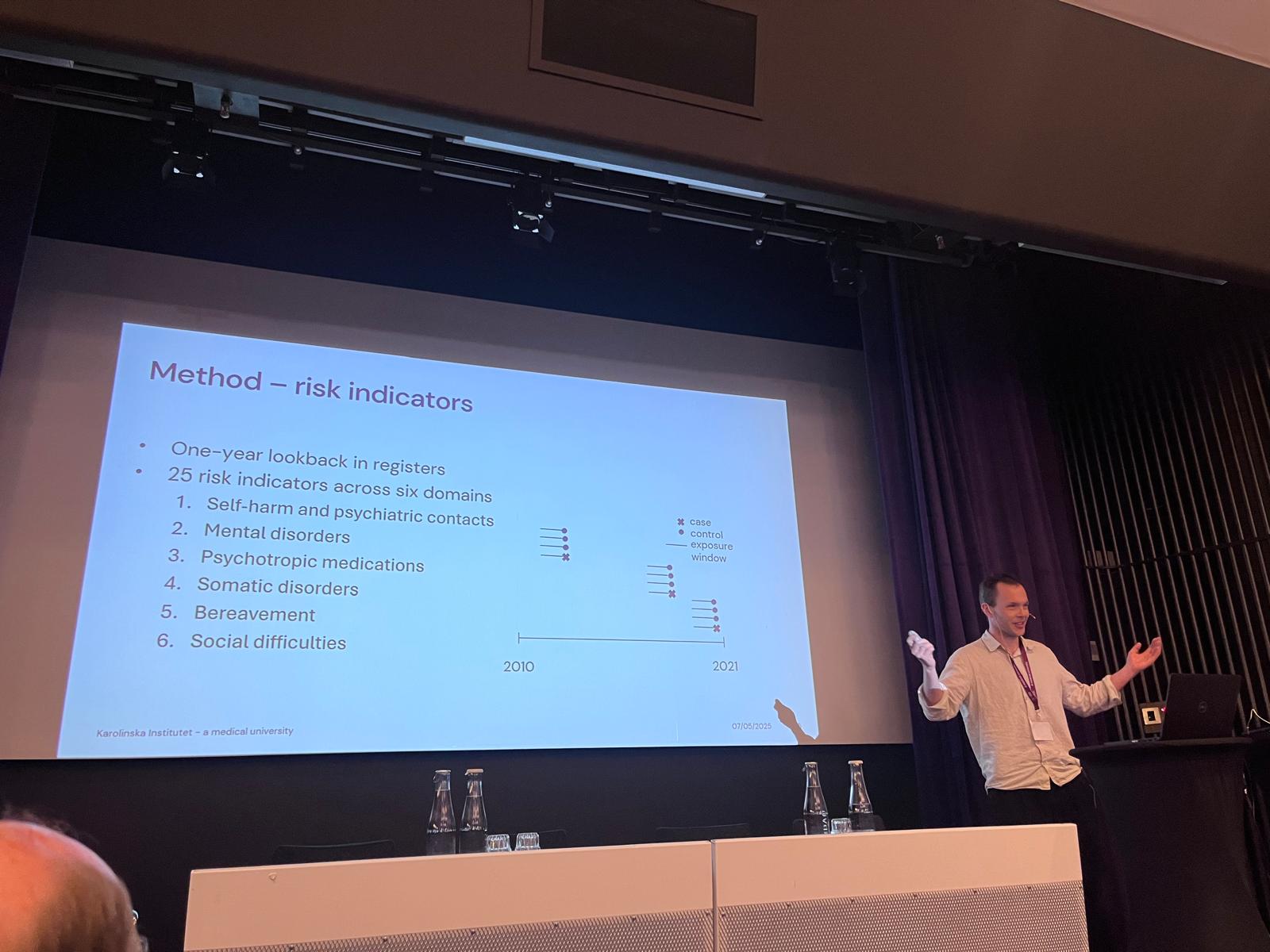
Fredrik presented research on sex- and age-specific risk indicators of suicide. In doing so, he underscored the difficulty of identifying high-risk males, as well as the importance of considering this challenge when developing suicide prevention measures.
Further information about the research presented can be found here.






 Rücklab - Psychiatry research at Karolinska Institutet