Paulina Wiktor, first year psychology student, is a new volonteer in our group and today helped us send info on our OCD trial to each and every general practioner in Stockholm. Thanks!

Rücklab – Psychiatry research at Karolinska Institutet
Research on OCD and related disorders, precision psychiatry, psychiatric genetics, suicide prevention, stress and PTSD

Paulina Wiktor, first year psychology student, is a new volonteer in our group and today helped us send info on our OCD trial to each and every general practioner in Stockholm. Thanks!

Jesper Enander today sucessfully passed the admission seminar to become a PhD student at Karolinska Institutet. His studies will be on Body Dysmorphic Disorder. Christian Rück is main supervisor and co-supervisors are Brjánn Ljótsson, Paul Lichtenstein and David Mataix-Cols.
We were visited today by Luca Montanelli, Lucia Mondini and Giacomo Grassi from Stefano Pallanti’s team at the University of Florence. The aim is to start a pilot of our internetbased CBT for OCD in Italy soon. 
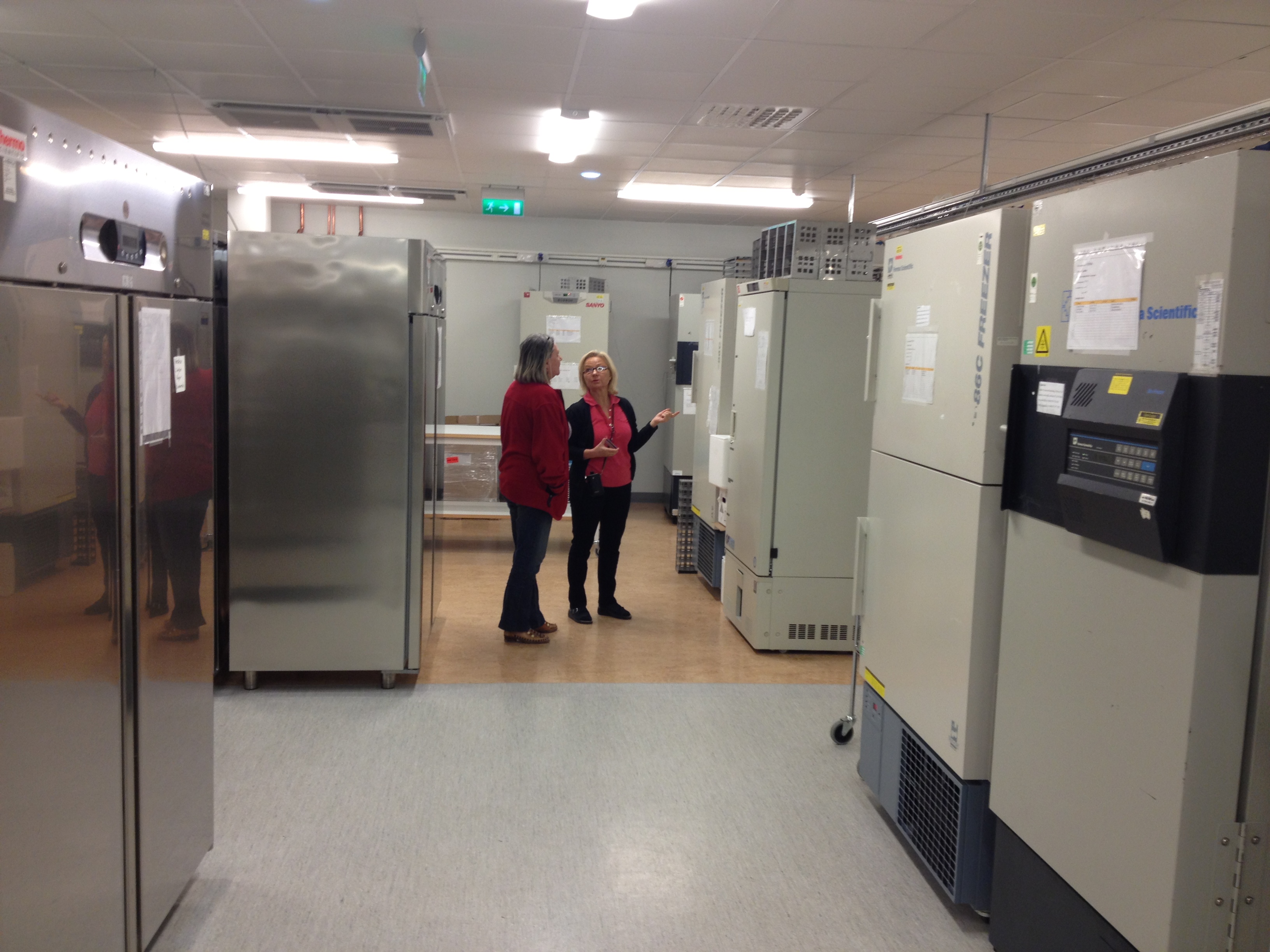
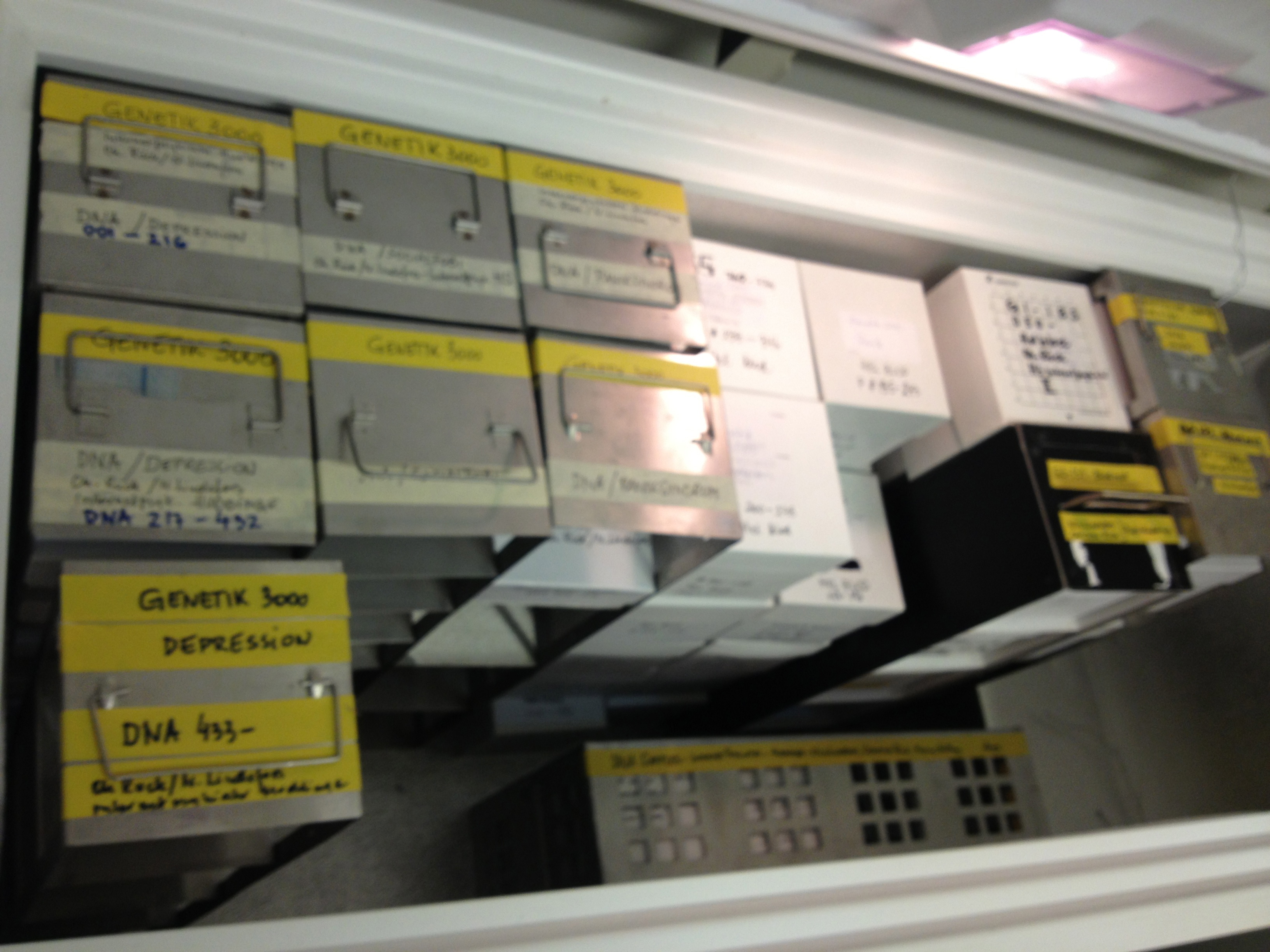
If you ever wondered where all the DNA in our studies end up, this is for you. As you may know, Rucklab has several genetical studies and one of the goals is to identify genes that are relevant to treatment response in CBT. We are now at more than 1000 patients that have left us their DNA and the collections is ongoing, some results are already published. Anyway, it’s all safely stored in a large freezer room underground. And thanks to our patients, nurse Monica Hellberg and lab technician Alexandra Tylec we hope to fill up another freezer soon. …
Diana Radu Djurfeldt is a psychiatrist and the head of Ångestenheten, the OCD clinic at Karolinska in Solna. She defended her thesis “Aspects on the psychopharmacology of cholecystokinin ” in 2005 (read it here). Her current research interests include Deep Brain Stimulation and Body Dysmorhic Disorder. Welcome in our group, Diana!
We are starting research on Body Dysmorphic Disorder also known as Dysmorphophobia, a very under-researched condition. Psychologist Jesper Enander will be the project manager of the studies. We received 300000 SEK for this research line from the regional agreement on medical training and clinical research (ALF) between Stockholm County Council and Karolinska Institutet.
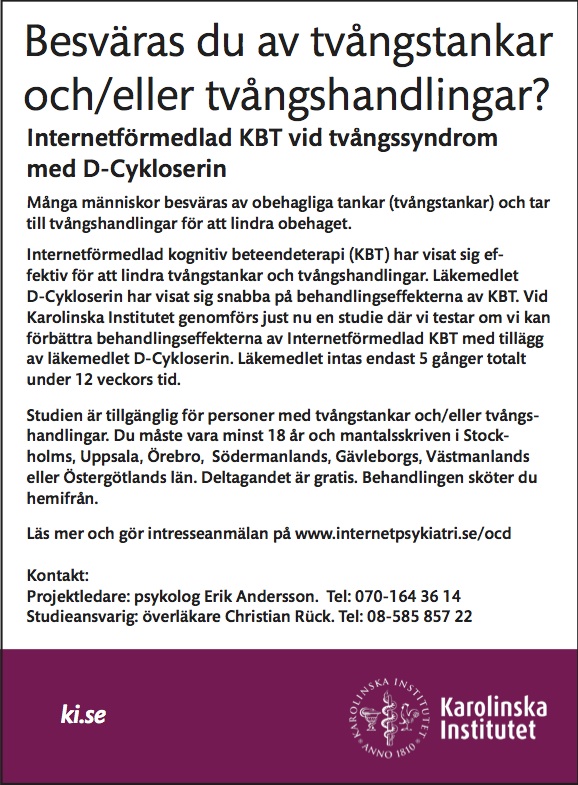
Läs mer och anmäl dig här.
The DOCS is a self-report questionnaire designed to address the current limitations of existing obsessive-compulsive symptom measures. A new study from our lab published in the Journal of Obsessive-Compulsive and Related Disorders give initial support that the DOCS, when administered via the Internet, exhibit adequate psychometric properties. Using the Internet to administer the DOCS can have many potiential benefits. For example, it can make data collection easier when studying the prevalence of OC symptoms in the general population.
Click below to access the paper (it’s Open Acess):
We have also gathered useful screening and assessment instruments available for clinicians both in english and swedish (including the DOCS).
Click on any of the following links to go to the measurements section of our homepage.
Volen Ivanov was interviewed on Swedish Vetenskapsradion (click to read more and listen) on the differnce between OCD and Hoarding disorder and discussed a new fMRI study by David Tolin et al just published in the Archives of General Psychiatry.
Volen will also appear on Swedish Radio P4 Extra at 3:45 pm today and tomorrow at 9:15 am on TV4.

 Rücklab - Psychiatry research at Karolinska Institutet