
The study “An Etiologically Informative, Population-based Study of Tourette Syndrome and Chronic Tics Across the Lifespan” was awarded 149003 USD by the Tourette Syndrome Association . David Mataix-Cols (IoP) is PI for the study and co-applicants are Christian Rück, Eva Serlachius, Paul Lichtenstein (KI) and James Leckman (Yale).
Category: News
Congrats to Evelyn who today very 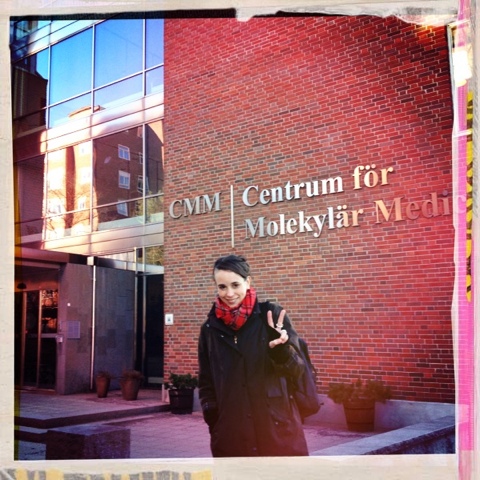 sucessfully passed the admission seminar. Her project is about genetic markers of CBT response. Supervisors are Christian Rück (main), Erik Hedman, Nils Lindefors, Catharina Lavebratt and Martin Schalling.

A new paper is out with lead author Erik Hedman studying predictors and moderators of outcome in CBT for social anxiety disorder. The most stable predictors of better treatment response were working full time, having children, less depressive symptoms, higher expectancy of treatment effectiveness, and adhering to treatment. The study also looked at gene polymorphisms (5-HTTLPR, COMTval158met, and BDNFval66met) but no association was found with treatment outcome. The gene story is part of Evelyn Andersson PhD study plan and she has be doing most of the wet lab work.
Click the reference below to read it all:

If you are going to the European Psychiatric Congress in Prague the coming week you may want to check out the CME course on iCBT (nr 10) Nils Lindefors, Erik Hedman and Christian Rück are giving .
 Johan Larsson, Christian Rück and David Mataix-Cols just landed a smash (sorry for the badminton joke) with a new study published in European Neuropsychopharmacology where a group of patients with severe OCD that had been treted with neurosurgery were studied. Results show that symptoms in the symmetry/ordering domain were associated with greater severity of OCD, depression and anxiety, as well as greater impairment at follow-up. The results challenge our current conceptualization of OCD as a unitary diagnostic entity with a single neurobiological substrate. Read more here:
OCD can be treated effectively with internetbased CBT according to a new randomized controlled study from our lab published today in Psychological Medicine. This is the first controlled study ever to show the efficacy of iCBT in OCD and offers hope that effective treatment can be more accessible in the future.
Read more (it’s Open Acess):


