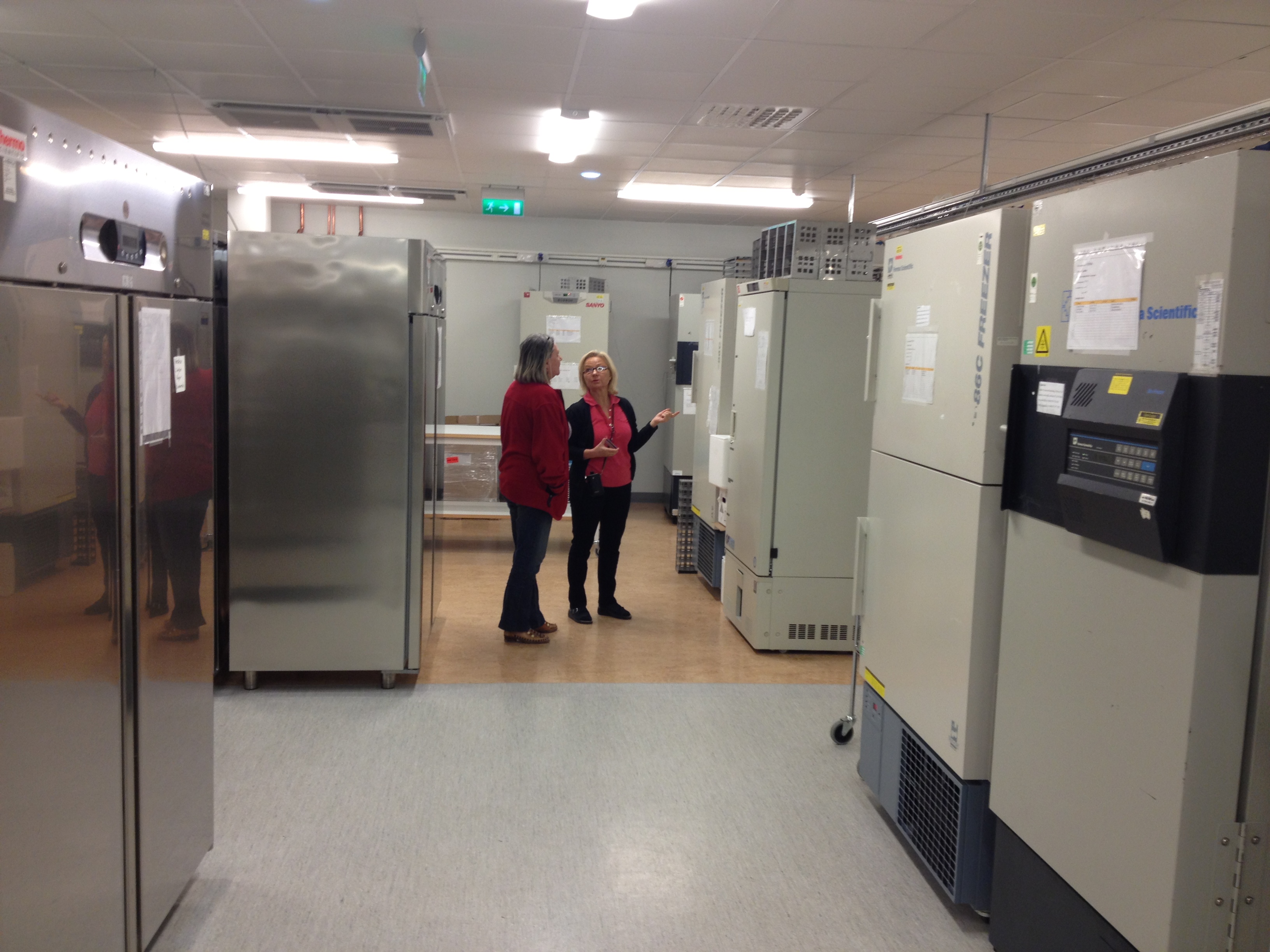
We were visited today by Luca Montanelli, Lucia Mondini and Giacomo Grassi from Stefano Pallanti’s team at the University of Florence. The aim is to start a pilot of our internetbased CBT for OCD in Italy soon. 
A paper just out in Translational Psychiatry by Lester and collegues exemplifies the ideas of the novel field of therapygenetics – how individual genetic variation impacts psychological treatment response.
In this study, 374 anxiety-disordered children who had completed a standardized cognitive behaviour therapy, were genotyped for single nucleotide polymorphisms (SNPs) in the nerve growth factor (NGF) (rs6330), brain-derived neurotrophic factory (BDNF) (rs6265) and in the serotonin transporter (5-HTTLPR) gene. These genes are considered important in synaptic plasticity and response to stress, and are expressed in areas in the brain responsible for fear and mood regulation.
Primary outcome measure was simply whether or not the participant fulfilled the anxiety diagnosis criteria post treatment. Treatment response was assessed immediately after treatment and at follow-ups. Lester and colleagues found that participants with one or more copies of the t-allele of NGF rs6330 were significantly more likely to be free of their diagnosis at follow-up. No interactional effect was observed between BDNF rs6265 or the 5-HTTLPR and treatment response. However, the 5-HTLLPR had a significant main effect as a predictor for treatment prognosis.
The authors reason that tyhe findings on NGF could be beneficial in helping to decide whether a child is likely to benefit from standard CBT or if further interventions should be considered.
For more on this topic, read:
- Beevers CG, McGeary JE. 2012. Therapygenetics: moving towards personalized psychotherapy treatment. Trends Cogn Sci 16:11-12.
- Bockting CL, RJ Mocking, A Lok, MW Koeter, AH Schene. 2012. Therapygenetics: the 5HTTLPR as a biomarker for response to psychological therapy? Mol Psychiatry.
- Eley, TC, JL Hudson, C Creswell, et al. 2012. Therapygenetics: the 5HTTLPR and response to psychological therapy. Mol Psychiatry 17:236-237.
This week, members from Rücklab visited the congress on neuropsychiatry “NPF barn och ungdomar, kunskap, insikt och samverkan”. Volen Ivanov and Fabian Lenhard each held a talk on Hoarding Disorder and CBT for children with high-functioning autism. We would like to thank the organizers Göteborgs stad (among others) for giving us the opportunity to speak at the beautiful old cinema theatre “Draken” in front of more than 300 attendants!


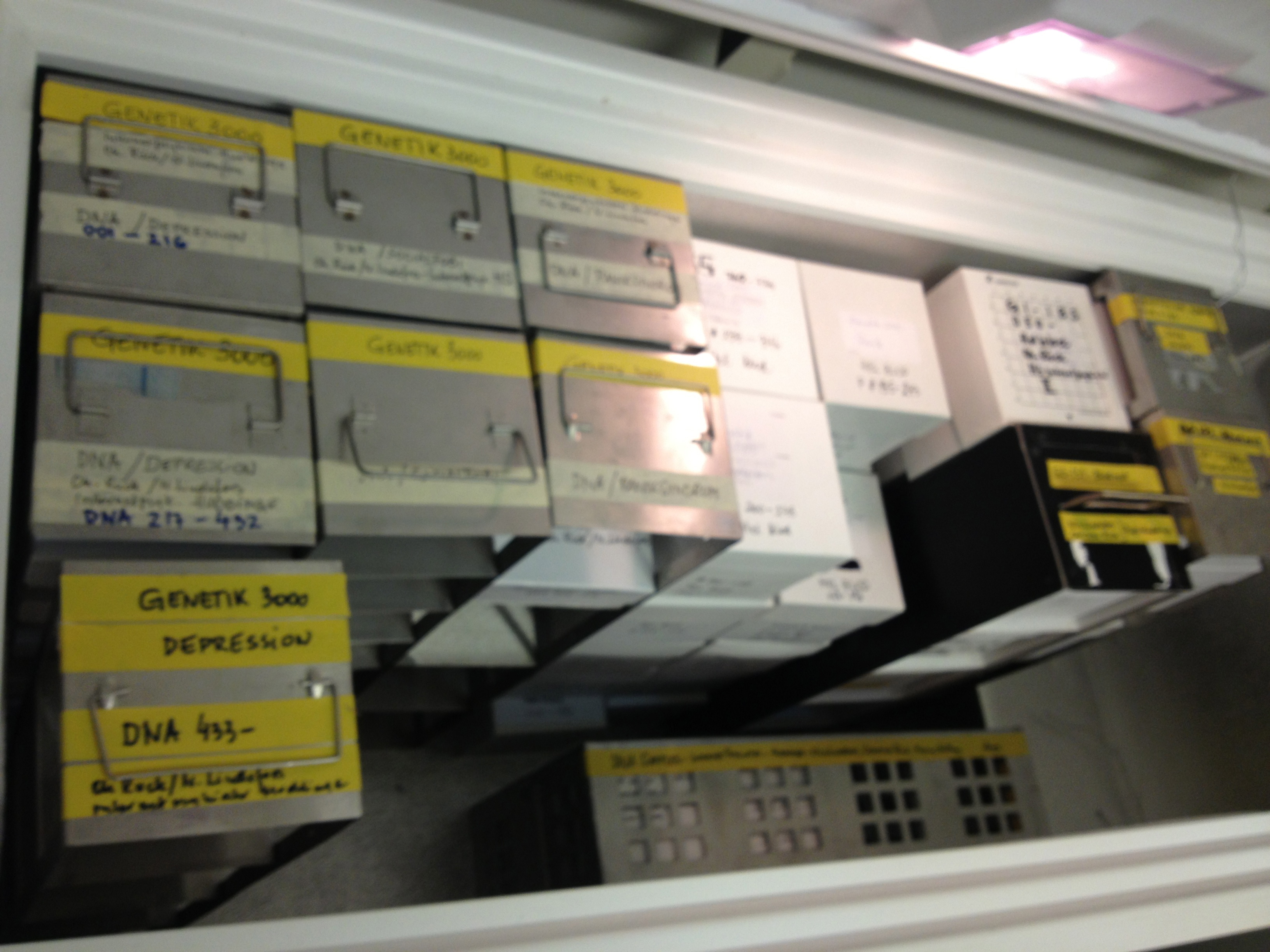
If you ever wondered where all the DNA in our studies end up, this is for you. As you may know, Rucklab has several genetical studies and one of the goals is to identify genes that are relevant to treatment response in CBT. We are now at more than 1000 patients that have left us their DNA and the collections is ongoing, some results are already published. Anyway, it’s all safely stored in a large freezer room underground. And thanks to our patients, nurse Monica Hellberg and lab technician Alexandra Tylec we hope to fill up another freezer soon. …

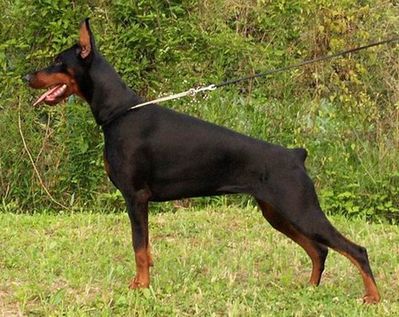
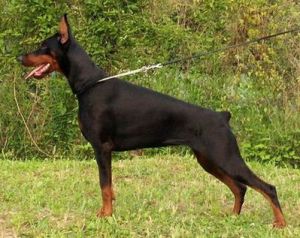
Dogs sometimes suffer from behaviors such as tail chasing, flank or blanket sucking and other repetetive behaviors that can be harmful and that are diagnosed as Canine Compulsive Disorder and considered an analog to OCD in humans. The extraordinary phenotypic diversity of dog breeds has been sculpted by a unique population history accompanied by selection for novel and desirable traits. These wanted traits may also lead to an accumulation of a disorder within one breed and may be of special interest when studying the genetics of certain traits.
Dodman and collegues studied 92 doberman pinchers (pet dogs) that had flank or blanket sucking and controls with a genome wide association study (GWAS) and found a new canidate gene; CDH2. CDH2 is widely expressed,
mediating synaptic activity-regulated neuronal adhesion. Dogs showing multiple compulsive behaviors had a higher frequency of the risk allele than dogs with a less severe phenotype. Kerstin Lindblad-Toh and others at Broad Institute and Uppsala University are continuing to investigate this and other candidate genes. A recent Finnish study by Tiira et al of tail chasers but in 3 other dog breeds than Dobermans failed to find an association with CDH2.
For those interested in a more detailed review of animal models in OCD we recommend a review by Albeleda and Joel in Neuroscience 2012 (see below for full reference).
Diana Radu Djurfeldt is a psychiatrist and the head of Ångestenheten, the OCD clinic at Karolinska in Solna. She defended her thesis “Aspects on the psychopharmacology of cholecystokinin
” in 2005 (read it here). Her current research interests include Deep Brain Stimulation and Body Dysmorhic Disorder. Welcome in our group, Diana!
We are starting research on Body Dysmorphic Disorder also known as Dysmorphophobia, a very under-researched condition. Psychologist Jesper Enander will be the project manager of the studies. We received 300000 SEK for this research line from the regional agreement on medical training and clinical research (ALF) between Stockholm County Council and Karolinska Institutet.
Läs mer och anmäl dig här.
The DOCS is a self-report questionnaire designed to address the current limitations of existing obsessive-compulsive symptom measures. A new study from our lab published in the Journal of Obsessive-Compulsive and Related Disorders give initial support that the DOCS, when administered via the Internet, exhibit adequate psychometric properties. Using the Internet to administer the DOCS can have many potiential benefits. For example, it can make data collection easier when studying the prevalence of OC symptoms in the general population.
Click below to access the paper (it’s Open Acess):
We have also gathered useful screening and assessment instruments available for clinicians both in english and swedish (including the DOCS).
Click on any of the following links to go to the measurements section of our homepage.