Sim will be working with the intensive exposure-based treatment RCT for post-traumatic stress disorder (PTSD). A thrilling project that will evaluate the effect, speed of recovery, and cost-effectiveness of a PTSD treatment delivered daily for five consecutive days. Preliminary research shows intensive trauma focused treatment (I-PE) to be as effective as when the treatment is delivered by weekly sessions, but with the advantage that the recovery rate is faster and the proportion of patients who drop out decreases.
Hear Max in the latest episode of OCD-podden talking about the current randomized controlled non-inferiority trial examining Bergen 4-day treatment (B4DT), an intensive treatment compared to gold standard psychological treatment delivered weekly.
Max Sannemalm is a lic. psychologist at OCD-programmet at Psykiatri Sydväst and also a PhD student working with the B4DT-study.
Congratulations Mia and the tricho-derma community!
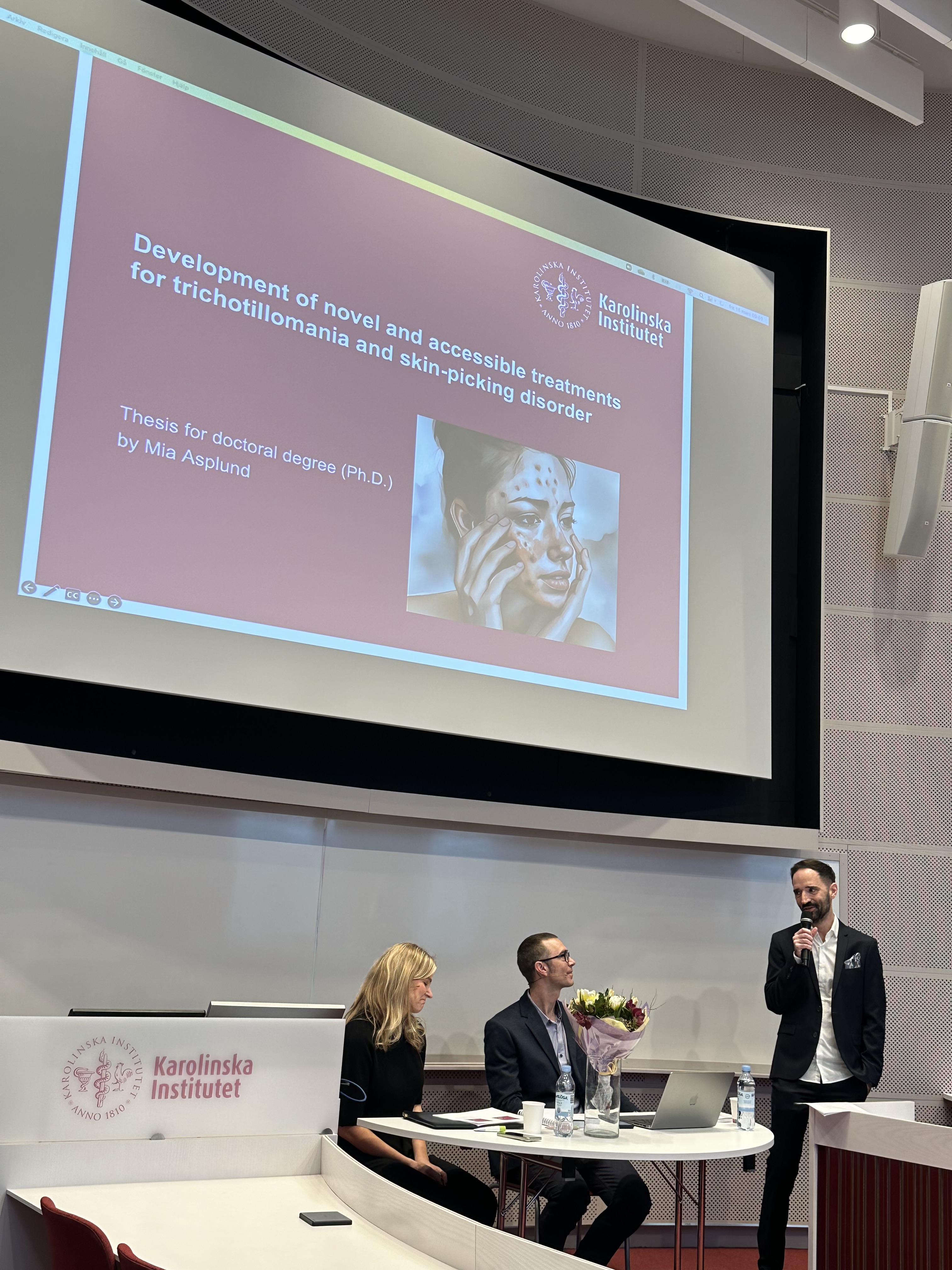
Today, incredible Mia Asplund successfully defended her thesis Development of novel and accessible treatments for Trichotillomania and Skin-picking disorder in Erna Möllersalen at Karolinska Institutet (KI), Flemingsberg. Opponent was Michael Twohig, Professor at Utah State University.
Also present were principal supervisor Volen Ivanov and co-supervisors Christian Rück and Fabian Lenhard (KI). Examination board consisted of Monica Buhrman, Associate Professor (Uppsala University), Ida Flink, Professor (Karlstad University) and Victoria Blom, Associate Professor (The Swedish School of Sports and Health).
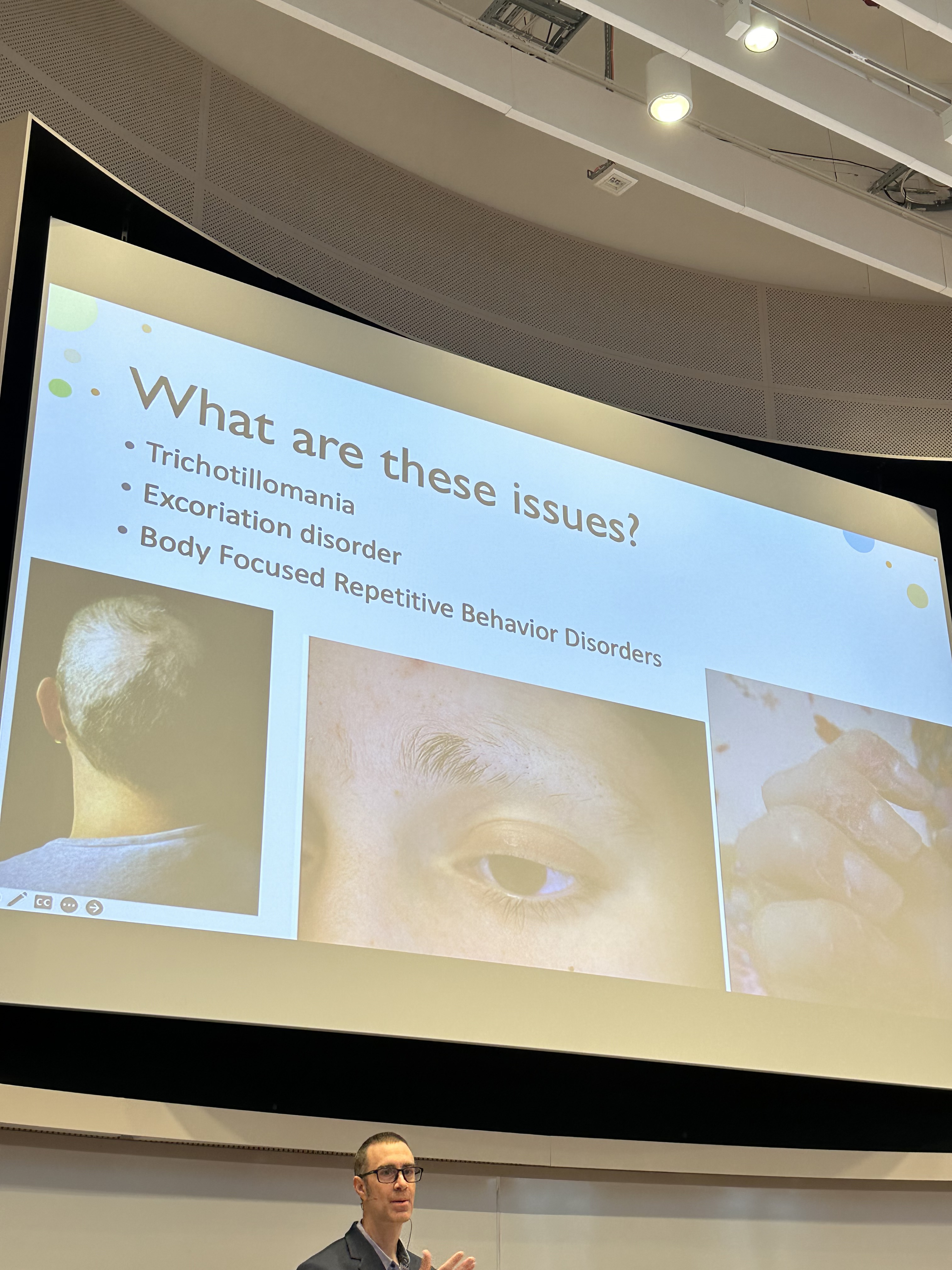
What is trichotillomania and skin-picking disorder? Trichotillomania (TTM) and Skin-picking disorder (SPD) are psychiatric conditions characterized by recurrent and excessive hair-pulling and skin-picking, respectively. These behaviors result in significant hair loss or skin lesions and often consume substantial amounts of time, leading to significant distress and functional impairment. Prevalence rates vary across studies but have been demonstrated to be as high as 3.5% for TTM and 5% for SPD.
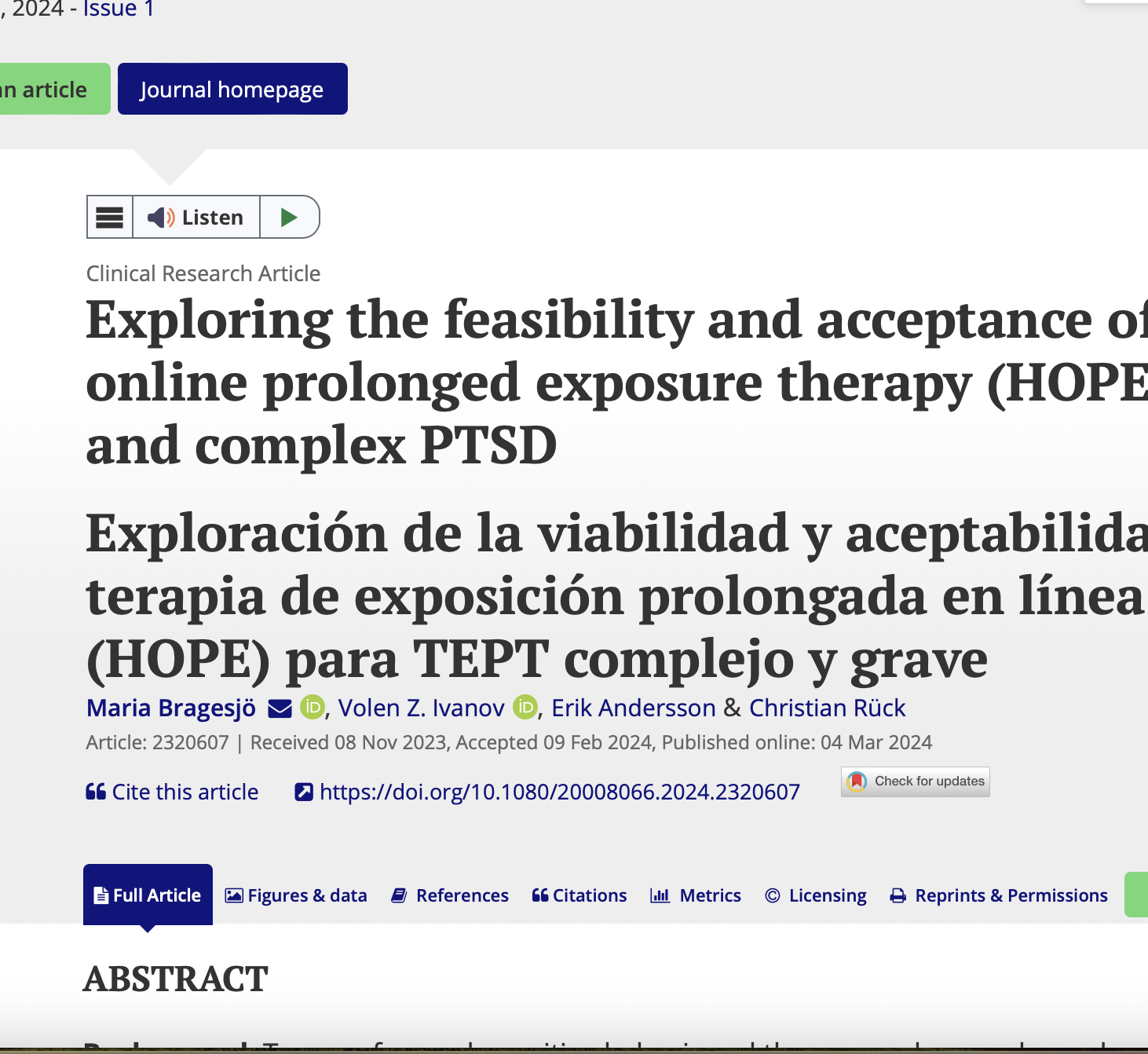
Although trauma-focused cognitive behavioral therapy such as prolonged exposure is considered the first choice in the treatment of post-traumatic stress disorder (PTSD), it is rarely available in regular health care. In a new feasibility trial, Maria Bragesjö et al. test digital therapy (Huddinge Online Prolonged Exposure; HOPE) to bridge this gap.
Results in short: HOPE proved feasible and effective. The treatment was well tolerated by patients and significant reductions in PTSD symptoms were found at end of treatment and were robust to the 6-month follow-up.
Fresh as a spring sign, we have a new postdoc in the group!
Fredrik Johansson starts as the new postdoc in the Wallert statistical modeling team. He describes his research as follows:
“My research within Rücklab focuses on causal and predictive modeling of suicide, both for people in closed psychiatric compulsory care but also in the general population. Based on a combination of registry data and genetic data, we try to improve the possibilities to predict who is at high risk of suicide, but also to understand what lies behind suicide in these different groups. Another research focus is treatment outcomes after internet-mediated CBT. Again, we are using registry data and genetic data, but also clinical data collected during treatment to better predict various relevant treatment outcomes and to understand processes that lead to successful treatment outcomes.”
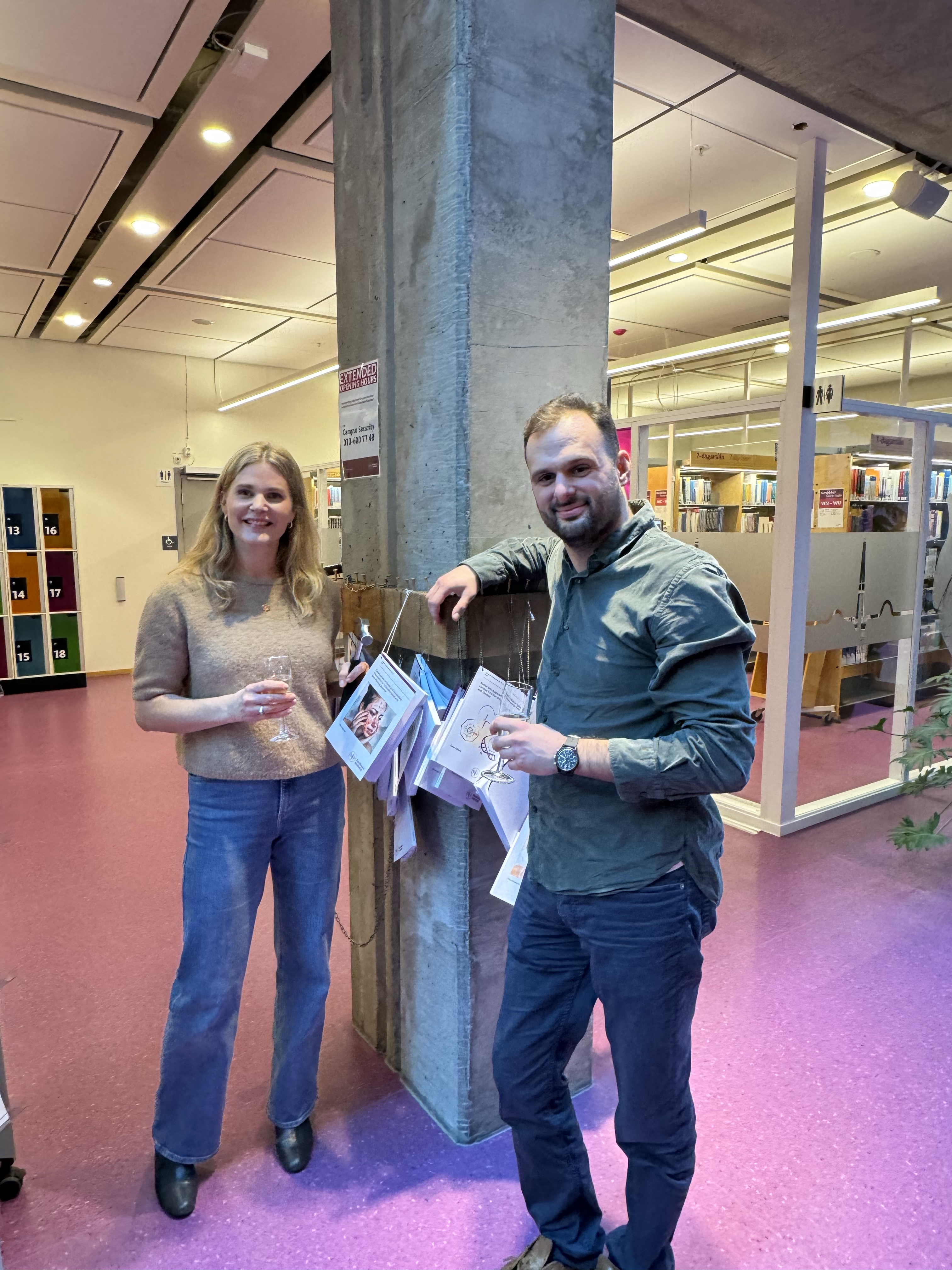
Today, Mia Asplund nailed her thesis at the KI library in Flemingsberg. Also present, of course, was supervisor Volen Ivanov. Well hammered and congratulations!
In this new summer course given by Karolinska Institutet (KI), we explore how artificial intelligence (AI) is researched and integrated into mental healthcare, particular psychiatry, to improve tailored patient care. Throughout the course we also debate ethical implications of this ongoing paradigm shift and its consequences for mental healthcare.
The course provides a comprehensive interdisciplinary perspective on both opportunities and challenges of AI with a focus on clinical psychology and psychiatry. Focus areas include conversational agents, suicide prediction, and applied machine learning for the purpose of improved tailored treatment, monitoring, and care. These topics are studied from a general perspective regarding strengths and limitations of humans versus machines. Lectures are supported by collaborative seminars on cutting-edge findings. Interactive workshops provide possibilities for both theoretical development and hands-on use and construction of AI-tools.
The course will take place from the 3rd until the 17th of June at Flemingsberg (full-time study).
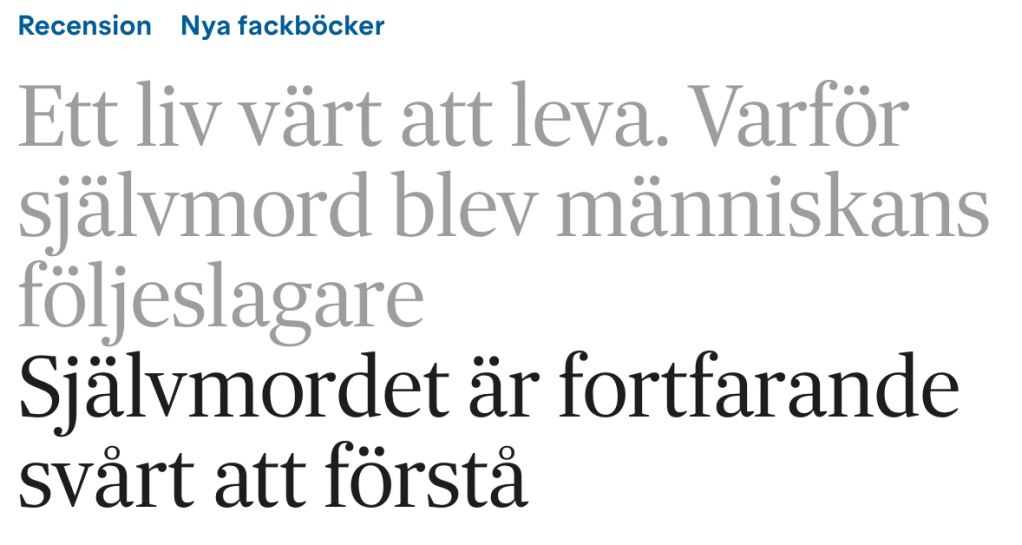
Research team leader Christian Rück’s book is now out! And it has already received great reviews, including in Svenska Dagbladet and Göteborgsposten.
The theme of the book itself seems to make an impression on the reviewers. Does a book about suicide have a place on the bookshelf?
Furthermore, the book raises questions among the critics: Which suicides do we accept in our culture? Is a zero vision for suicide achievable? Is a person who commits suicide due to e.g. mental illness “wrong” in their claim? What are the limits of human autonomy?
“Boken är tunn och välskriven. Ändå tar det tid att läsa. Rücks raka prosa och de överlevande han intervjuar berör och lockar till eftertanke – med jämna mellanrum måste jag helt enkelt lägga boken ifrån mig och bara låta orden smälta.”
Listen to a Swedish Radio interview with Christian ahead of the release of his new book: A life worth living – Why suicide became man’s companion.
The interview covers perspectives on suicide in different times and cultures, as well as questions about which suicides are acceptable and which are not.
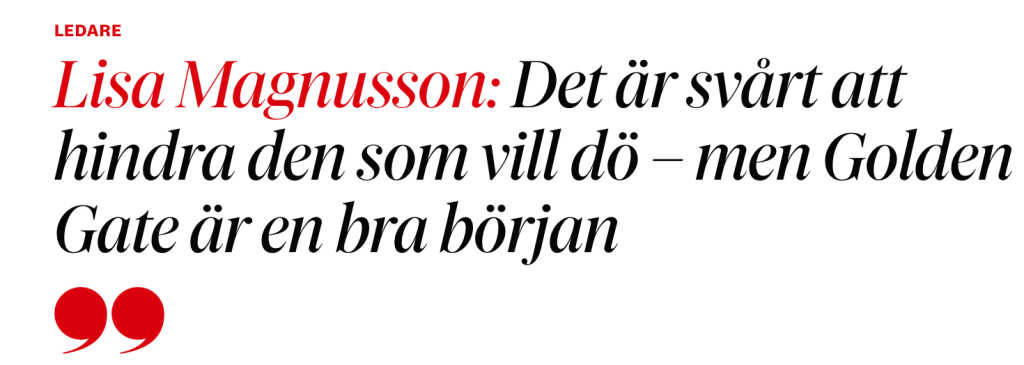
In the Swedish newspaper Dagens Nyheter, Christian Rück debates Sweden’s zero vision for suicide. He argues that the zero vision creates the false notion that all suicides are preventable and that it places additional blame on families and health professionals. This risks making efforts to reduce cases more difficult.
Manne Sjöstrand is the research team’s expert on medical ethics. In this paper from 2023, he develops a critical position on Vision Zero as a way to reduce suicide.