New interesting Karolinska OCD Master Classes ahead: skin-picking, David Tolin and Kerry Ressler

The Center for Psychiatry Research arranges Master Classes in OCD-related topics and very good ones are lined up in 2013:

February 1: How to run a CBT group for skin-picking and trichotillomania by Nienke Vulink, MD PhD, Pieter Ooms, CBT nurse , Mechteld Hoogedoorn, psychologist, PhD, Amsterdam University. Registration and more info at: http://www.webbhotell.sll.se/sv/Psykiatriforskning/Forskning/Angestsjukdomar/Karolinska-OCD-Master-Class–/ .

May 27: Buried in Treasures: The Nature and Treatment of Hoarding Disorder by Dr David Tolin, Director, The Institute of Living and Adjunct Associate Professor at Yale University. Dr Tolin is well known for his research on OCD and Hoarding and has was the host of the TV series “The OCD project”. Registration not yet open.

December 2nd: The neurobiology of fear learning and extinction by Assoc Prof Kerry Ressler, Emory University, Atlanta. Registration not yet open.

All these will be held at Karolinska Institutet, Stockholm, Campus Huddinge.
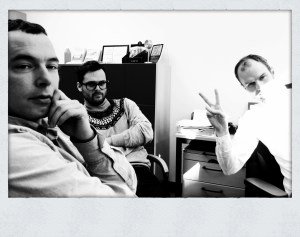
Swedish Research Council gives grant to Christian Rück

IMG_2078
V for Victory: Erik Andersson, Volen Ivanov and Christian Rück.

The Swedish Research Council (Vetenskapsrådet) has awarded our group leader a half-time position (“forskare på halvtid i klinisk miljö”) for a maximum of 6 years and the position comes with a yearly contribution of 880000 SEK.

Hoarding new disorder in DSM-5!

On December 1st, the American Psychiatric Association issued a news release announcing the novelties in the upcoming version of the Diagnostic and Statistical Manual of Mental Disorders, DSM-5, which will be published in May 2013. We at Rücklab are very pleased to see that Hoarding Disorder, one of our lab’s main interest areas, will be one of the very few new included disorders.  APA have embraced a conservative approach to DSM-5 and the number of disorders will be roughly the same compared to the previous version of the manual. It is stated that the inclusion of Hoarding Disorder is supported by “extensive scientific research” and we at Rücklab want to thank those envolved in this reserach during the past years.

We are confident in that the addition of this new disorder will spur the research field even more and we hope that those who benefit mostly from this inclusion will be the sufferers, and their families!

Read more:

http://www.psychiatry.org/