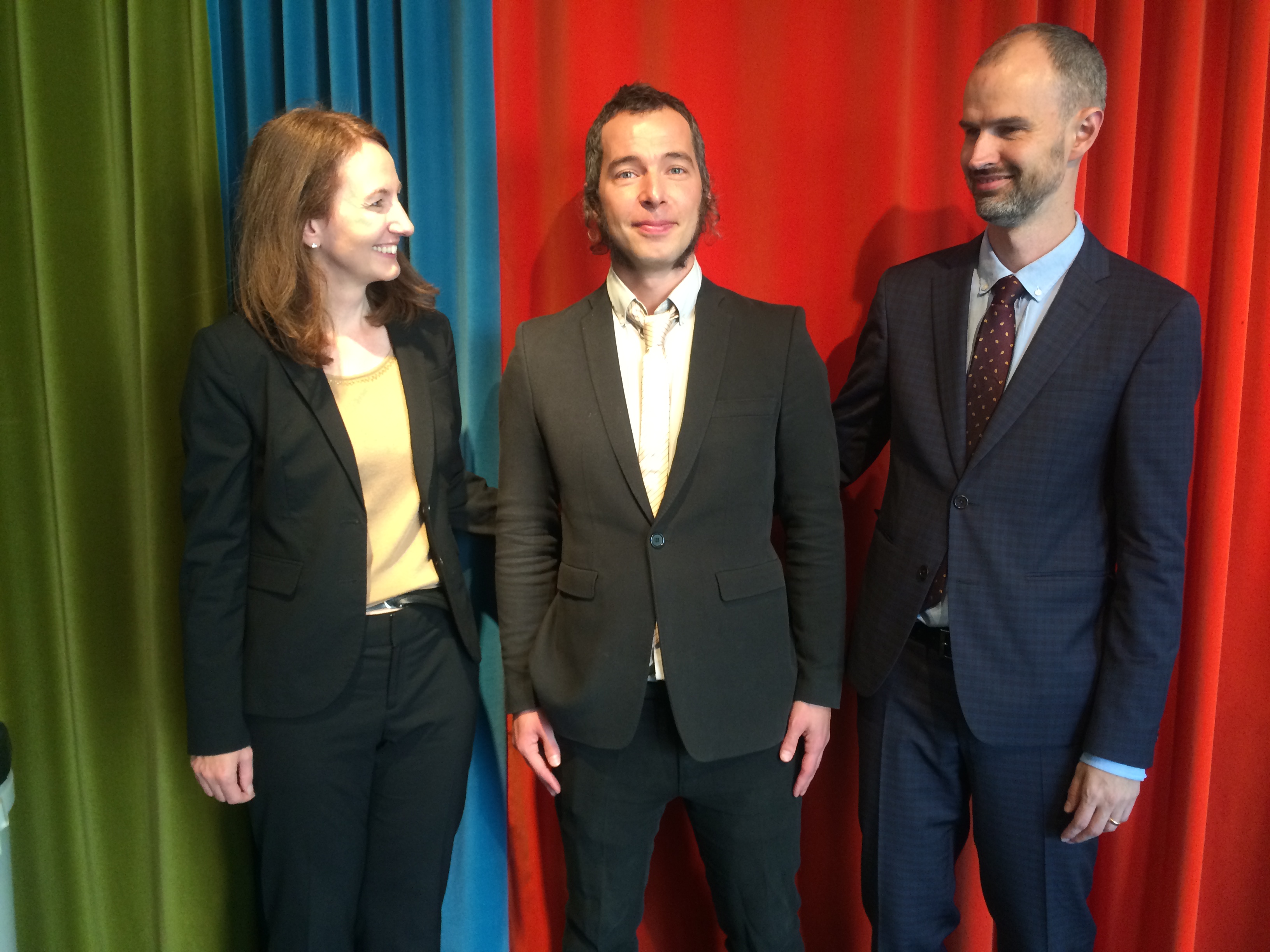
The leading scientific journal Nature writes about our work on internet-based CBT for BDD today. Read it all here: http://www.nature.com/nature/journal/v526/n7572_supp/full/526S14a.html#close
Category: News
Christopher LaLima, student at Hofstra in New York, who has worked in our pilot study of iCBT for OCD at Columbia University is now joining us here in Sweden for a year. He will work in our BDD project. Today was his first day at work and it started with some drama: he lost his passport on his way to work and our search and rescue efforts yielded nothing. But there is a happy ending: a very nice person replied to our SOS on Instagram and had heard that the passport had been found in the bus and now Chris has his passport back. Anyway, Chris you are very welcome in our group! (And hold on to you passport).

The risk for tic disorders, including Tourette syndrome and chronic tic disorders, increased with the degree of genetic relatedness in a study of families in Sweden, according to an article published online today by JAMA Psychiatry.
While tic disorders are thought to be strongly familial and heritable, precise estimates of familial risk and heritability are lacking.
David Mataix-Cols, lead author, of the Karolinska Institutet, Stockholm, and coauthors including Johan Larsson and Christian Rück from our group tried to overcome some of those limitations by estimating family clustering and heritability of tic disorders using data from two Swedish population-based registers. We identified 4,826 individuals diagnosed as having Tourette syndrome or chronic tic disorders from 1969 through 2009.
The authors found first-degree relatives of individuals with tic disorders had higher risk of having Tourette syndrome or chronic tic disorders than second- and third-degree relatives. In turn, the odds were higher for second-degree relatives than third-degree relatives.
Full siblings, parents and children of individuals with Tourette syndrome or chronic tic disorder (all with 50 percent genetic similarity but with siblings assumed to have more shared environment because they grew up together) had comparable risks. The results also indicate that risks for full siblings (50 percent genetic similarity) were higher than those for maternal half siblings (25 percent genetic similarity) despite similar shared environmental exposures. First cousins (12.5 percent) genetic similarity had a three-fold higher risk of having Tourette syndrome or chronic tic disorders compared with control patients.
“The heritability of tic disorders was estimated to be approximately 77 percent, with the remaining variance being attributable to nonshared environmental influences and measurement error. … Our heritability estimates place tic disorders among the most heritable neuropsychiatric conditions,” the study concludes.
Our study of d-cycloserine in OCD is out now in JAMA Psychiatry (click for link). This randomized clinical trial examines whether d-cycloserine augments cognitive behavioral therapy in the treatment of obsessive-compulsive disorder (OCD) and whether concomitant use of antidepressants moderates the effects of d-cycloserine.
Sammanfattning på svenska: http://ki.se/nyheter/tuberkulosmedicin-kan-forbattra-effekt-av-kbt
Andersson E, Hedman E, Enander J, Radu Djurfeldt D, Ljótsson B, Cervenka S, Isung J, Svanborg C, Mataix-Cols D, Kaldo V, Andersson G, Lindefors N, Rück C. D-cycloserine vs Placebo as Adjunct to Cogntive Behavioral Therapy for Obsessive-Compulsive Disorder and Interaction With Antidepressants: A randomized clinical trial. JAMA Psychiatry. Published online May 13, 2015. doi:10.1001/jamapsychiatry.2015.0546.
Assistant Professor James J. Crowley is now affilated to Karolinska Institutet and our group. Jim is currently at the Department of Genetics at the University of North Carolina at Chapel Hill. Check out some his recent publications here. We are very proud to have him at KI.Dear friends,
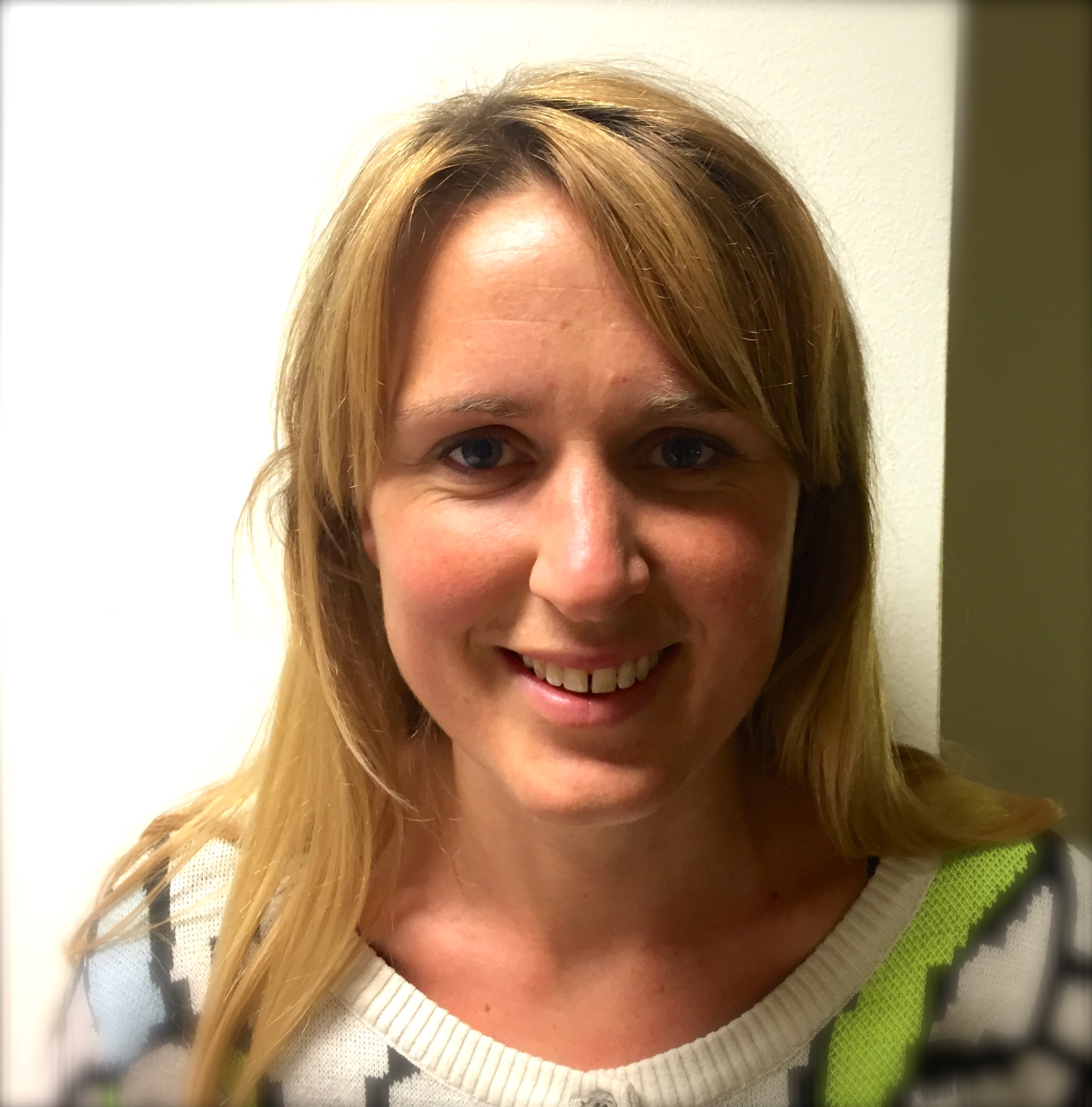
2014 has been a good year. We have contributed to 18 publications, presented at several congresses, Evelyn Andersson and Volen Ivanov have had their half-time seminars on their steady way to a PhD and Erik Andersson was the first out of our lab to defend his thesis. We have also staged what may be the Worlds first blind breaking party. On a more serious note, several of our treatment studies have helped people who suffer. We have published the first internetbased CBT study for Body Dysmorhic Disorder with Jesper Enander as first author and stay tuned for more on BDD in 2015. We hope to do even more in 2015. If you wish to donate to our research to make it possible, contact christian.ruck@ki.se .


Jesper Enander medverkade i gårdagens sändning av Rapport på SVT. Inslaget handlade om dysmorfofobi/BDD och den internetbehandling som vår forskargrupp har tagit fram.
Inslaget går att se på SVT play genom att klicka HÄR
Det finns även tre artiklar om BDD att läsa på SVT’s nyhetssite:
“Plastikoperation kan förvärra en förvriden självbild”
In a new publication in Schizophrenia Bulletin Swedish registers were used in the so far largest study set out to understand the relationship between OCD and psychosis and bipolar disorders. Clinically it is clear that psychotic delusions can sometimes be hard to tell apart from obsessions, especially when there is low insight.
In this population-based longitudinal and multigenerational family study, we examined the patterns of comorbidity, longitudinal risks, and shared familial risks between these disorders. Participants were individuals with a diagnosis of OCD (n = 19814), schizophrenia (n = 58336), bipolar disorder (n = 48180), and schizoaffective disorder (n = 14904) included in the Swedish Patient Register; their first-, second-, and third-degree relatives; and population-matched unaffected controls and their relatives. Individuals with OCD had a 12-fold increased risk of having a comorbid diagnosis of schizophrenia and a 13-fold increased risk of bipolar disorder and schizoaffective disorder. This still means that those disorders disorders will not affect most OCD patients. Longitudinal analyses showed that individuals first diagnosed with OCD had an increased risk for later diagnosis of all other disorders, and vice versa. OCD-unaffected first-, second-, and third-degree relatives of probands with OCD had a significantly increased risk for all 3 disorders; the magnitude of this risk decreased as the genetic distance increased. We conclude that OCD is etiologically related to both schizophrenia spectrum and bipolar disorders.