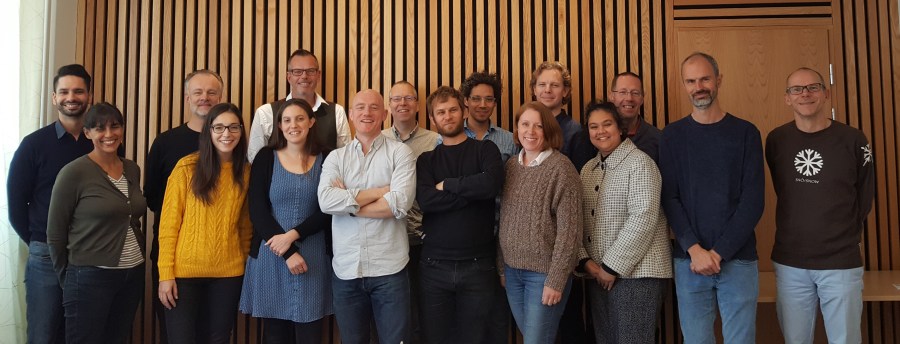
This week RISE/KTH arranged a roundtable on AI in mental heath research with participants from KI, KTH, Stockholm University and KCL, UCL and Anna Freud Institute in London. We are starting in this exiting field now.

Research on OCD and related disorders, precision psychiatry, psychiatric genetics, suicide prevention, stress and PTSD
This week RISE/KTH arranged a roundtable on AI in mental heath research with participants from KI, KTH, Stockholm University and KCL, UCL and Anna Freud Institute in London. We are starting in this exiting field now.

In collaboration with researchers at Linnéuniversitet, Royal Institute of Technology and University of North Carolina at Chapel Hill we are planning a new study called PRIMED: Predicting Response to CBT in Mental Disorders using multimodal data and machine learning.
Common mental disorders such as depression, social anxiety, panic disorder and OCD have a point prevalence of 15%. CBT is the treatment of choice, yet 30-60% of patients undergoing CBT will not respond to treatment. Identifying non-responders before treatment would allow alternative treatment choices.
Predictor studies have so far not been able to reach an acceptable predictive power to guide clinical decisions so adding fine-grained and multiple types data, including the genetic footprint, may be a way forward.
Hence, the aim of PRIMED is to better predict treatment response to Cognitive behavioral therapy (CBT) in depression, social anxiety disorder, panic disorder, and OCD by using clinical, register-based, and genetic data from 6000 individuals in Sweden.
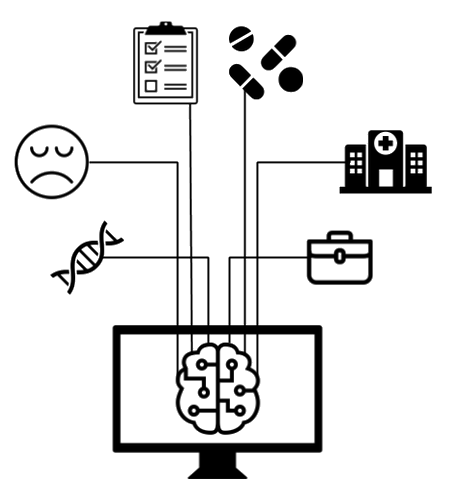
In PRIMED, potential predictors include clinical information, register based data and genetic variation. Outcomes are short-term clinical data, long-term register based medical data e.g. prescriptions, diagnoses, suicide attempts and social data such as unemployment, sickness absence, and disability pension.
![]()
In addition to study predictors on these different levels, we also want to add artificial intelligence, or Machine Learning to identify individuals at risk of not responding to treatment. So-called ‘Learning Machines’ can learn from historical cases and then apply what it has learnt to predict outcomes in a single, new case. Rather than considering the effect of one variable on an outcome of interest at a group level, Learning Machines identify patterns of information that can be used to predict the outcome for an individual.
The Learning Machine will learn from a training dataset consisting of 4 000 individuals and then validate its ability to correctly identify patients at risk on 2 000 new patients.
This project pursues a novel research area that can only be developed by a multidisciplinary team involving experts in disparate fields: psychiatry, psychology, epidemiology, AI, and genetics. We have assembled a strong interdisciplinary team from four different universities in two countries and are very excited about this collaboration!
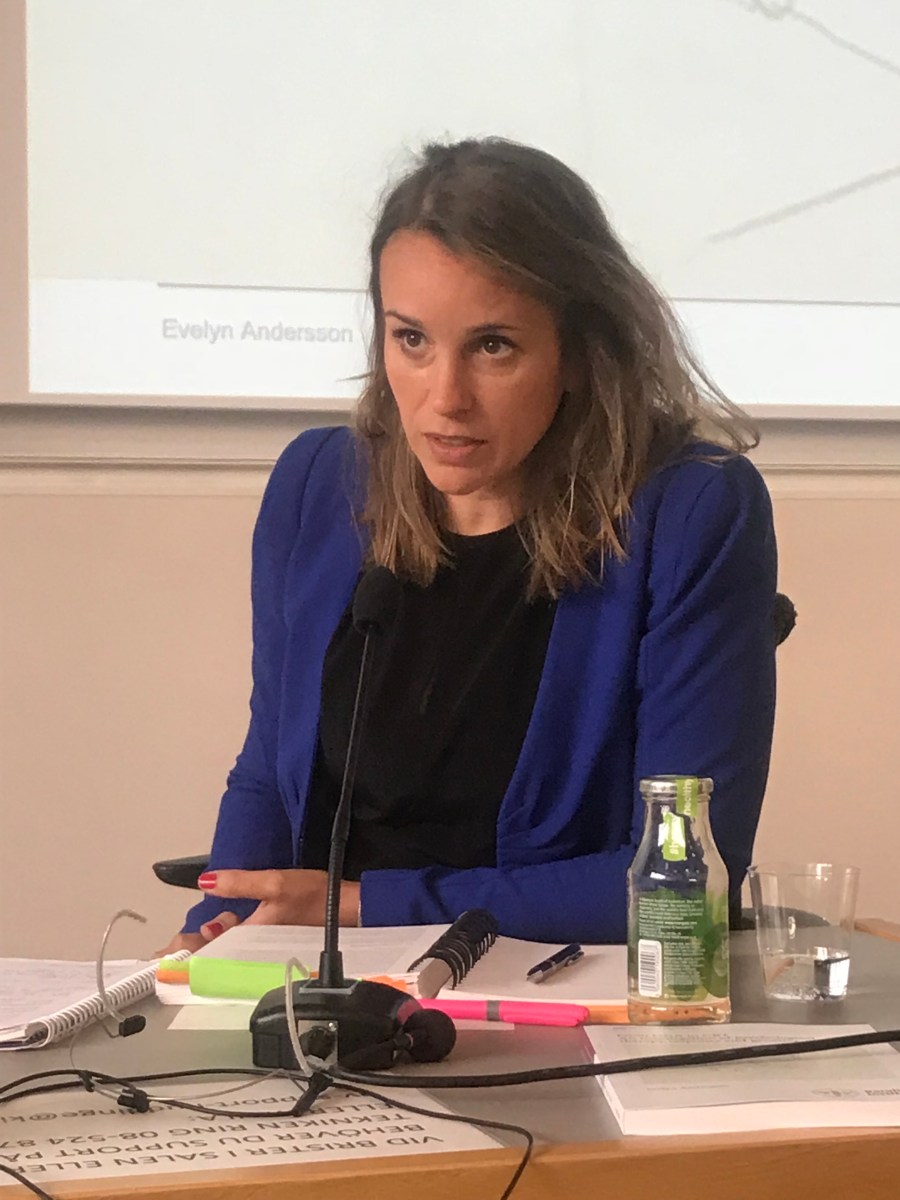
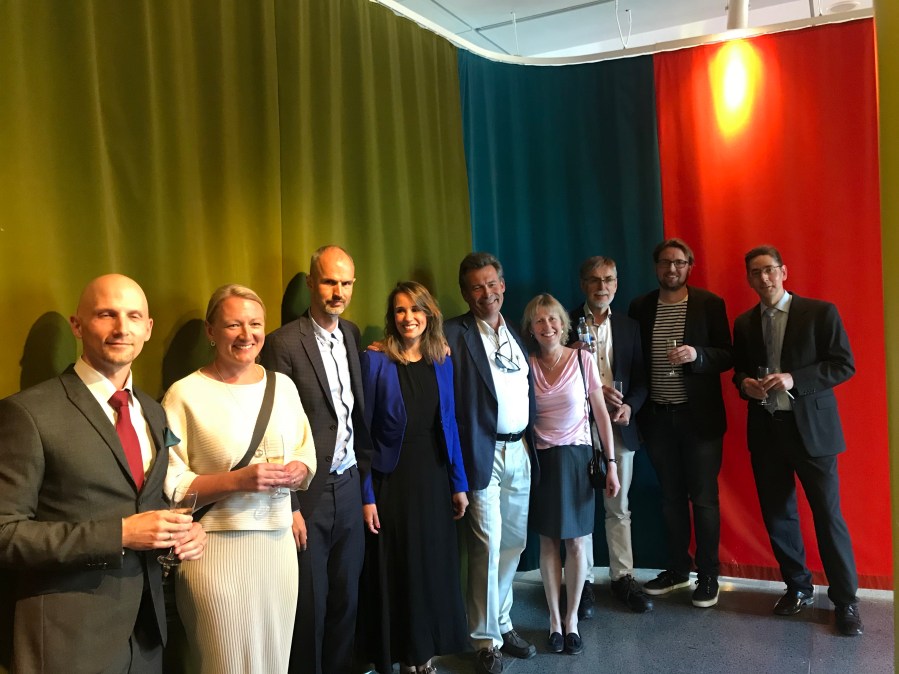
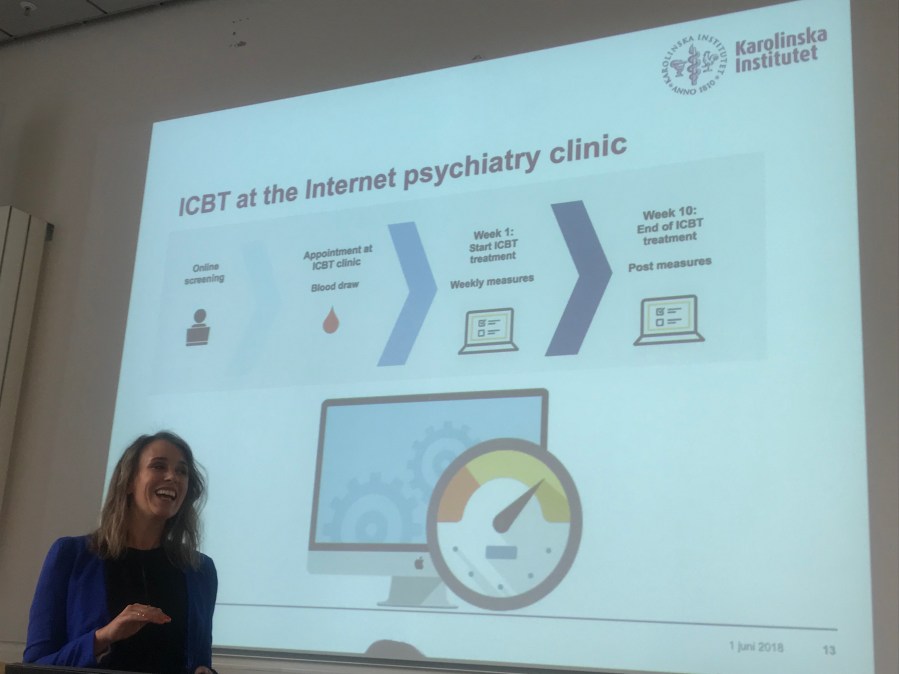
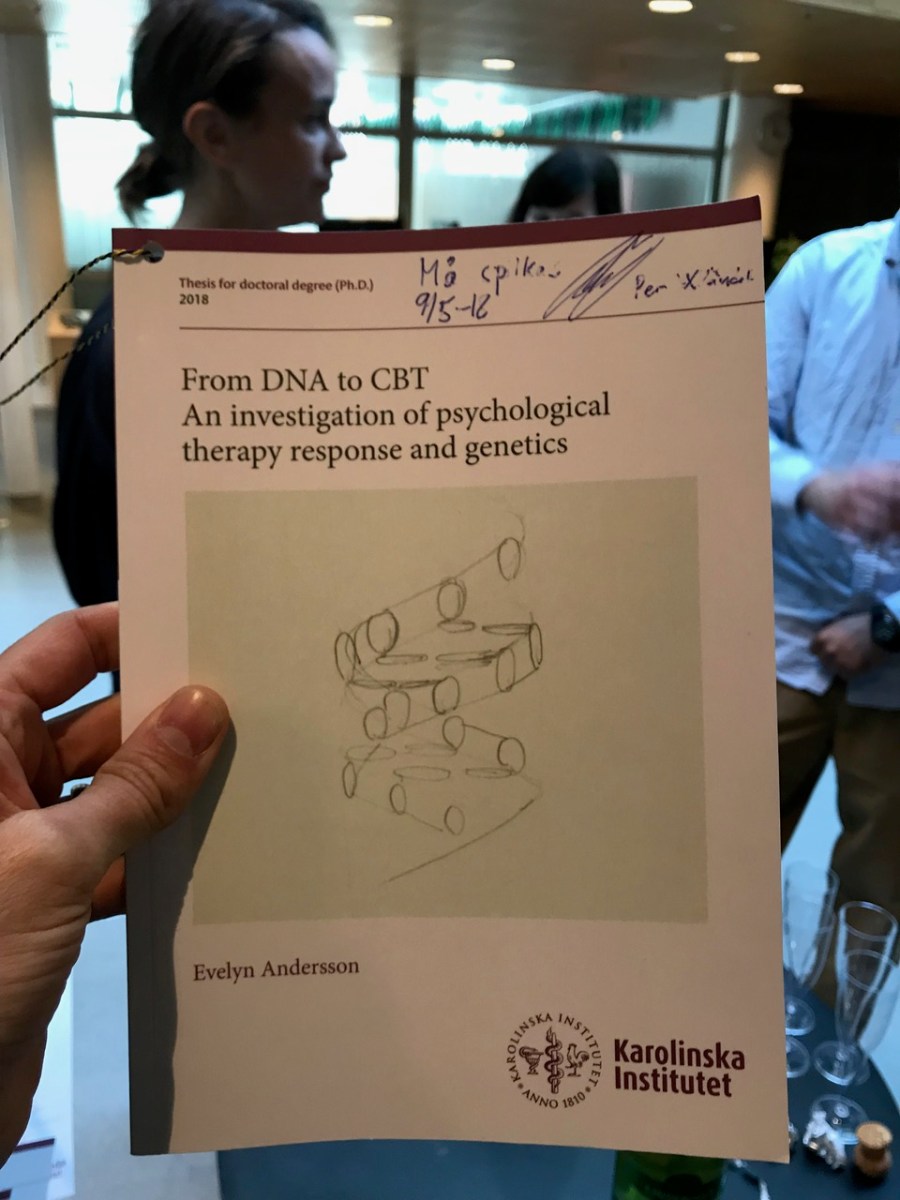
Congrats Evelyn! She is the 4th PhD student to graduate from our lab and she defended her thesis very well the past Friday. Big thank you to everyone involved!


Come work with us! Great data ❤️ you?
Read more: https://ki.mynetworkglobal.com/en/what:job/jobID:212265/
Från och med idag ersätter Dataskyddsförordningen GDPR den tidigare Personuppgiftslagen (PUL). Detta gäller alla våra studier.
Vår forskningsgrupp söker tillsammans med OCD-programmet på Psykiatri Sydväst en sjuksköterska för en tjänst med forsknings- och klinikinnehåll. Läs mer här: https://candidate.hr-manager.net/ApplicationInit.aspx?cid=1354&ProjectId=153846&DepartmentId=55430&MediaId=5
Evelyn Andersson Hagen today nailed her thesis at the KI Library. This is symbol of her thesis now being out in the public. She will defend her thesis June 1st. Everyone is welcome! Details here.
Big thanks to all the participants of the studies, the involved clinicians of Internetpsykiatrienheten and to the co-supervisors Nils Lindefors, Martin Schalling, Catharina Lavebratt and Erik Hedman-Lagerlöf.
The thesis is here (pdf).


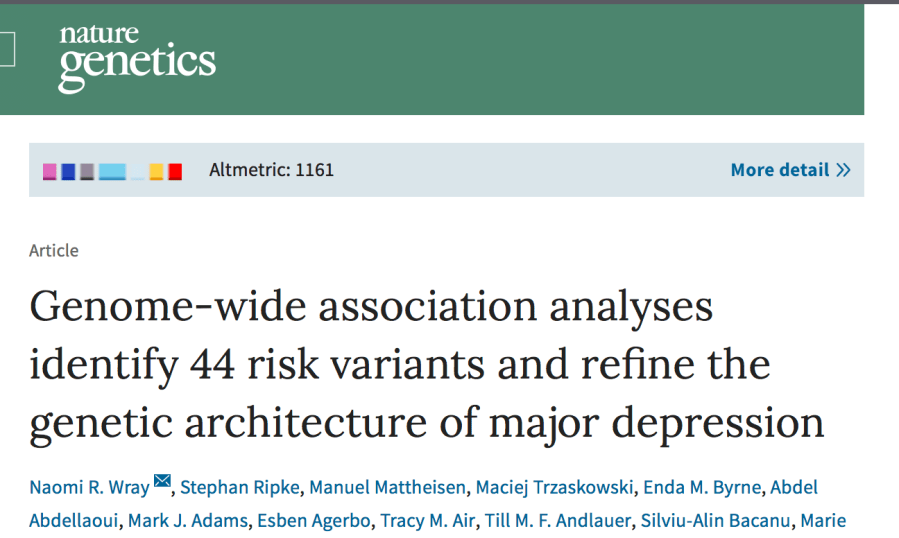
We are proud that a landmark study of depression genetics published in Nature Genetics has Professor Manuel Mattheisen as one of the lead authors. Manuel is a Professor at Würzburg University but also affiliated to our group at Karolinska Institutet.
The authors conducted a genome-wide association meta-analysis based in 135,458 cases and 344,901 controls and identified 44 independent and significant loci. The genetic findings were associated with clinical features of major depression and implicated brain regions exhibiting anatomical differences in cases. Targets of antidepressant medications and genes involved in gene splicing were enriched for smaller association signal. We found important relationships of genetic risk for major depression with educational attainment, body mass, and schizophrenia: lower educational attainment and higher body mass were putatively causal, whereas major depression and schizophrenia reflected a partly shared biological etiology. All humans carry lesser or greater numbers of genetic risk factors for major depression. These findings help refine the basis of major depression and imply that a continuous measure of risk underlies the clinical phenotype.
Here is a commentary in The Guardian.
Nature Genetics volume 50, pages 668–681 (2018)
Full paper: https://www.nature.com/articles/s41588-018-0090-3
Vi söker tre medarbetare för att arbeta med oss med att lösa vad orsakerna till sjukdomar som OCD är.
Forskningssjuksköterska:
https://ki.mynetworkglobal.com/se/what:job/jobID:191723/type:job/where:4/apply:1
Forskningsassistent:
https://ki.mynetworkglobal.com/se/what:job/jobID:192808/type:job/where:4/apply:1
Projektsamordnare:
https://ki.mynetworkglobal.com/se/what:job/jobID:192810/type:job/where:4/apply:1