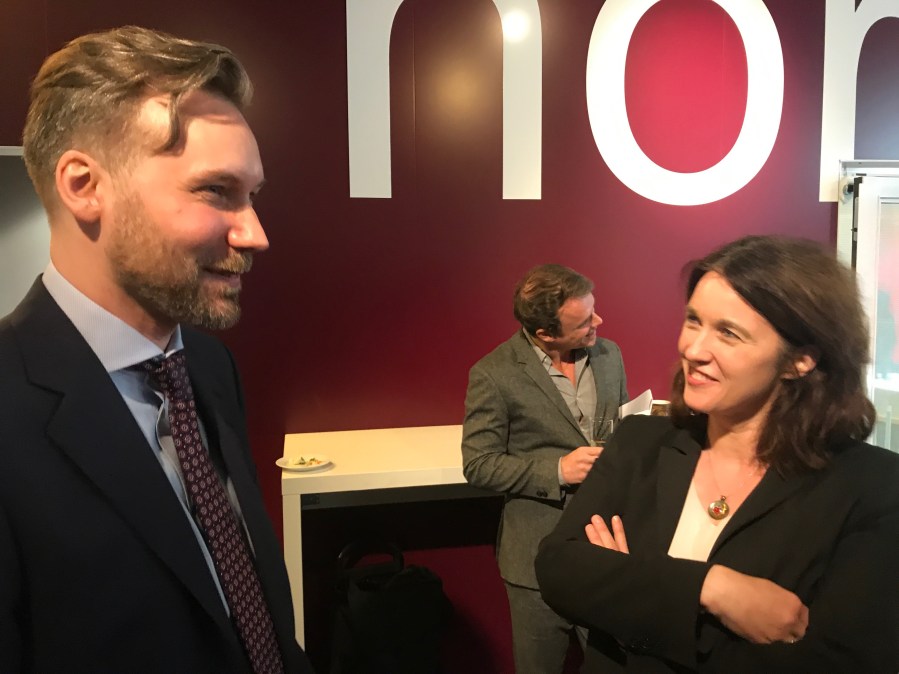
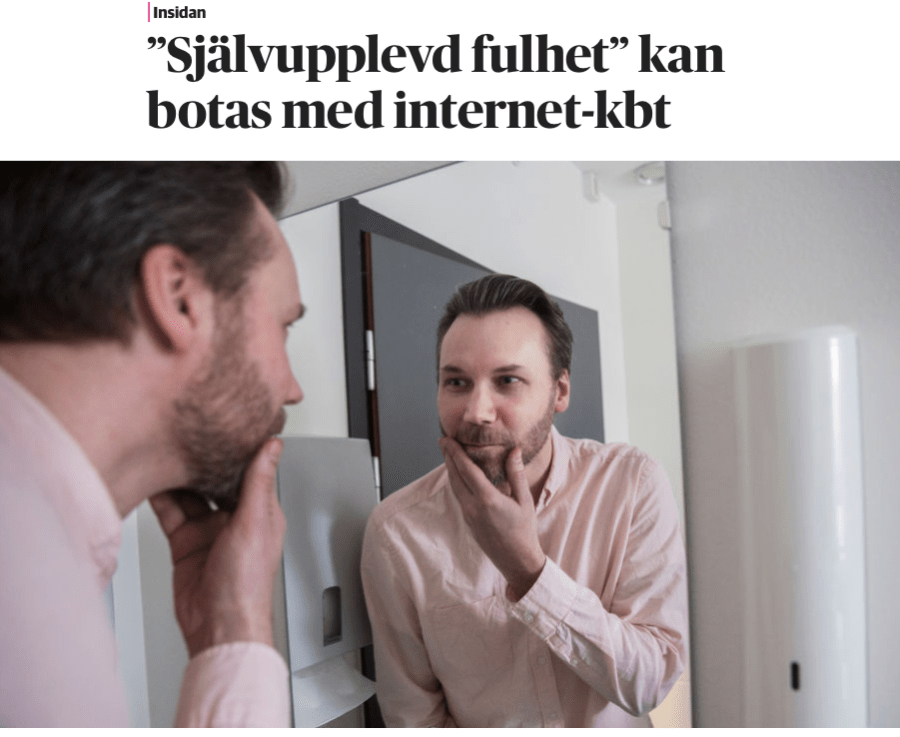
Dagens Nyheter har en artikelserie om BDD där flera av våra medarbetare är med.
Läs här (IntrenetKBT med Jesper Enander) eller här (BDD och män med Christian Rück).

Research on OCD and related disorders, precision psychiatry, psychiatric genetics, suicide prevention, stress and PTSD
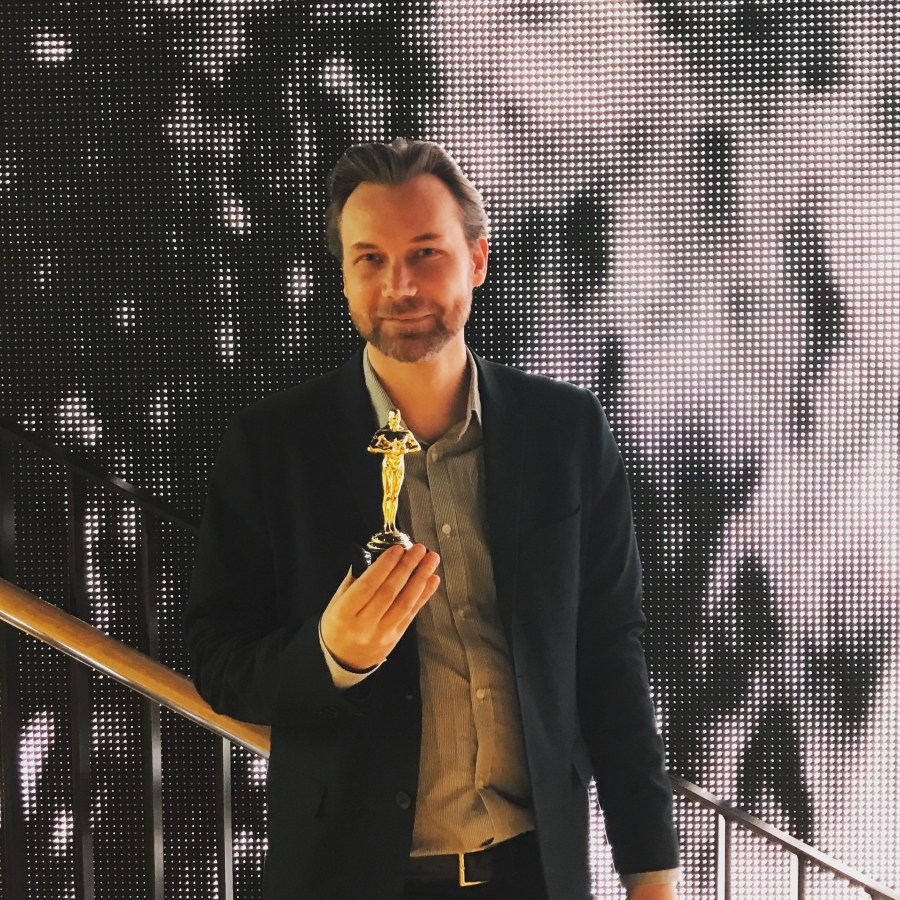
Jesper Enander today received his PhD after successfully defending his thesis today. Congratulations Jesper!


Our collaborator Manuel Mattheisen, Associate Professor at Århus University, is now officially affiliated to Karolinska Institutet and our group. He studied medicine at the University in Bonn and went on to be a research follow at Harvard Medical School before moving to Denmark. We are fortunate to enjoy his deep expertise in genetical methods. Check out his quite spectacular publication list here.

Jesper Enander just nailed his thesis to a plank at the Karolinska library. This means that the thesis is now open to the public and will be publicly defended May 5th.
Our treatment study of Body Dysmorphic Disorder published in the BMJ was yesterday awarded the best publication of the year by the Department of Clinical Neuroscience at Karolinska Institutet!

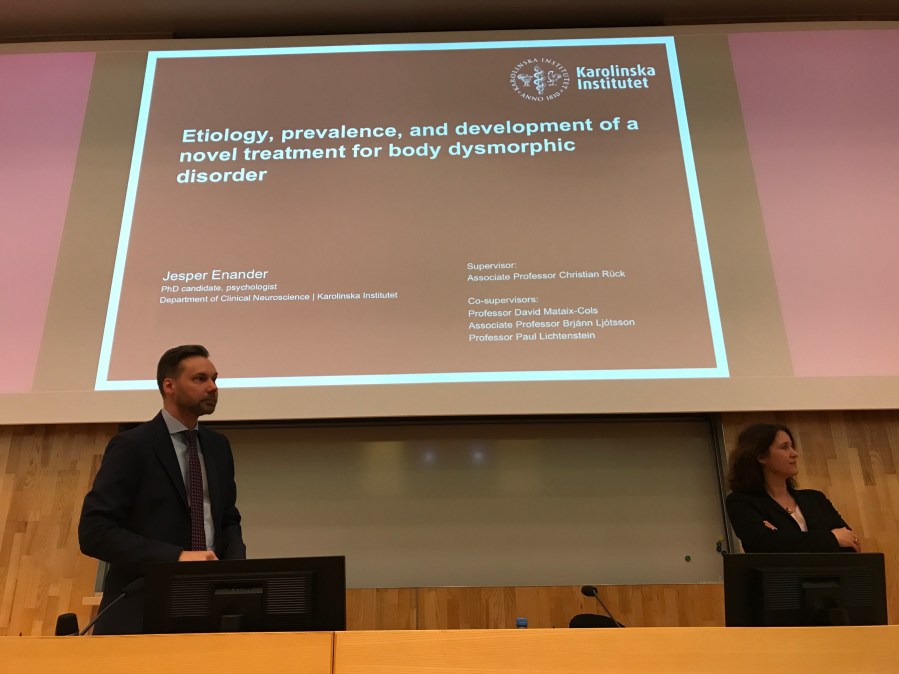
Jesper is about to defend his thesis titled: “Etiology, prevalence, and development of a novel treatement for body dysmorphic disorder” May 5 at 09.00 in Lecture hall H1, Alfred Nobels Allé 23, Campus Flemingsberg. Do not miss!
His Opponent will be Professor Ulrike Buhlman, University of Münster.
Examination Board:
Associate Professor Kalle Lundgren, Karolinska Institutet, Department of Molecular Medicine and Surgery
Professor Klaas Wijma, Linköping University, Department of Clinical and Experimental Medicine
Professor Jerker Hetta, Karolinska Institutet, Department of Clinical Neuroscience
Principal Supervisor:
Associate Professor Christian Rück, Karolinska Institutet, Department of Clinical Neuroscience
Co-supervisors:
Professor David Mataix-Cols, Karolinska Institutet, Department of Clinical Neuroscience
Professor Paul Lichtenstein, Karolinska Institutet, Department of Medical Epidemiology and Biostatistics
Associate Professor Brjánn Ljótsson, Karolinska Institutet, Department of Clinical Neuroscience
It has been an intense week for those involved in the treatment of OCD in children and adolescents. Fabian Lenhard has successfully defended his thesis, congratulations Fabian! His opponent was Professor John Piacentini from University of California, Los Angeles. Professor Piacentini is an experienced clinician and researcher in pediatric OCD. Yesterday he gave a lecture on the research frontiers in this field.

The topic of Dr. Lenhard’s thesis is Internet-delivered Cognitive Behavior Therapy for Adolescents with Obsessive-Compulsive Disorder. You can find the thesis here: https://openarchive.ki.se/xmlui/handle/10616/45535
He has developed and tested the treatment in an open trial and a randomized controlled trial. Analyses on cost-effectiveness and predictors of outcome are underway.

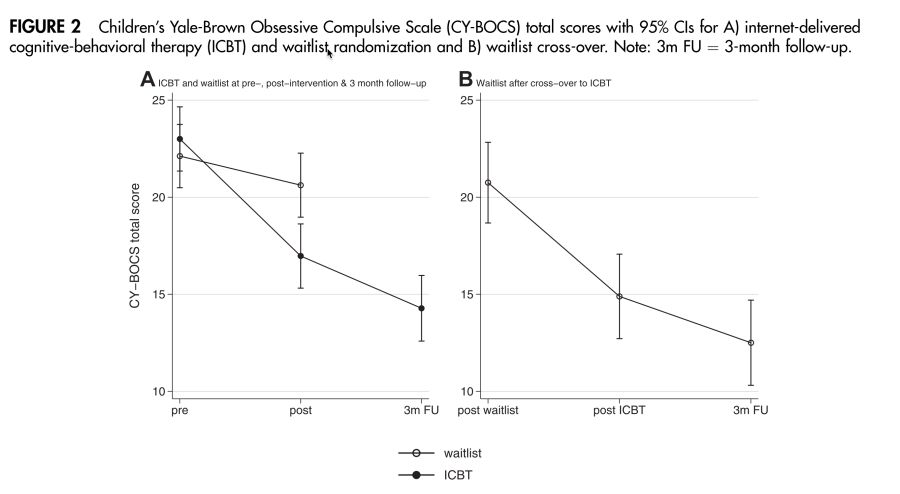
The results from both the open trial and the randomized trial indicate that internet-delivered CBT is an effective treatment for adolescents with OCD. The pre-post within-group effect sizes were large in both trials.
Link to the open trial: http://journals.plos.org/plosone/article?id=10.1371/journal.pone.0100773
Link to the randomized trial: http://www.jaacap.com/article/S0890-8567(16)31857-3/abstract


During his visit to Sweden, Professor Piacentini talked about research that aims to optimize outcomes in pediatric OCD. After receiving CBT, around 40 % of patients are in remission. While our treatments are effective for some, we still have a long way to go in order to treat every child and adolescent with OCD. Looking into specific mechanisms of change might be a way to optimize the current treatments.

Some suggested mechanisms include expectations of recovery (which might be mediated by home work compliance), the ability of a therapist to push exposures, and affect labeling (”I feel scared”) rather than cognitive restructuring during exposure.
Professor Piacentini also discussed recent work on neurotransmitters that directly target the underlying brain correlates of OCD. For example, glutamate levels might serve as a possible moderator of treatment outcome. We are awaiting the results from trials that aim to change glutamate levels pre-treatment to enhance the outcomes of CBT.
Don’t miss our dearest Fabian Lenhard’s thesis
to be publicly defended Friday March 23. Details on where here: http://ki.se/cns/kalender/disputation-fabian-lenhard
Your can download his thesis here: https://openarchive.ki.se/xmlui/handle/10616/45535

Thalia Eley is professor of developmental behavioural genetics at SGDP centre, Institute of psychiatry, King’s College, London. She is also head of EDIT lab where the research focuses on the genetic and environmental effects on development and treatment of anxiety and depression amongst children.
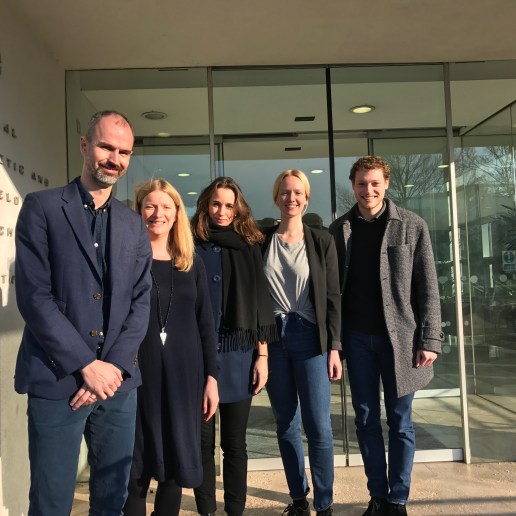
Christian Rück, Thalia Eley, Evelyn Andersson, Julia Boberg & Chris
Rayner outside EDIT lab.
The EDIT lab team aim to explore why anxiety and depression disorders to some extend run in the family. On one hand they do twin studies to explore how much of variation in a phenotype, i.e. anxiety disorders, could be explained by genetic variance and on the other hand they perform studies on environmental factors to explore to what extent variation could be explained by nurture.
The BioPoRT project is a part of IAPT (Increasing access to psychological treatment) in the UK. The aim of BioPoRT is to find predictors for treatment outcome, exploring both demographic variables as well as clinical and genetic factors. The latter is called therapygenetics, a term coined by Thalia Eley a few years ago.
Additionally the team do research on information processing.
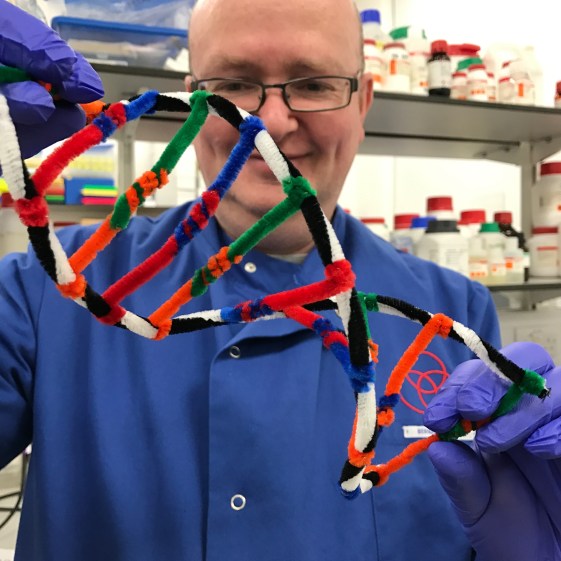
We got a tour of the actual lab by the centre laboratory manager Bernard Freeman, where the whole genome sequencing (GWAS) is being executed. He showed us DNA extracted from salmon sperm and some very high tech machinery.
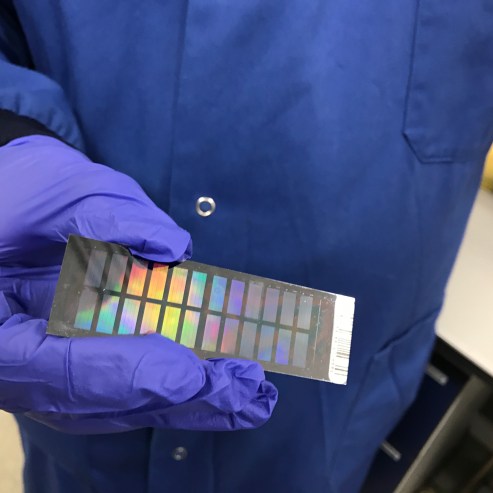
GWAS chip
Bernard Freeman with the double helix
The team also run the EDIT lab blog, a great source for novel research, interesting chronicles about bringing research into daily life hazzle (such as making your baby sleep) and the challenges one could face when working as a researcher.
Much of the work done at EDIT lab is related to the genetics work done at Rücklab, although our experience and knowledge in the field is a bit more scant. We look forward to future collaborations with the EDIT lab team.
Twitter:
@edit_lab
@thaliaeley

Sabina Brohede of Linköping University has just defended the first ever dissertation on Body Dysmorphic Disorder ever. Congratulations Sabina! Below her work explained in 4 wooden figures.