A strong week for CBT-treatment of pediatric OCD

It has been an intense week for those involved in the treatment of OCD in children and adolescents. Fabian Lenhard has successfully defended his thesis, congratulations Fabian! His opponent was Professor John Piacentini from University of California, Los Angeles. Professor Piacentini is an experienced clinician and researcher in pediatric OCD. Yesterday he gave a lecture on the research frontiers in this field.

IMG_1428
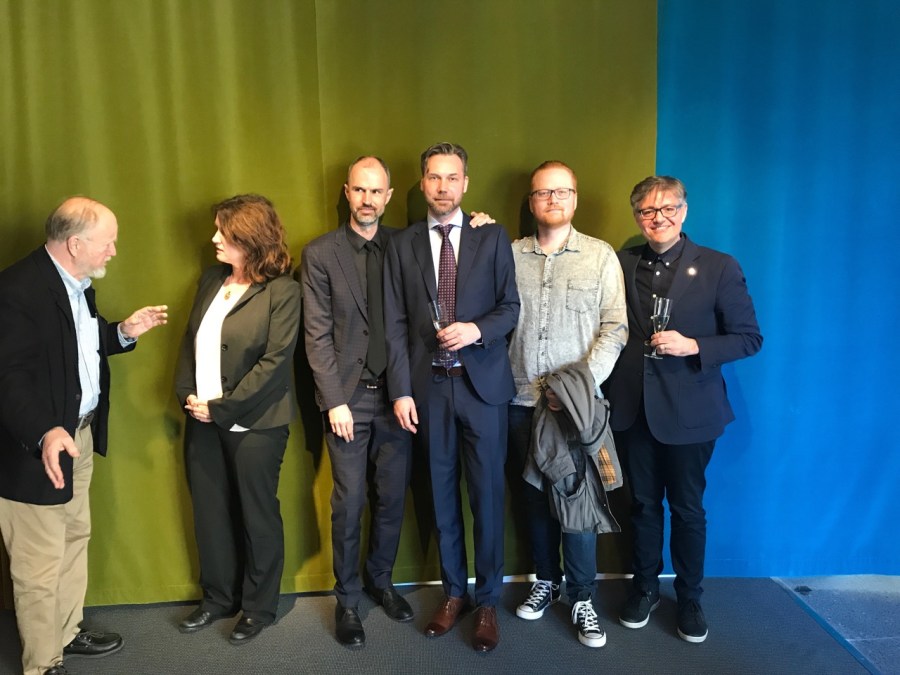
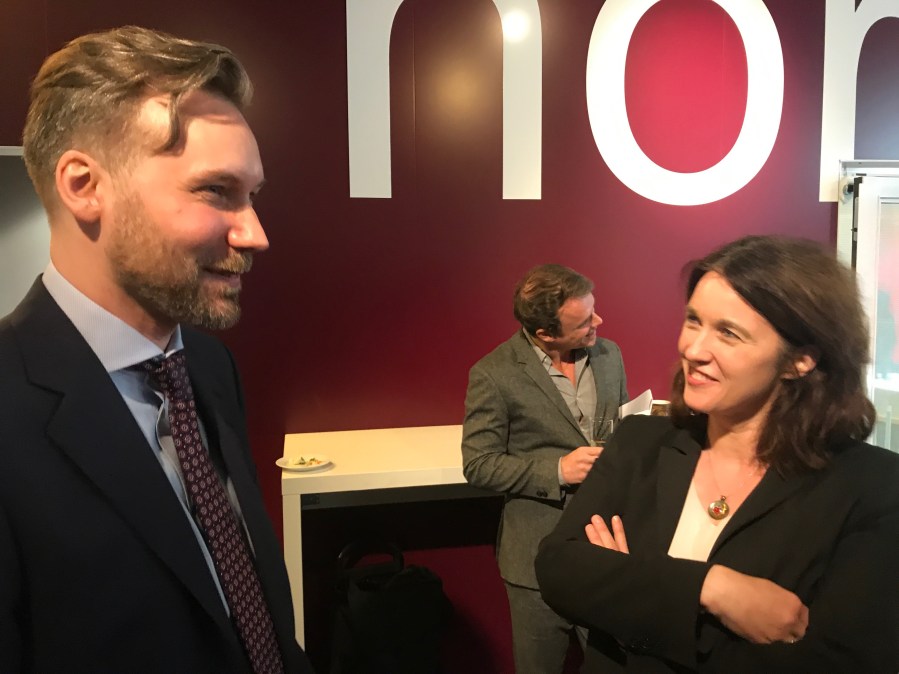
Fabian and his supervisors. From left to right: Erik Andersson, Eva Serlachius, Fabian Lenhard, Christian Rück, and David Mataix-Cols

Internet-delivered CBT for adolescents with OCD

The topic of Dr. Lenhard’s thesis is Internet-delivered Cognitive Behavior Therapy for Adolescents with Obsessive-Compulsive Disorder. You can find the thesis here: https://openarchive.ki.se/xmlui/handle/10616/45535

He has developed and tested the treatment in an open trial and a randomized controlled trial. Analyses on cost-effectiveness and predictors of outcome are underway.

IMG_8782
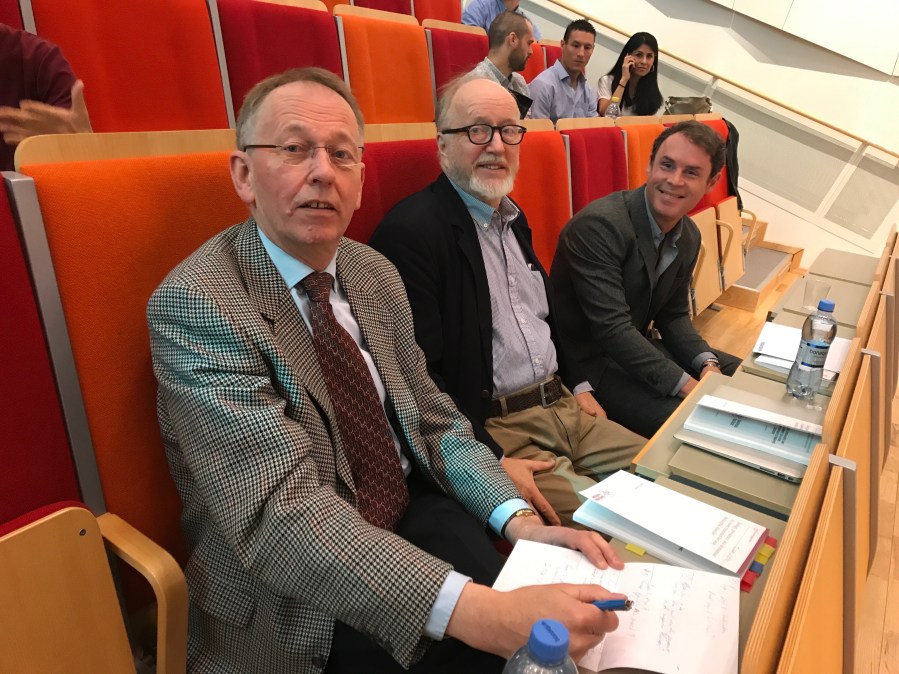
Fabian during his dissertation

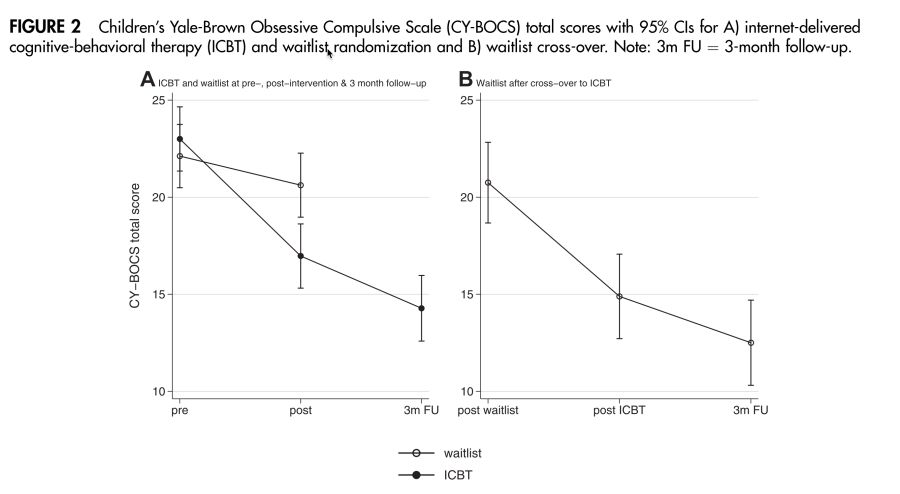
The results from both the open trial and the randomized trial indicate that internet-delivered CBT is an effective treatment for adolescents with OCD. The pre-post within-group effect sizes were large in both trials.

Link to the open trial: http://journals.plos.org/plosone/article?id=10.1371/journal.pone.0100773

Link to the randomized trial: http://www.jaacap.com/article/S0890-8567(16)31857-3/abstract

results-fabianpilot-png
Main results from the open trial.
results-fabianrct-png
Main results from the randomized trial

Professor John Piacentini: Optimizing Outcomes for Pediatric OCD

During his visit to Sweden, Professor Piacentini talked about research that aims to optimize outcomes in pediatric OCD. After receiving CBT, around 40 % of patients are in remission. While our treatments are effective for some, we still have a long way to go in order to treat every child and adolescent with OCD. Looking into specific mechanisms of change might be a way to optimize the current treatments.

IMG_9495
Professor Piacentini of UCLA

Some suggested mechanisms include expectations of recovery (which might be mediated by home work compliance), the ability of a therapist to push exposures, and affect labeling (”I feel scared”) rather than cognitive restructuring during exposure.

Professor Piacentini also discussed recent work on neurotransmitters that directly target the underlying brain correlates of OCD. For example, glutamate levels might serve as a possible moderator of treatment outcome. We are awaiting the results from trials that aim to change glutamate levels pre-treatment to enhance the outcomes of CBT.

Fabian Lenhard to defend thesis

Don’t miss our dearest Fabian Lenhard’s thesis

to be publicly defended Friday March 23. Details on where here: http://ki.se/cns/kalender/disputation-fabian-lenhard

Your can download his thesis here: https://openarchive.ki.se/xmlui/handle/10616/45535

IMG_2941

Rücklab visits professor Thalia Eley & EDIT lab at King’s college, London

Thalia Eley is professor of developmental behavioural genetics at SGDP centre, Institute of psychiatry, King’s College, London. She is also head of EDIT lab where the research focuses on the genetic and environmental effects on development and treatment of anxiety and depression amongst children.

IMG_0070Christian Rück, Thalia Eley, Evelyn Andersson, Julia Boberg & Chris
Rayner outside EDIT lab.

The EDIT lab team aim to explore why anxiety and depression disorders to some extend run in the family. On one hand they do twin studies to explore how much of variation in a phenotype, i.e. anxiety disorders, could be explained by genetic variance and on the other hand they perform studies on environmental factors to explore to what extent variation could be explained by nurture.

The BioPoRT project is a part of IAPT (Increasing access to psychological treatment) in the UK. The aim of  BioPoRT is to find predictors for treatment outcome, exploring both demographic variables as well as clinical and genetic factors. The latter is called therapygenetics, a term coined by Thalia Eley a few years ago.

Additionally the team do research on information processing.

We got a tour of the actual lab by the centre laboratory manager Bernard Freeman, where the whole genome sequencing (GWAS) is being executed. He showed us DNA extracted from salmon sperm and some very high tech machinery.

IMG_0077GWAS chip

IMG_0074Bernard Freeman with the double helix

The team also run the EDIT lab blog, a great source for novel research, interesting chronicles about bringing research into daily life hazzle (such as making your baby sleep) and the challenges one could face when working as a researcher.

Much of the work done at EDIT lab is related to the genetics work done at Rücklab, although our experience and knowledge in the field is a bit more scant. We look forward to future collaborations with the EDIT lab team.

Twitter:
@edit_lab
@thaliaeley

New PhD student at Rücklab: Oskar Flygare

RUNCLUB

Hi! My name is Oskar Flygare and I’m the latest addition to the group of PhD students at Rücklab. I have been working in the group for a year and am now a registered doctoral student with Christian Rück as main supervisor. Co-supervisors are David Mataix-Cols and Erik Andersson.

Oskar Flygare 2
Photo: Martin Hammar

The focus of my PhD thesis is the psychological treatment of OCD

Lina Lundström and I are the project managers of a randomised controlled trial that compares two types of internet-delivered cognitive behavioural therapy (ICBT) with face-to-face cognitive behavioural therapy for adults with OCD. The three treatments are:

  • Individual face-to-face CBT
  • Therapist-guided ICBT
  • Self-guided ICBT

120 individuals will be randomised to receive one of the treatments, i.e. 40 patients in each treatment arm. Treatment lasts for 14 weeks. We are recruiting participants and you can register here.

Our main goal is to evaluate the treatments on how well they provide symptom relief. In addition to this, I will also perform cost-effectiveness analyses on the three treatments, i.e. evaluate the benefits in relation to costs. My study plan also contains research on predictors and moderators of treatment outcome.

When I’m not doing a deep-dive in obscure research, I enjoy playing and listening to music. I have been playing the saxophone for 15 years and wanted to become a professional musician when I was a teenager. I came to my senses after three years of intense music studies in high school and switched to psychology.

Please get in touch if you want to exchange ideas or talk about interesting research! I am always curious, sometimes thoughtful and never indifferent.

Visit from Blake Dear of eCentreClinic, Australia

Dr. Blake F. Dear, Co-Director of the eCentreClinic in Australia, recently visited Karolinska Institutet to partake in the dissertation of Marianne Bonnert. While in Sweden, he also gave a talk on recent updates from the Australian eCentreClinic. They develop internet-delivered psychological treatments for common mental health and physical health conditions.

blakedear-firstpage.png

Continue reading “Visit from Blake Dear of eCentreClinic, Australia”

New meta-analysis in JAMA Psychiatry: Does d-cycoserine add to CBT?

D-cycloserine (DCS) is a partial NMDA agonist that facilitates fear extinction in animals and reduces return of fear when given before  extinction training. Despite several initial trials showing promising results in humans with anxiety disorders larger trials conducted within the past 5 years have produced mixed results. Our large trial in obsessive-compulsive disorder22 found no general effect of DCS but a significant interaction effect between DCS and antidepressant medication in a post hoc analysis;  antidepressants impaired treatment response in patients randomized to DCS but not in patients randomized to placebo.

We collected Individual participant data for 21 of 22 DCS trials, representing 1047 of 1073 eligible participants. When controlling for antidepressant use, participants receiving DCS showed greater improvement from pretreatment to posttreatment (mean difference, −3.62; 95% CI, −0.81 to −6.43; P = .01; d = −0.25) but not from pretreatment to midtreatment (mean difference, −1.66; 95% CI, −1.60 to 4.92; P = .32; d = −0.14) or from pretreatment to follow-up (mean difference, −2.98, 95% CI, −0.03 to 5.99; P = .05; d = −0.19). Only 1 significant moderator emerged: year of publication. Specifically, the more recent the study, the smaller the difference between DCS and placebo for pretreatment to follow-up improvement (b = 4.02; 95% CI, 0.59-7.45; P = .02, d = 0.26).

Conclusion: D-cycloserine is associated with a small augmentation effect on exposure-based therapy. The small size of the effect makes the clinical usefulness of DCS doubtful.


Mataix-Cols D, Fernández de la Cruz L, Monzani B, Rosenfield D, Andersson E, Pérez-Vigil A, Frumento P, de Kleine RA, Difede J, Dunlop BW, Farrell LJ, Geller D, Gerardi M, Guastella AJ, Hofmann SG, Hendriks G, Kushner MG, Lee FS, Lenze EJ, Levinson CA, McConnell H, Otto MW, Plag J, Pollack MH, Ressler KJ, Rodebaugh TL, Rothbaum BO, Scheeringa MS, Siewert-Siegmund A, Smits JAJ, Storch EA, Ströhle A, Tart CD, Tolin DF, van Minnen A, Waters AM, Weems CF, Wilhelm S, Wyka K, Davis M, Rück C, for the DCS Anxiety Consortium. D-Cycloserine Augmentation of Exposure-Based Cognitive Behavior Therapy for Anxiety, Obsessive-Compulsive, and Posttraumatic Stress DisordersA Systematic Review and Meta-analysisJAMA Psychiatry. Published online January 25, 2017. doi:10.1001/jamapsychiatry.2016.3955


Rücklab retreat 2017

rucklab-retreat-yasuragi-2017-1-av-8-3
From left to right: Josef Isung, Diana Radu Djurfeldt, Gustaf Brander, Volen Ivanov, James Crowley, Christian Rück, Lina Lundström, Oskar Flygare, Andrew Gentile, Evelyn Andersson, Julia Boberg, Mia Asplund and Jesper Enander.

It’s officially 2017, and the members of our group took to Yasuragi spa & bath outside Stockholm for this year’s retreat! Although some were more devoted to the Yasuragi-outfits than others (see above), everyone participated in the different activities with enthusiasm.

Continue reading “Rücklab retreat 2017”

Our 2016 in review

While the world around us may have had a perplexing year, we have in fact had a great year  when it comes to research.

Here is a review of some of what has happened in our group:

In our own humble opinion we have published some landmark studies:

A large randomised controlled trial of internet-based CBT for Body Dysmorphic Disorder, showing excellent results, published in the BMJ with Jesper Enander as lead author.

The largest study so far looking at risk factors around birth in Obsessive-Compulsive Disorder (OCD), published in JAMA Psychiatry with Gustaf Brander as lead and David Mataix-Cols as senior author. This study to me also shows the power of Swedish national registries.

The largest study so far looking at suicide in OCD and finding a much higher suicide rate than expected. Lead author is the brilliant Lorena Fernandez de la Cruz and this master piece out of the Mataix-Cols kitchen was published in Molecular Psychiatry. A similar study on tic disorders was also published in Biological Psychiatry.

Fabian Lenhard pioneered the first randomised study looking at ICBT for adolescents our neighbouring research group of Eva Serlachius. It was just published in JAACAP.

What else did we publish in 2016? Check https://rucklab.com/publications/

Genetics: major study started and harvest time for some

We have started a new big study trying to understand the complex genetical architecture of OCD and related disorders. You can read more about the study here. Good news is that data collection is going well (=lots of DNA) and that we in this year have built a lot of infrastructure to ensure a bright future for the project.

We are collecting samples at 8 centers in Sweden and this study is part of a larger Nordic effort called, yes, NORDiC! Read all about NORDiC here: http://www.crowleylab.org/nordic

nordic_logo

We have DNA from about 2500 individuals who have undergone internet-CBT for other anxiety disorders and depression. It is now harvest time for some of that, data is being analysed at different sites in Europe with Evelyn Andersson as the coordinating PhD student.

New people

Oskar Flygare has secured a CSTP-grant and will start a PhD early next year in tight collaboration with Lina Lundström.

Annelie Porsborn, Julia Boberg and Susanne Alm are our new front-line soldiers, all employed in the OCD genetics project.

Long-Long Chen and Mia Asplund are both hang-arounds likely to go into a PhD next year on poo bacteria, Deep Brain Stimulation and skin-picking and hair-pulling. What a mix!

*********

A special shout out to Volen Ivanov who has tirelessly educated hundreds of people in the social services on Hoarding Disorder!

We wish you all a great 2017! Thank YOU to all our collaborators, research subjects, readers and funders!