End of a trial

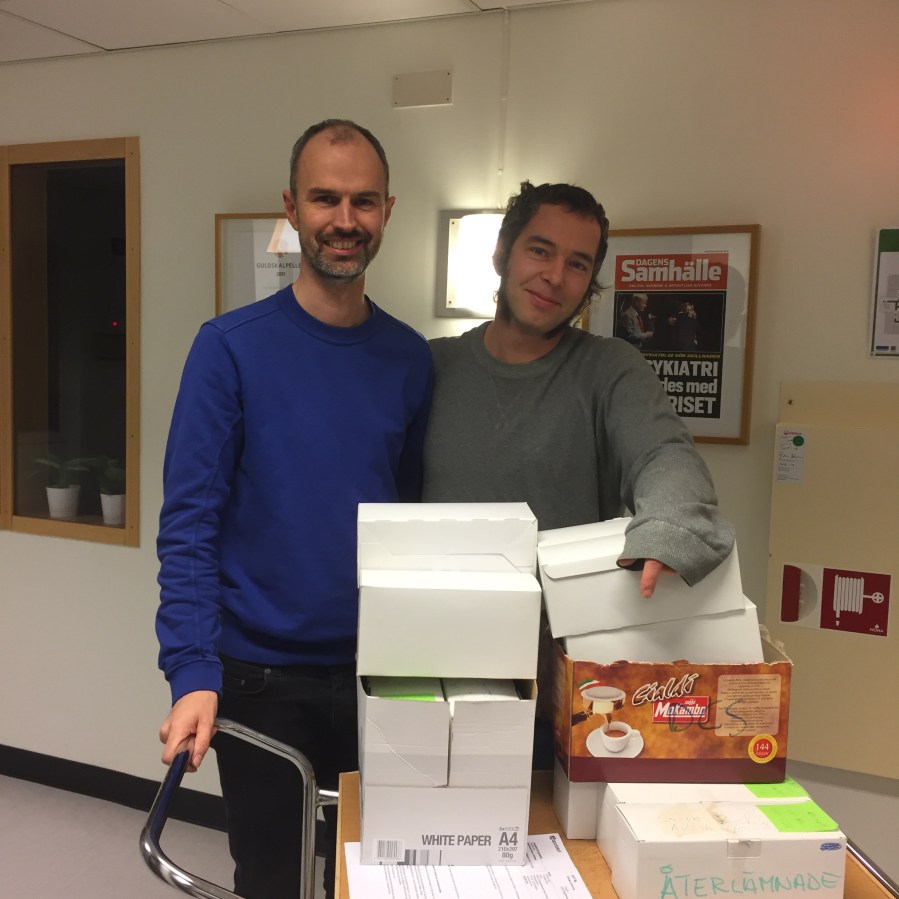
Last week we had the honor of being visited by a lab alumni, Erik Andersson. It was time to close and archive our trial where we tested the efficacy of d-cycloserine as an add on to CBT for OCD. You can read the results of that trial here in Jama Psychiatry. Now all the follow-ups are done and it was time to close the trial, send the end-of-trial forms to the Swedish Medical Products agency and to return the drugs to the pharmacy.

It was really a trip down memory lane, remembering how we got APL Pharmaceuticals to produce both the drug and placebo, the massive workload for all approvals and the task of actually get such a big trial done. Broke the bank and got us a few gray hairs. Good news is that the treatment with internet-based CBT in the trial was very helpful for the participants.

img_0664
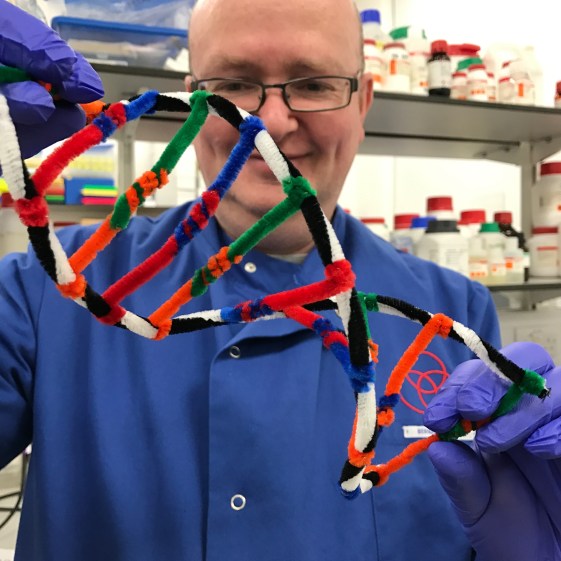
Erik saying a a few last words to the capsule before going to destruction.
img_0672
Still smiling after all these years.

Vi söker en forskningssjuksköterska

Vi söker en tredje forskningssjuksköterska i vårt stora genetikprojekt. Vill du vara med i världens största studie för att förstå tvångssyndromets genetiska bakgrund? Vi vill bli en till i vårt team! Läs mer på https://ki.mynetworkglobal.com/se/what:job/jobID:123067/where:4/

Are differences in cardiac autonomic function (heart rate and blood pressure) associated with later psychiatric disorders? New study in JAMA Psychiatry

In this longitudinal cohort study of more than 1 million men in Sweden, a higher resting heart rate in late adolescence was associated with an increased risk for subsequent obsessive-compulsive disorder, schizophrenia, and anxiety disorders, whereas a lower resting heart rate in late adolescence was associated with an increased risk for substance use disorders and violent criminality. Similar associations were observed with systolic/diastolic blood pressure.

Read the full paper here. 

Latvala A, Kuja-Halkola R, Rück C, D’Onofrio BM, Jernberg T, Almqvist C, Mataix-Cols D, Larsson H, Lichtenstein P. Association of Resting Heart Rate and Blood Pressure in Late Adolescence With Subsequent Mental DisordersA Longitudinal Population Study of More Than 1 Million Men in SwedenJAMA Psychiatry. Published online October 26, 2016. doi:10.1001/jamapsychiatry.2016.2717

New publication in JAMA Psychiatry: What are the risk factors at birth for OCD?

A new study on risk factors at birth associated with developing OCD later has just been published in JAMA Psychiatry. Over 2 million children were followed and we studied perinatal data from the Swedish Medical Birth Register and included maternal smoking during pregnancy, labor presentation, obstetric delivery, gestational age (for preterm birth), birth weight, birth weight in relation to gestational age, 5-minute Apgar score, and head circumference. A range of perinatal risk factors were associated with a higher risk for OCD independent of shared familial confounders, suggesting that perinatal risk factors may be in the causal pathway to OCD.

Read the full story here.

Brander G, Rydell M, Kuja-Halkola R,  Fernández de la Cruz L, Lichtenstein P, Serlachius E, Rück C, Almqvist C, D’Onofrio BM, Larsson H, Mataix-Cols D. Association of Perinatal Risk Factors With Obsessive-Compulsive Disorder: A Population-Based Birth Cohort, Sibling Control Study. JAMA Psychiatry. Published online October 05, 2016. doi:10.1001/jamapsychiatry.2016.2095


IMG_0944
Proud first author Gustaf Brander

Karolinska Institutet Discovers lecture

skarmklipphuvud
The Karolinska Institutet Discovers seminars present excellent ongoing research by scientists at KI.


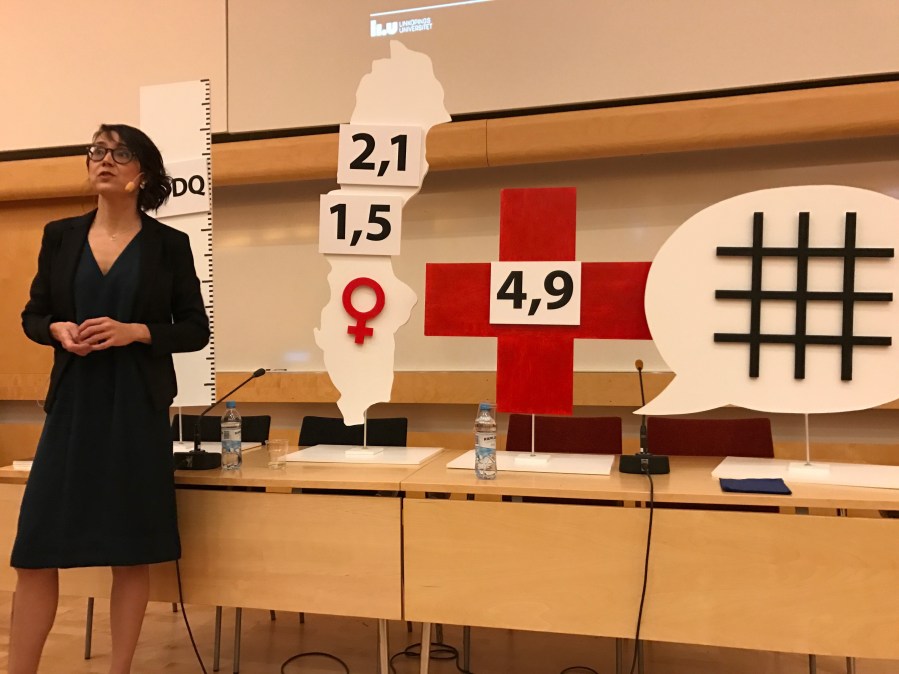
Onsdag 28 september presenterar universitetslektor Christian Rück och doktorand Jesper Enander vid institutionen för klinisk neurovetenskap, forskningen bakom sin publikation:

Therapist guided internet based cognitive behavioural therapy for body dysmorphic disorder: single blind randomised controlled trial,
BMJ (2016) online 2 februari.

Enander JAndersson EMataix-Cols D, Lichtenstein L, Alström K, Andersson G, Ljótsson B and Rück C.

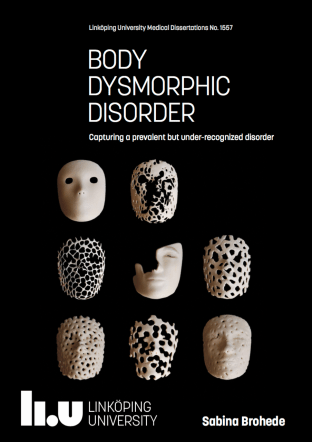
Läs webbnyheten: Starkt missnöje med utseendet kan botas med internet-KBT

Professor Anna Karlsson vid institutionen för laboratoriemedicin kommer att vara moderator för seminariet.

Kaffe och smörgås serveras mellan 11.30 och 12.00.


Going to ECNP in Vienna?

2016-vienna-banner-large

Christian Rück is speaking Monday Sept 19 at 0900-1040 in the “Obsessive-compulsive disorder: clinical heterogeneity and innovative treatment approaches”-symposium. The title of his presentation is “How can psychological interventions for OCD patients be more accessible and outcomes improved?” Welcome.

Rücklab at EABCT 2016

EABCT, or European Association for Behaviourial and Cognitive Therapies, is hosting their 46th conference this weekend. The conference takes place at the Waterfront Congress Centre in Stockholm, Sweden. Representatives from our team will of course be present at the congress, see you there!

Thursday

Symposium

New Developments in Hoarding Disorder: Heritability, Developmental Course, Risk Factors, and Treatment Approaches

Volen Ivanov will present findings from his research and join the discussion in this symposium, which is hosted by Lorena Fernandez de la Cruz in our close research network. David Mataix-Cols will participate as a discussant at this symposium.

Friday

Panel Discussion

Vård av Psykisk Ohälsa i Sverige – Aktuell Situation och Framtida Utmaningar

Group Leader Christian Rück participates in this discussion, which will be held in Swedish.

Saturday

Poster

Lina Lundström and Oskar Flygare will present their poster at Saturday’s poster session. Come talk to them and ask critical questions about their study protocol!

Symposium

Recent Advances on Cognitive-Behavioural Mechanisms and Treatment of Body Dysmorphic Disorder

Jesper Enander from our team will join the panel discussion at this symposium, together with David Mataix-Cols in our near network.

Increased risk of suicide in patients with obsessive-compulsive disorder

title Fernández de la Cruz et al

In a recent study published in Molecular Psychiatry, members of our group and colleagues at Karolinska Institutet have looked at suicide in obsessive-compulsive disorder (OCD). The study compared rates of suicide among 36 788 patients with OCD and matched controls without an OCD diagnosis.

The risk of dying by suicide was found to be about 10 times higher in patients with OCD (OR = 9.83 (95% CI, 8.72-11.08). Patients with OCD were also about 5 times more likely to attempt suicide (OR = 5.45 (05% CI, 5.24-5.67). The risk was marginally attenuated in women compared to men.

Lorena Fernández de la Cruz and her co-authors also note that the increased risk of death by suicide

“… remained substantial after adjusting for different groups of psychiatric comorbidities that are already known to be associated with suicide. In fact, 43% of the individuals from the OCD cohort who died by suicide did not have any other recorded psychiatric comorbidity.” (p. 4)

They argue that OCD is associated with an increased risk of death by suicide in its own right. The main predictor for dying by suicide was a previous suicide attempt.

The message for clinicians is clear:

“OCD should be added to the list of psychiatric disorders that are known to increase the risk of suicide in their own right. Suicide risk needs to be carefully monitored in these patients, particularly in those who have previously attempted suicide.” (p. 6)

The paper is freely available here.