
It has been suggested that SSRIs may cause pancreatitis. The Upper Gastrointestinal Research Group at KI with Rickard Ljung as first author (with Christian Rück as a co-author) just published on SSRIs in relation to risk of acute pancreatitis in a population-based case-control study of people aged 40 to 84 years in Sweden. Logistic regression with adjustment for potential confounding factors was used to calculate odds ratios (ORs) with 95% confidence intervals (CIs). The OR for acute pancreatitis, adjusted for matching variables, was increased among present users of SSRI (OR, 1.5; 95% CI, 1.4-1.7), indicating increased risk. Intrestingly, after adjusting for diseases or medications related to alcohol overconsumption, tobacco smoking, diabetes, ischemic heart disease, obesity, and severe pain together with educational level and marital status, the corresponding OR was 1.1 (95% CI, 1.0-1.3). After adjusting for the number of distinct medications, a proxy for comorbidity, the corresponding OR was 1.0 (95% CI, 0.9-1.1). The OR for antidepressant use other than SSRI showed a similar pattern. In conclusion, no increased risk of acute pancreatitis remained among users of SSRI after adjusting for confounding factors.
Enjoy your Easter holidays by listening to our first podcast episode! Professor David Mataix-Cols from King’s College discusses one our favourite topics, hoarding, with us. Listen to it here!
More research is needed on the OCD spectrum disorders. To reward students who are interested in this area the Rück Research Lab is giving out an award for best thesis written in the field. At the moment only Swedish students are eligible for the award.
Read more about the reward and how to nominate by clicking here
Busy writing grant applications on a friday afternoon?
A Rucklab Spotify playlist to go with that: Grant application music
Läs mer och anmäl dig på http://ocdstudien.se/
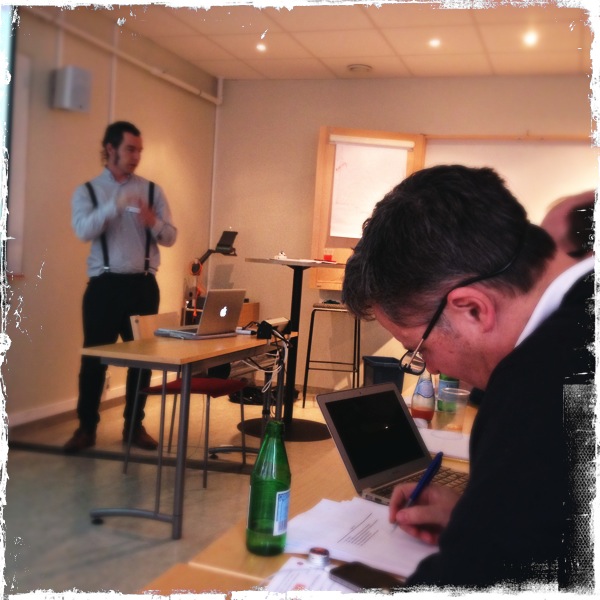
Erik Andersson today passed the half-way milestone of his Ph D project on how to enhance CBT in OCD. The review board consisted of Professors Bo Melin, Bo Runeson and Mats Fredriksson. As you can see in the picture, they were busy taking notes.

The Swedish Association for Behavioral Therapy (Beteendeterapeutiska föreningen) honored Jesper Enander and Per Andrén the award for the best Master Thesis in 2011! And the best master thesis resulted in this paper out of our lab. Congrats Jesper and Per!

