PhD student and psychologist wanted for Maria’s intensive treatment for PTSD project

Want to work at the forefront of PTSD research? Look here!

Maria Bragesjö and her team are announcing two exciting positions for her project on intensive treatment for Post-Traumatic Stress Disorder (PTSD).

  1. A PhD student that will hold a project leadership position in a clinical trial of intensive exposure-based treatment for post-traumatic stress disorder. You will play a central role in protocol development, regulatory processes, study execution, and analysis, comparing intensive prolonged exposure with the gold standard individual, weekly treatment.
    Read more and apply here.
  2. A Lic. psychologist or PTP psychologist for a project position at the Trauma Program, Psychiatry Southwest. Tasks include assessment of PTSD, physically and digitally as part of the research project.
    Read more and apply here.
More funding for PTSD research

We are very happy to announce that Maria has received two additional grants for her work on innovating treatment for PTSD!

Two weeks ago, we reported that Maria got 2.4 million SEK from CIMED.

Since then, she has received two new grants:

Firstly, she received 3 million from FORTE for her upcoming RCT on intensive exposure-based treatment for PTSD. You can read more about the project here. In short, it is about PTSD treatment during five intensive days instead of weekly treatment during three to five months.

In addition, she has received the ALF grant for clinical postdoc. The support consists of 500 000 SEK per year for 2 years with the possibility of extension for another 2 years.

These contributions will benefit patients through new high quality forms of trauma treatment.

Good job Maria!

Myrto’s dissertation

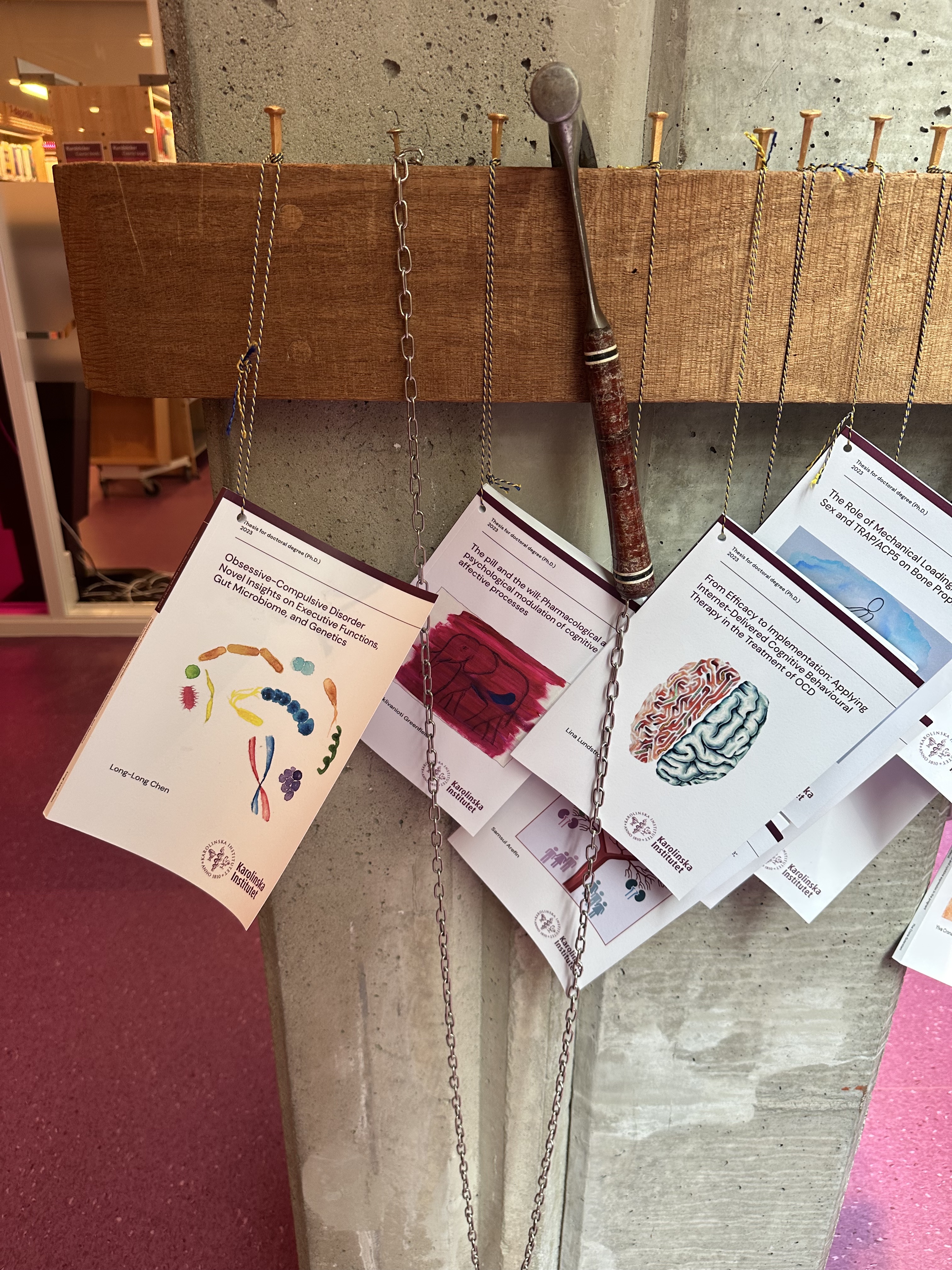
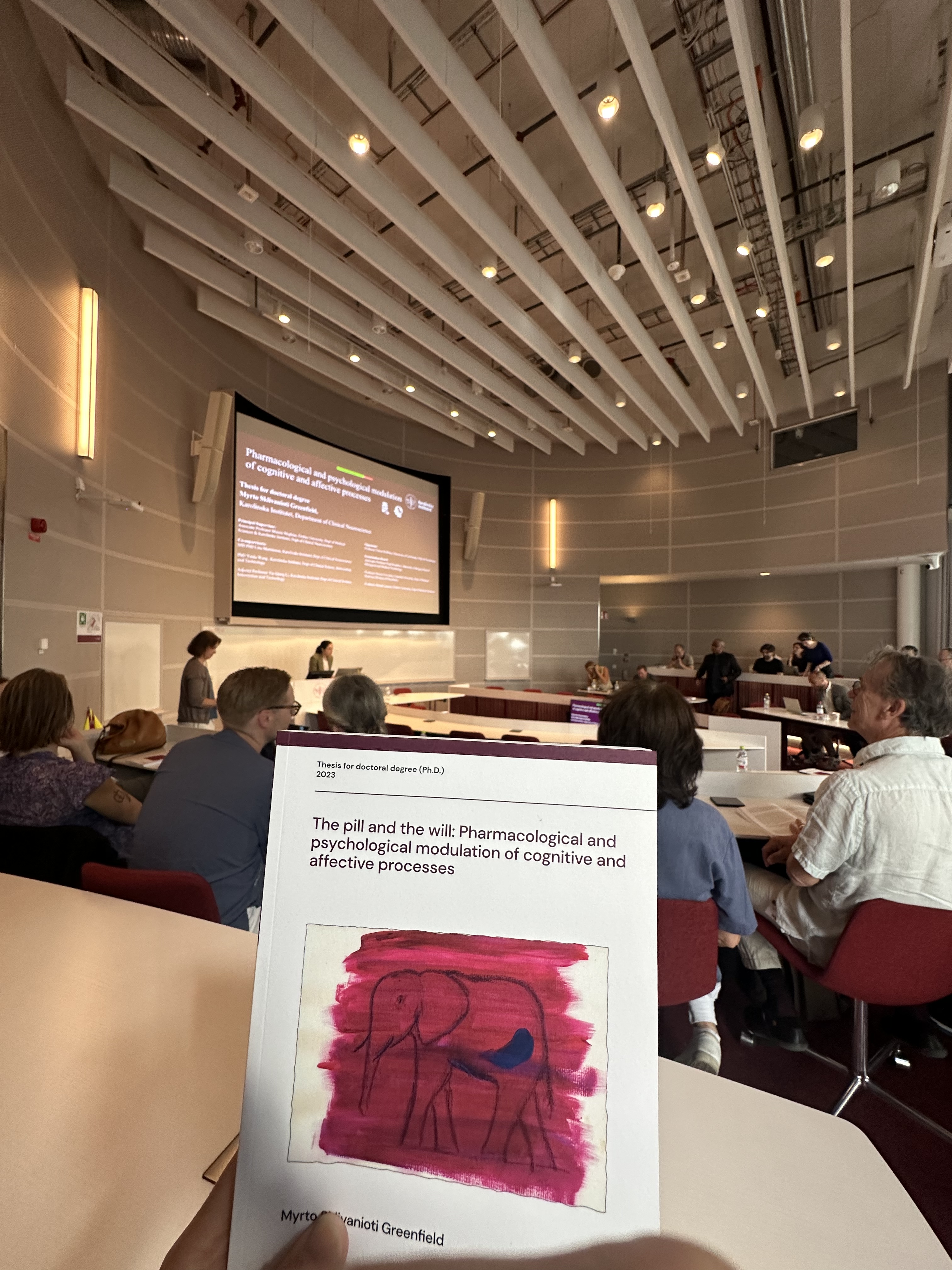
Last Friday, we saw Myrto successfully defend her thesis “The pill and the will : pharmacological and psychological modulation of cognitive and affective processes”.

The thesis investigates pharmacological and psychological approaches to emotion regulation. In brief, it involves:

  1. How SSRI affect induction and regulation of fear and disgust in healthy subjects.
  2. The effect of stimulant medication on the induction and regulation of negative emotions in healthy controls and patients with ADHD.
  3. The difference between pharmacological emotion regulation (SSRI and CS) and psychological emotion regulation and emotion regulation with skills training/exposure.

The opponent was Trevor Robins, Professor of Cognitive Neuroscience at the University of Cambridge. Main supervisor was Mussie Msghina, and co-supervisors were Yanlu Wang, Tie-Qiang Li & Lina Martinsson.

Well done and congratulations, Myrto!

Grant money to Maria

Congratulations to PTSD research, Maria has received a 2.4 million SEK CIMED project grant! 🎉

Maria’s study evaluates intensive treatment for post-traumatic stress disorder (PTSD), an exposure-based treatment that is given for five days instead of the regular treatment time of three to five months. Preliminary research shows intensive trauma focused treatment to be as effective as when the treatment is delivered by weekly sessions, but with the advantage that the recovery rate is faster and the proportion of patients who drop out decreases.

Read more about the project here.

First article on Braining

The first article on Braining is out! By Rücklab group members Åsa, Lina and colleagues.

The study has analyzed data from all participants in the Braining project at Psykiatri Sydväst and compared it with regular patients at the clinic as well as records for a smaller cohort of participants. The study describes the characteristics of the participants in the project and concludes that the Braining intervention reached a wide age range and patients with a wide and representative diagnostic panorama. This suggests that Braining could be a promising and safe method for implementing physical activity in a psychiatric patient population

Link to the article here. 🧠🏋️💪

What is Braining?

Braining – physical activity as additional treatment in psychiatry – is an initiative by Psykiatri Sydväst. The intervention consists of group sessions of physical activity where patients and staff train together at the psychiatric clinic. The aim is to reduce symptoms of depression and anxiety and improve the quality of life and physical health of patients. The hope is that Braining will reduce stress among the staff and contribute to an improved work environment.

Diana on Epstein’s podcast

In Louise Epstein and Ola Hermanson’s podcast “I hjärnan på Louise Epstein”, Diana is interviewed about obsessive-compulsive disorder (OCD).

She talks about what we know about what happens in the brain of patients with OCD, about diagnostics and the psychological treatment: exposure with ritual prevention. The treatment involves finding the obsessions and refraining from doing what feels right in the moment but in the long run upholds the problems. Author Amanda Romare also participates in the podcast and talks about her own experiences with OCD and CBT treatment.

Diana also talks about her research on Deep brain stimulation for patients with severe OCD who have not responded to various forms of psychotherapy and/or medication.

Episode (in Swedish) here.

Come work at Rücklab!

We are looking for a postdoc in precision psychiatry for Christian Rück’s research group and John Wallert’s team.

The role includes work within three very relevant research projects: 1) The Compulsory mental care project, 2) The saving lives project and 3) a project that aims to identify predictors of short-term and long-term outcomes after CBT treatment.

Read more and submit your application here.

We look forward to receiving your application!

Long Long Chen’s dissertation

Last Friday, Long Long Chen successfully defended his thesis Obsessive-Compulsive Disorder – Novel Insights on Executive Functions, Gut Microbiome, and genetics.

Long Long is a specialist in psychiatry, senior specialist at the OCD program at Psykiatri Sydväst, as well as research colleague in the Rück group.

The thesis underlines the fact that Obsessive-Compulsive disorder (OCD) is complex and that it is difficult to identify biological markers as an explanatory model. However, genetic research towards patients with severe and treatment-resistant OCD is promising.

Congratulations, Long Long! 🎺🎺🎺

Christian in Idébyrån

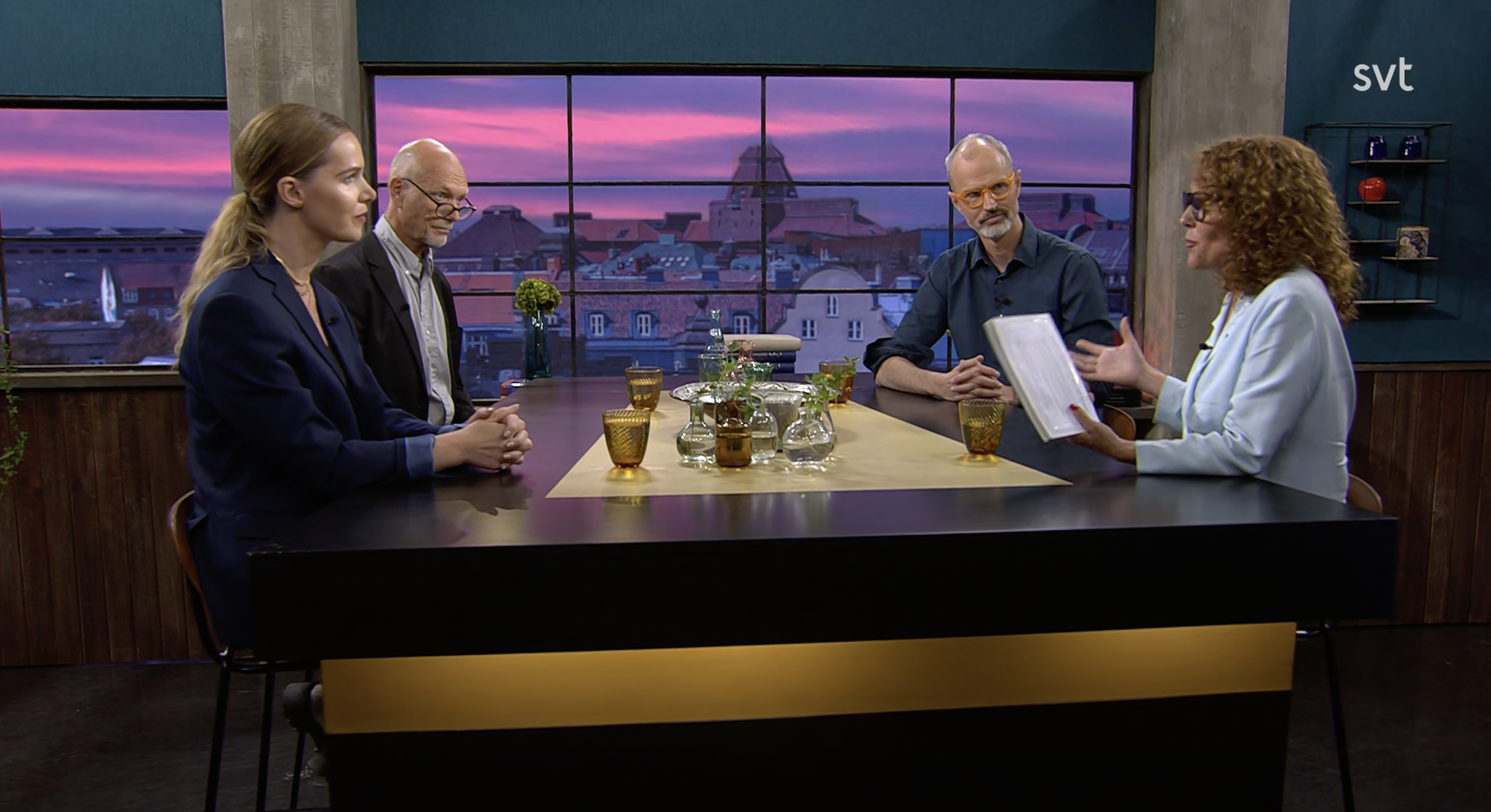
In a recent episode of SVT’s Idébyrån, Christian participates on the theme “Why do you feel like shit?”. The subject perhaps raises more questions than answers.

Are most people unhappy or happy today? Or something in between? Is a happiness project or adventure project needed, or is it enough to eat hot dogs at a football game and be satisfied?

Joining the studio are Victoria Larm, author, Bengt Brülde, professor of practical philosophy and presenter Anna Lindman.