
Today we came out with a paper that combines neurosurgical patients from Sao Paulo, Boston and Stockholm and we studied symptom dimensions (what type of OCD it was) and clinical outcome after limbic system surgery for treatment-refractory patients. Patients with hoarding symptoms had a worse response to treatment (mean Y-BOCS decrease of 22.7% ± 25.9% vs 41.6% ± 32.2%, respectively; p = 0.006). Click the link below for the full story:
Category: News
Evelyn Andersson a week ago passed her half time seminar with flying coulors. We wish to thank the board: Prof Jerker Hetta, Prof Bo Melin and Assoc Prof Patrik Magnusson. The PhD is on genetics and CBT.

Volen Ivanov is ansvering questions for Sydsvenskan on Hoarding (överdrivet samlande in Swedish). Check it out: http://www.sydsvenskan.se/inpa-livet/chatta-om-overdrivet-samlande/

 Evelyn Andersson will have her half-time seminar for her PhD (“From DNA to Therapy – Predictors, Candidate Genes and a Gene x Environment study with national register data”) on March 28 at 2 pm at Askö, M57, Karolinska Huddinge.
Dysmorfofobi, på engelska kallat Body Dysmorphic Disorder (BDD), är ett tillstånd där man är så missnöjd med specifika delar av sitt utseende att det blir ett handikapp. Ibland kallas det också inbillad fulhet och det man då menar med “inbillad” är att den defekt som man själv ser inte kan uppfattas av andra. BDD är inte samma sak som att känna sig lite oattraktiv eller tjock, här är man istället upptagen av att t ex ens näsa är så groteskt ful att man inte kan visa sig för andra. Att andra säger till en att man ser normal ut brukar inte hjälpa. Ofta förekommer ritualer för att dölja sin “defekt” eller att man speglar länge sig för att se om man ser OK ut.
BDD är vanligt, ca 1-2 % av befolkningen lider av sjukdomen.
Vi har startat en behandlingstudie där vuxna i hela Sverige kan delta. Studien pågår just nu och anmälan är stängd. KBT är annars rekommenderad behandling och du kan söka till din psykiatriska öppenvårdsmottagning för att få hjälp.
Idag talade bl a Volen Ivanov, Christian Rück och David Mataix-Cols som sjukligt samlande (hoarding) i P1:s Kropp och Själ som du kan lyssna på här: http://sverigesradio.se/sida/avsnitt/297465?programid=83
Även HSB:s psykosociala enhet med Sylvia Mårtensson och Christina Ahlström berättar om deras fantastiska verksamhet i programmet.
We are happy announce that the Swedish Society of Medicine (Stiftelsen Söderström-Königska sjukhemmet) has given us two grants of 200000 SEK each for internetbased-CBT in BDD (dysmorphofobia) and DBS in OCD (with Diana Djurfeldt as PI), respectively.
Christian Rück medverkade idag i SVT Gomorron Svrige om Quick-fallet och psykiatrin: http://www.svtplay.se/klipp/1630468/ny-dokumentar-om-tomas-quick-vacker-fragor?tab=klipp&sida=2 . 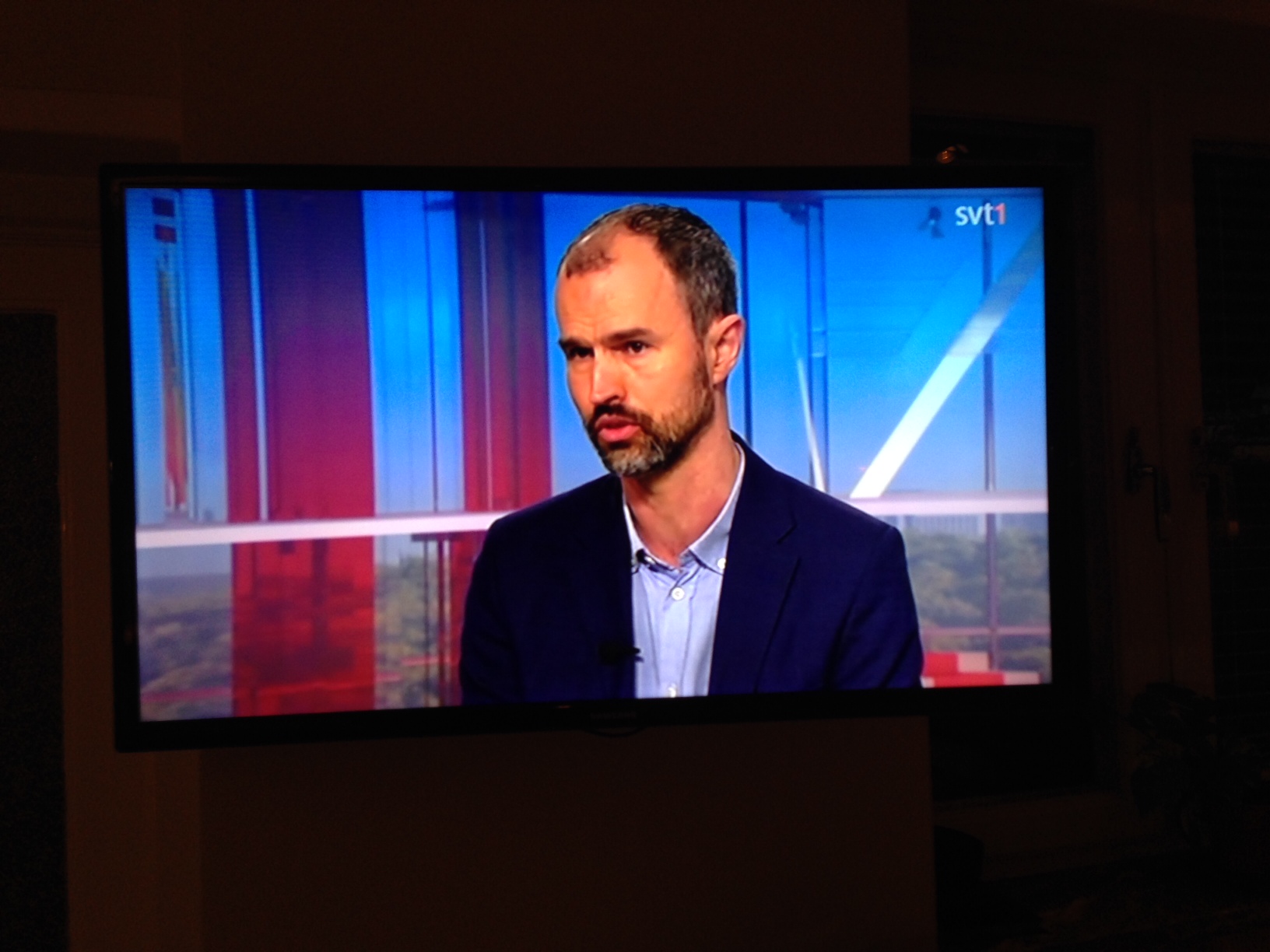 Länk till Stockholm Psychiatry Lectures 29/1 om fallet: https://www.facebook.com/events/466934116758370/?ref=5
In a collaboration between Karolinska Institutet and Uppsala University, we studied three genetic polymorphisms in the monoamine system (5-HTTLPR, COMT val158met, TPH2 G-703T) and outcome of cognitive behavioral therapy (CBT) in social anxiety disorder (SAD) in over 300 patients. This is one of the largest genetic studies ever made on adults with SAD and CBT outcome. Monoamine-related gene polymorphisms have previously been tied to amygdala reactivity, treatment efficacy and fear extinction processes and was hereby reasoned to influence the outcome of CBT. However, none of our polymorphisms were associated with CBT outcome at long term follow-up. In our subsamples we found contradictory significant effects immediately after treatment. Even though CBT is an effective treatment of anxiety disorders, many patients (25-50%) do not respond sufficiently. Therefore, there is a need to improve not only the treatments but also how patients are selected for treatment in order to optimize the efficacy. Therapygenetics attempts to explore the relationship between genetic variation and psychological treatment response. Ultimately, such knowledge could be used to tailor therapies based on patients’ biological markers, which in turn, could improve therapeutic outcome.
In an almost desperate attempt to be percieved as cool and hip we are now officially on Instagram. @christianruck

