One of the most brilliant reserachers we know of is coming to Stockholm soon, don’t miss: 
Category: News
David Nutt’s Stockholm Psychiatry Lecture on the safety and harm of drugs and why psychiatry should wake up and study these compounds: http://www.youtube.com/watch?v=mDo09IBVHZw&feature=youtu.be …
A new study is out with lead author Erik Hedman. If you wonder why we call him “pekmaskinen” (Swedish for “the manuscript machine”, check Pubmed.
The study is the first to investigate mechanisms of improvement in Internet-based cognitive behaviour therapy (CBT) for severe health anxiety. We assessed mediators as well as outcome on a weekly basis throughout treatment among participants receiving Internet-based CBT in a randomized controlled trial. The results showed that reduced perceived risk of disease, less attention to bodily symptoms, and reduced intolerance of uncertainty significantly mediated improvement in health anxiety.The findings have theoretical and clinical implications as they indicate processes that may be causally related to the improvements observed after CBT for health anxiety.
Click the link for the full text:

This years round of Stockholm County Council grants (ALF PPG) was a good one for us:
Our BDD project was awarded with 300000 + 250000 SEK ( 2 years) and the Deep Brain Stimulation project headed by Diana Radu Djurfeldt was awarded 200000 + 200000 SEK.
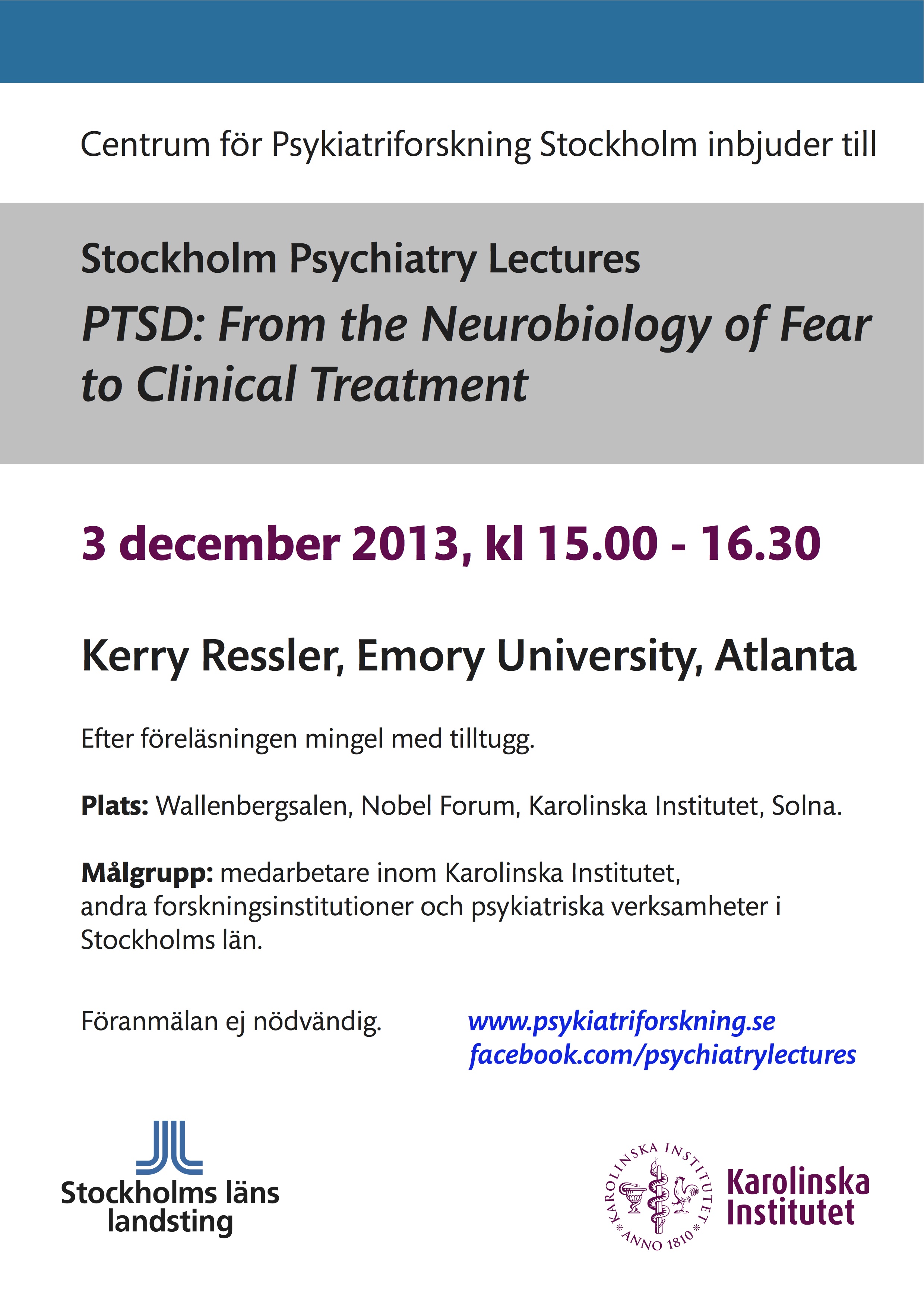
On December 2nd: a workshop by Prof Kerry Ressler, Emory University on the neurobiology of fear learning and extinction, including
1) Current psychotherapy and pharmacology treatment approaches to OCD
2) Translational human research on extinction processes to understanding CBT
3) Mouse behavioral/genetic research approaches to OCD and Extinction
4) Molecular neurobiology of extinction and future directions to enhancing treatment and CBT
More info and how to register at: https://www.facebook.com/events/571586239534400/
We had two great nominations and choosing the winner was hard, in fact so hard that we had to find an additional extrernal reviewer to make the descision.
The winners are:
Gustaf Brander and Per Söderholm, graduates of Stockholm University for their Master Thesis: “Tilläggsbehandling som återfallsprevention efter internetadministrerad KBT vid tvångssyndrom- en randomiserad kontrollerad studie” (Adding a booster to internetbased CBT – a RCT). Supervisor: Jan Bergström.
The runners-up:
Henrik Engelmark and Niclas Stagnér, graduates of Uppsala University. Master Thesis: “Exponering med responsprevention för tvångssyndrom i ett kliniskt sammanhang – en behandlingsutvärdering på OCD-Centret i Uppsala”. (ERP for OCD – evaluated in a clinical setting”. Supervisors: Timo Hursti and Sandra Bates.
We wish to thank our review board (David Mataix-Cols, Tord Ivarsson and Susanne Bejerot).

The two nominations for our Student Award have been reviewed by Professors Mataix-Cols and Ivarsson and the result is: 1-1! In hindsight maybe not such a clever idea to have an even number of reviewers… Anyway, the nominations are now reviewed by a third reviewer and the final result will be presented tomorrow.
2 strong nominations for our student award are in and currently the external reviewers are evaluating the proposals. The reviewers are Professor David Mataix-Cols (just moved from KCL to KI) and Assoc Professor Tord Ivarsson, University of Gothenburg and R-BUP Öst og Sör. The nominees are:
- Gustaf Brander and Per Söderholm, graduates of Stockholm University.
- Henrik Engelmark and Niclas Stagnér, graduates of Uppsala University.
The winners will be presented on this webpage in due time.


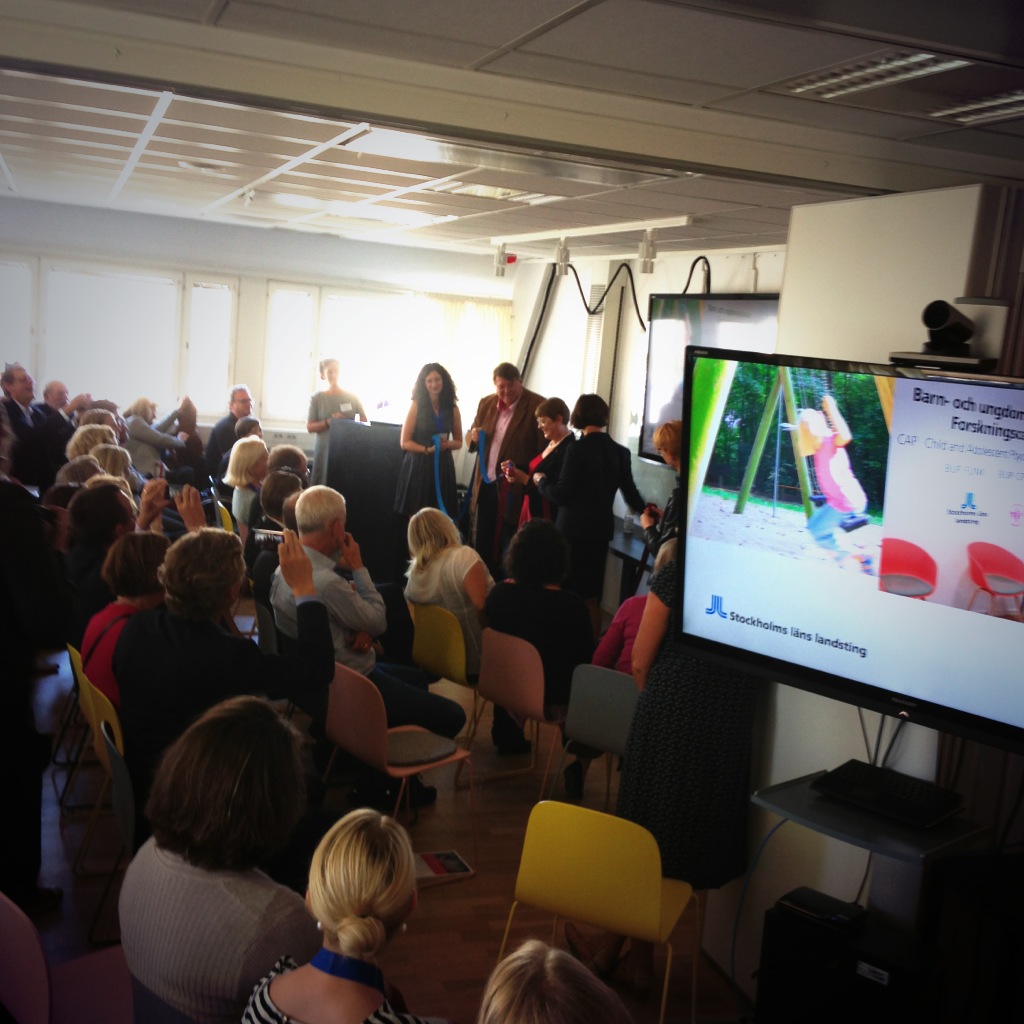
Today the Child- and Adolescent Psychiatry (CAP) Research Center in Stockholm at Gävlegatan 22 had its grand opening. It is so nice to see the rise of CAP research at Karolinska Institutet!
Volen Ivanov och Christian Rück skriver i veckans nummer av Läkartidningen om patologisk samlande (hoarding). Att samla på saker är ett allmänmänskligt fenomen; studier har visat att 70 procent av barn och 30 procent av vuxna har en samling.
Men ibland kan samlandet ta sig orimliga proportioner och gå över gränsen till det sjukliga. Patologiskt samlande är svårigheter att göra sig av med saker på grund av ett upplevt behov att behålla dem och obehag förknippat med att göra sig av med dem. Symtomen resulterar i att hemmet blir stökigt och överhopat. Tillståndet är svårbehandlat, men vissa lovande resultat finns med läkemedelsbehandling och psykologisk behandling. Troligtvis krävs samordnade insatser från sjukvård, socialtjänst, bostadsbolag etc. Läs mer här.