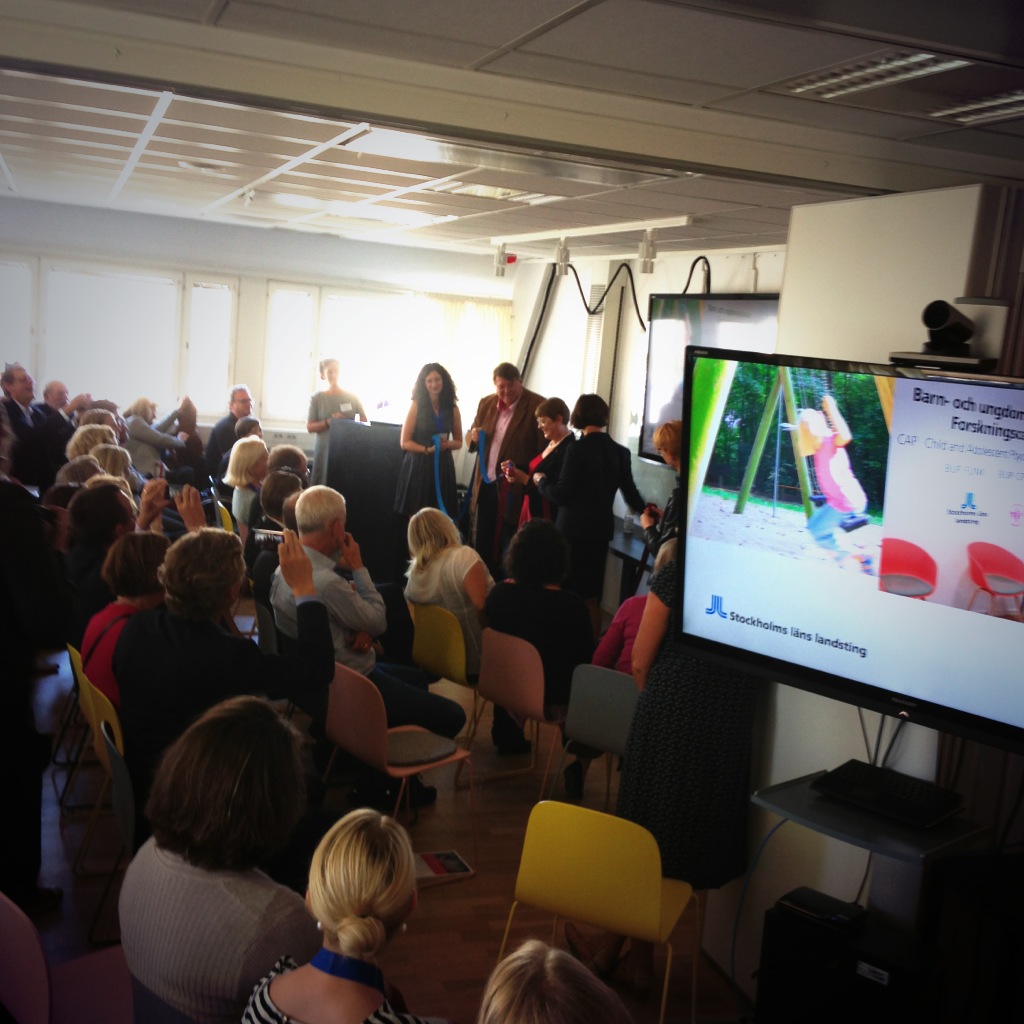

Today the Child- and Adolescent Psychiatry (CAP) Research Center in Stockholm at Gävlegatan 22 had its grand opening. It is so nice to see the rise of CAP research at Karolinska Institutet!
Rücklab – Psychiatry research at Karolinska Institutet
Research on OCD and related disorders, precision psychiatry, psychiatric genetics, suicide prevention, stress and PTSD

Today the Child- and Adolescent Psychiatry (CAP) Research Center in Stockholm at Gävlegatan 22 had its grand opening. It is so nice to see the rise of CAP research at Karolinska Institutet!
Volen Ivanov och Christian Rück skriver i veckans nummer av Läkartidningen om patologisk samlande (hoarding). Att samla på saker är ett allmänmänskligt fenomen; studier har visat att 70 procent av barn och 30 procent av vuxna har en samling.
Men ibland kan samlandet ta sig orimliga proportioner och gå över gränsen till det sjukliga. Patologiskt samlande är svårigheter att göra sig av med saker på grund av ett upplevt behov att behålla dem och obehag förknippat med att göra sig av med dem. Symtomen resulterar i att hemmet blir stökigt och överhopat. Tillståndet är svårbehandlat, men vissa lovande resultat finns med läkemedelsbehandling och psykologisk behandling. Troligtvis krävs samordnade insatser från sjukvård, socialtjänst, bostadsbolag etc. Läs mer här.

Läs mer och anmäl dig på: http://internetpsykiatri.se/ocd
The first study to present the prevalence comorbidity and heritability of hoarding in adolescents just came out in PLoS ONE. In this study, we report that 2% of Swedish 15-year olds report symptoms of hoarding including distress and/or impairment. This is quite surprising given that hoarding is considered to be a problem most common among the elderly. We also found that hoarding seldom co-occurs with OCD which supports the status of Hoarding Disorder, which has been separated from Obsessive-Compulsive Disorder in the new DSM-5. Finally, using the twin design we were able to conclude that hoarding symptoms are heritable during adolescence but only in boys. In girls, the environment, both the shared, and non-shared between twins accounted for the variability in hoarding symptoms.
Our research group has been collaborating with the Swedish Twin Registry and Professor David Mataix-Cols on this paper and this partnership is only at its start. Keep following us to see what the incredible Swedish Twin data will tell us in the future!
http://www.plosone.org/article/info%3Adoi%2F10.1371%2Fjournal.pone.0069140
Ivanov VZ, Mataix-Cols D, Serlachius E, Lichtenstein P, Anckarsäter H, Chang Z, Hellner Gumpert C, Lundström S, Långström N, Rück C. (2013) Prevalence, Comorbidity and Heritability of Hoarding Symptoms in Adolescence: A Population Based Twin Study in 15-Year Olds. PLoS ONE 8(7): e69140.
In a new study that is just out in the Journal of Consulting and Clinical Psychology, researchers led by Brjánn Ljótsson studied how different possible mechanisms of CBT contributed to its efficacy in Irritable Bowel Syndrome. We used parallel process growth mediational analyses (!) to study weekly ratings of gastrointestinal symptom-specific anxiety (GSA) and stress reactivity. Results showed that only GSA displayed a pattern consistent with a causal model in which change in process preceded and contributed to symptom change.

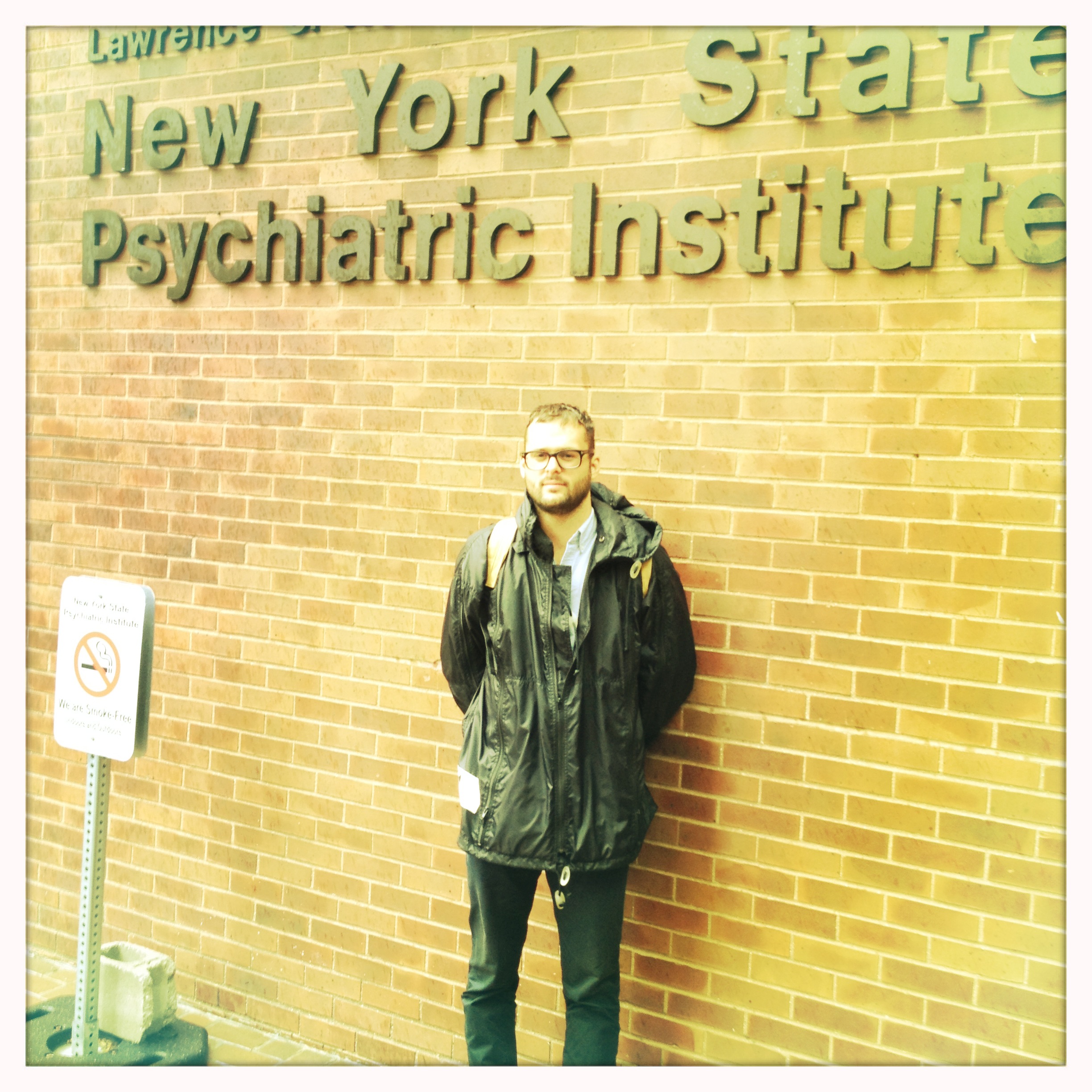

This week, Volen Ivanov vistited Columbia University/New York State Psychiatric Institute to meet with some of Rücklabs favourite OCD researchers and present some of our lab’s recent work on Hoarding Disorder. Big thanks to Dr. Carolyn Rodriguez and Dr. Helen Blair Simpson for having him over! Follow us on Rücklab for some very interesting podcasts on OCD and related disorders coming out soon!
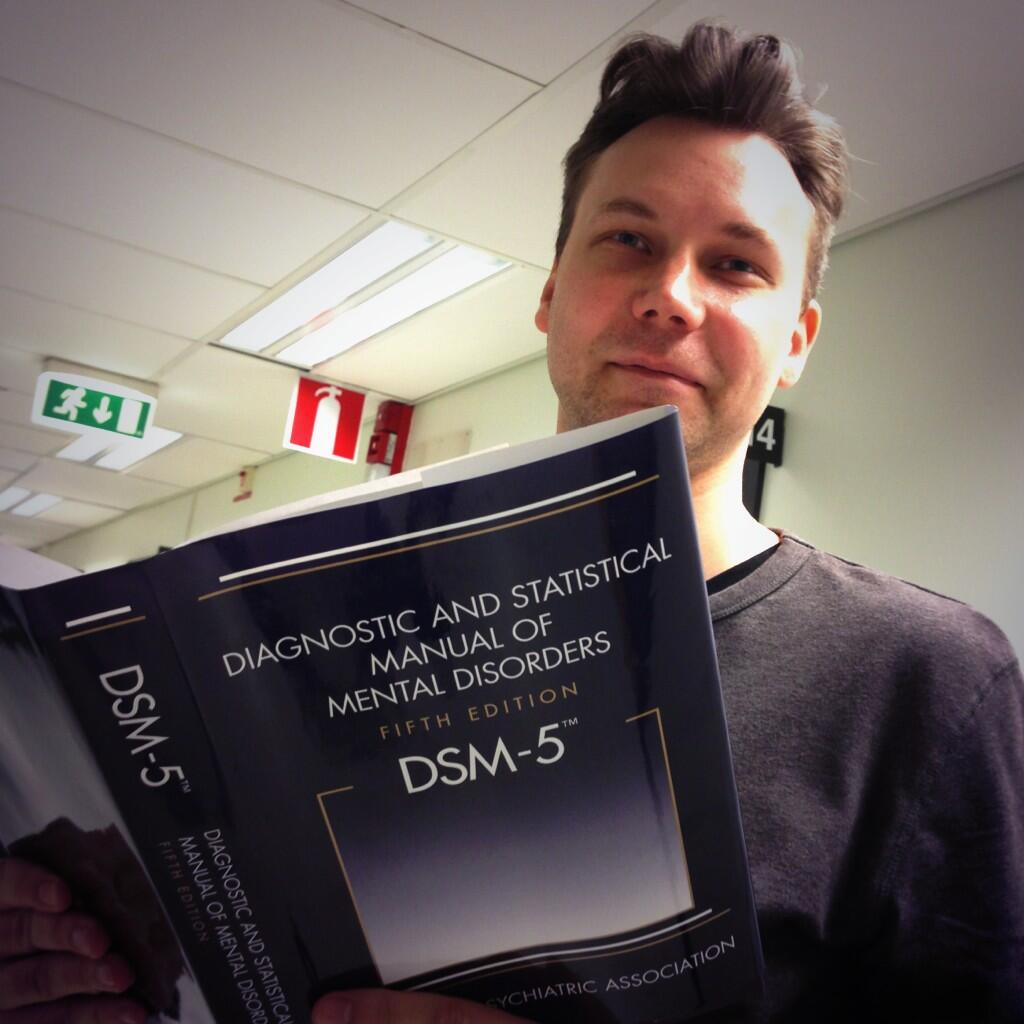
Historic day. #DSM5 just landed in the mail.
A new paper is out using Swedish multigenerational register data showing that the risk for OCD among relatives of OCD probands increased proportionally to the degree of genetic relatedness. Also, partners of people diagnosed with OCD were more likely to have OCD.
David Mataix-Cols, PhD; Marcus Boman, BSc; Benedetta Monzani, MSc; Christian Rück, MD; Eva Serlachius, MD; Niklas Långström, MD; Paul Lichtenstein, PhD. Population-Based, Multigenerational Family Clustering Study of Obsessive-Compulsive Disorder. JAMA Psychiatry. 2013;():1-9.
http://archpsyc.jamanetwork.com/article.aspx?articleid=1689532
href=”https://rucklab.com/wp-content/uploads/2013/05/ucsd-biomed1.jpg”>
Rücklab’s Evelyn Andersson visited Department of Psychiatry at UCSD last week who hosts prominent researchers such as prof. Hagop Akiskal, famous for his extensive work on mood disorders and prof. John Kelsoe, a pioneer in investigating molecular genetics and bipolar disorder for over 20 years.



 Rücklab - Psychiatry research at Karolinska Institutet
