Rücklab: summing up our first year

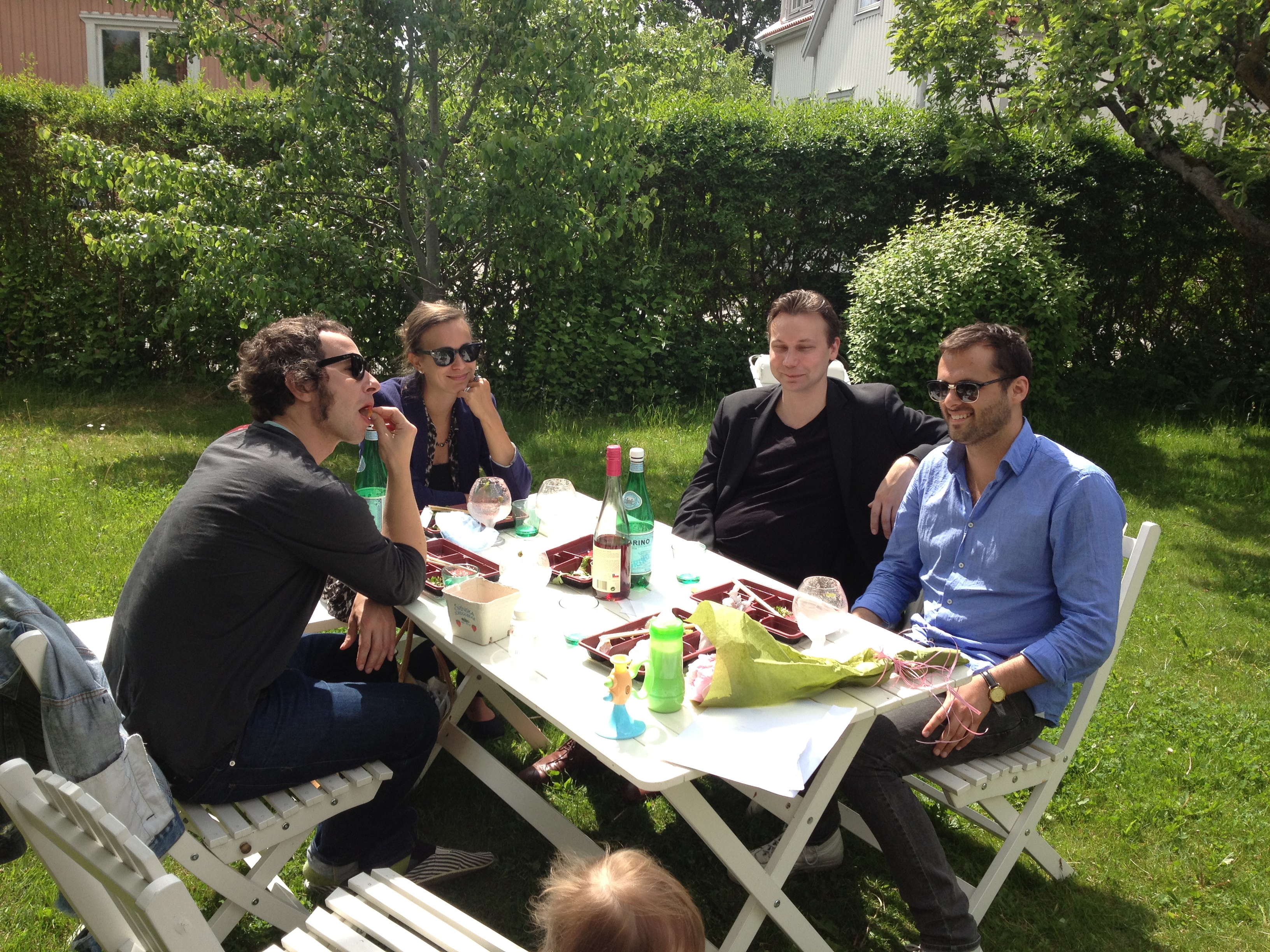
Rucklab members (from left) Erik Andersson (with a Nature paper stuck in his teeth), Evelyn Andersson, Jesper Enander and Volen Ivanov.

Our research group met the other day to sum up our first year of existence as a research group. So, what have we been up to in the last year? Well, we’ve been part of 12 scientific papers, 2 new Ph D students have been enrolled, we showed that internetbased CBT works for OCD and we have been writing 3 big grant applications. And we started this site. And the next year looks even better with a lot of good things in the pipeline. We’ll keep you posted!

Get organized! Join the International College of Obsessive Compulsive Spectrum Disorders (ICOCS)

The directors of ICOCS met in Stockholm last night. So, what is ICOCS? The International College of Obsessive Compulsive Spectrum Disorders (ICOCS) is an organization for researchers and mental health professionals. The organization intends to aid and stimulate mental health professionals and others to develop research projects in this field, and to help coordinate research efforts amongst members. Read more about ICOCS and how to join by clicking on the link above. The next meeting of ICOCS is in October in Vienna.

New study: CBT changes dopamin D2-receptor binding in social phobia

Simon Cervenka

A new study was just published with Simon Cervenka as lead author and with Christian Rück among the co-authors .  Nine SAD patients were examined using high-resolution PET and the high-affinity D2-R antagonist radioligand [11C]FLB 457, before and after 15 weeks of CBT and the study shows that D2 binding changes after patients with social anxiety disorder. Click the citation to get to the full text:

Cervenka, S., Hedman, E., Ikoma, Y., Radu Djurfeldt, D., Rück, C., Halldin, C., Lindefors, N. Changes in dopamine D2-receptor binding are associated to symptom reduction after psychotherapy in social anxiety disorder. Translational Psychiatry (2012) 2, e120; doi:10.1038/tp.2012.40
Published online 22 May 2012

Do SSRIs cause pancreatitis?

It has been suggested that SSRIs may cause pancreatitis. The Upper Gastrointestinal Research Group at KI with Rickard Ljung as first author (with Christian Rück as a co-author) just published on SSRIs in relation to risk of acute pancreatitis in a population-based case-control study of people aged 40 to 84 years in Sweden. Logistic regression with adjustment for potential confounding factors was used to calculate odds ratios (ORs) with 95% confidence intervals (CIs). The OR for acute pancreatitis, adjusted for matching variables, was increased among present users of SSRI (OR, 1.5; 95% CI, 1.4-1.7), indicating increased risk. Intrestingly, after adjusting for diseases or medications related to alcohol overconsumption, tobacco smoking, diabetes, ischemic heart disease, obesity, and severe pain together with educational level and marital status, the corresponding OR was 1.1 (95% CI, 1.0-1.3). After adjusting for the number of distinct medications, a proxy for comorbidity, the corresponding OR was 1.0 (95% CI, 0.9-1.1). The OR for antidepressant use other than SSRI showed a similar pattern. In conclusion, no increased risk of acute pancreatitis remained among users of SSRI after adjusting for confounding factors.

Ljung R, Rück C, Mattsson F, Bexelius TS, Lagergren J, Lindblad M. Selective Serotonin Reuptake Inhibitors and the Risk of Acute Pancreatitis: A Swedish Population-Based Case-Control Study.J Clin Psychopharmacol. 2012 Apr 26. [Epub ahead of print]

The Rück Research Lab is giving out an award for best thesis

More research is needed on the OCD spectrum disorders. To reward students who are interested in this area the Rück Research Lab is giving out an award for best thesis written in the field. At the moment only Swedish students are eligible for the award.

Read more about the reward and how to nominate by clicking here

Erik Andersson successfully passed his PhD half-time seminar today

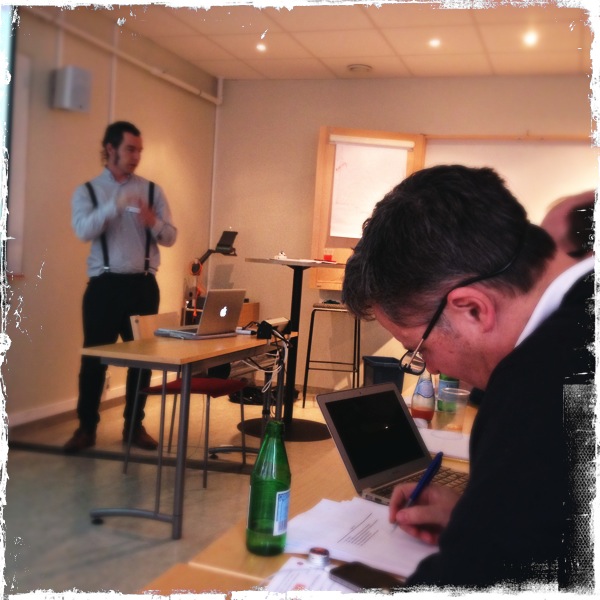
Erik Andersson today passed the half-way milestone of his Ph D project on how to enhance CBT in OCD. The review board  consisted of Professors Bo Melin, Bo Runeson and Mats Fredriksson. As you can see in the picture, they were busy taking notes.

Jesper Enander from our lab awarded for best master thesis by BTF!

Jesper Enander (right)

The Swedish Association for Behavioral Therapy (Beteendeterapeutiska föreningen) honored Jesper Enander and Per Andrén the award for the best Master Thesis in 2011! And the best master thesis resulted in this paper out of our lab. Congrats Jesper and Per!

Our best friend David Mataix-Cols promoted to Professor!

Congrats to David Mataix-Cols who has been promoted to Professor of Clinical Psychobiology at the Institute of Psychiatry, King’s College London.

David (or, as he should be called Professor Mataix-Cols) is a leading OCD and related disorders reseacher and we are fortunate to collaborate with him on several project including twin studies of hoarding.