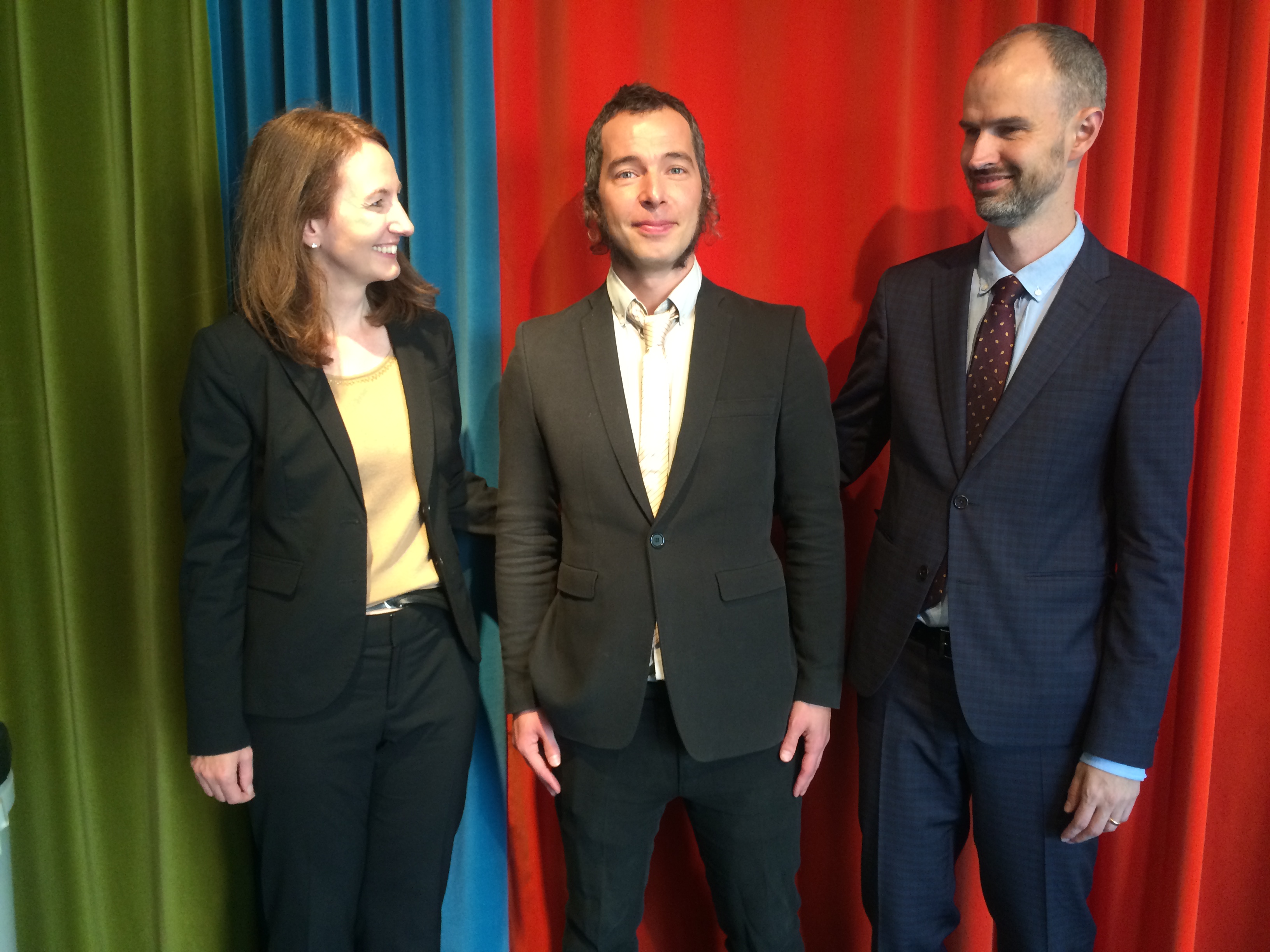
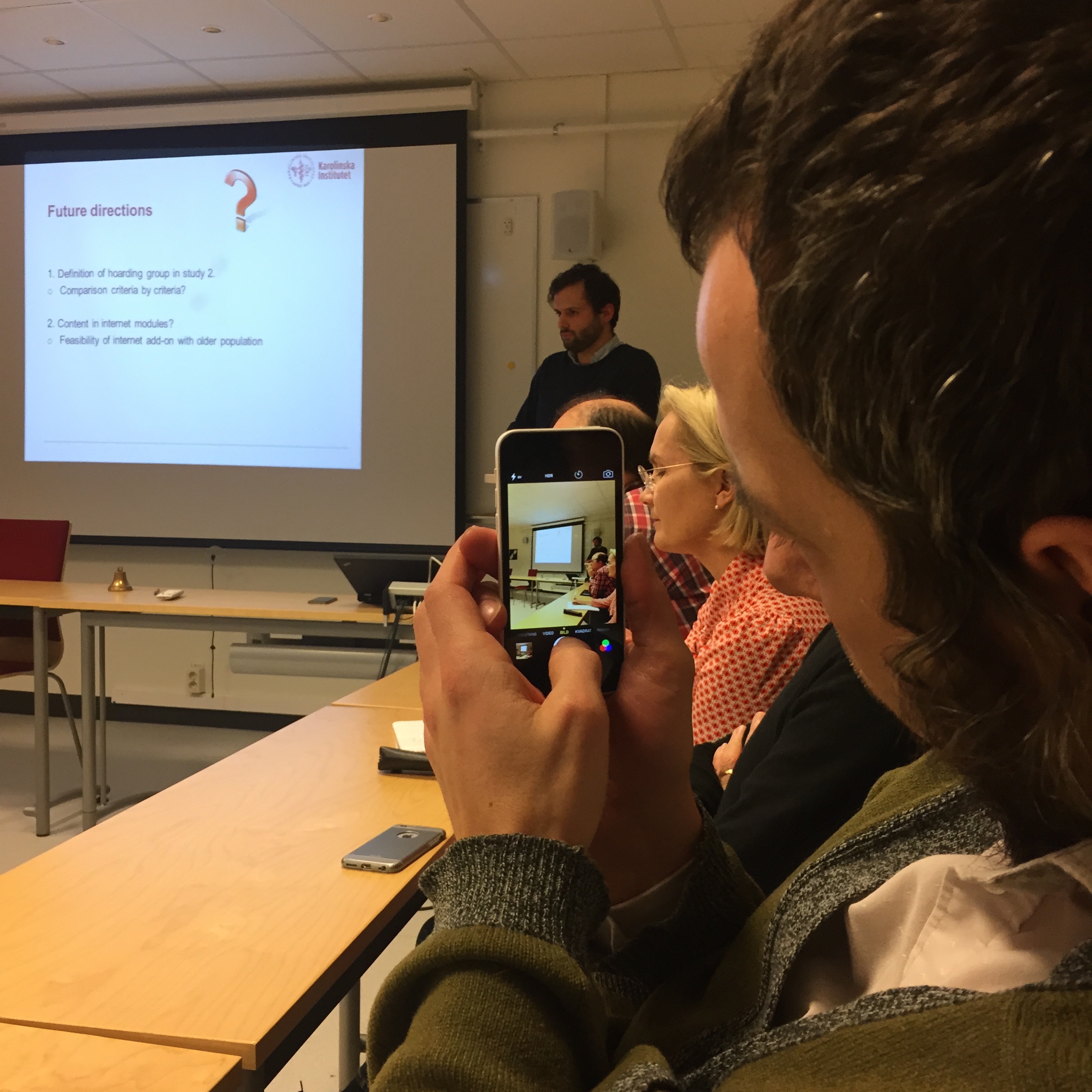
Tomorrow, Monday,December 29th, Rücklab’s Volen Ivanov will be visiting the Swedish National Radio (Sveriges Radio, P1) to participate in the talkshow Nordegren & Epstein. Collecting and hoarding are the topics that will be discussed. Don’t forget to tune into the show at 15.05 or stream it afterwards.
Jesper Enander medverkade i gårdagens sändning av Rapport på SVT. Inslaget handlade om dysmorfofobi/BDD och den internetbehandling som vår forskargrupp har tagit fram.
Inslaget går att se på SVT play genom att klicka HÄR
Det finns även tre artiklar om BDD att läsa på SVT’s nyhetssite:
“Plastikoperation kan förvärra en förvriden självbild”
In a new publication in Schizophrenia Bulletin Swedish registers were used in the so far largest study set out to understand the relationship between OCD and psychosis and bipolar disorders. Clinically it is clear that psychotic delusions can sometimes be hard to tell apart from obsessions, especially when there is low insight.
In this population-based longitudinal and multigenerational family study, we examined the patterns of comorbidity, longitudinal risks, and shared familial risks between these disorders. Participants were individuals with a diagnosis of OCD (n = 19814), schizophrenia (n = 58336), bipolar disorder (n = 48180), and schizoaffective disorder (n = 14904) included in the Swedish Patient Register; their first-, second-, and third-degree relatives; and population-matched unaffected controls and their relatives. Individuals with OCD had a 12-fold increased risk of having a comorbid diagnosis of schizophrenia and a 13-fold increased risk of bipolar disorder and schizoaffective disorder. This still means that those disorders disorders will not affect most OCD patients. Longitudinal analyses showed that individuals first diagnosed with OCD had an increased risk for later diagnosis of all other disorders, and vice versa. OCD-unaffected first-, second-, and third-degree relatives of probands with OCD had a significantly increased risk for all 3 disorders; the magnitude of this risk decreased as the genetic distance increased. We conclude that OCD is etiologically related to both schizophrenia spectrum and bipolar disorders.


Volen passed his half-way checkpoint to his PhD today. We wish to thank the examination board and the co-supervisors Eva Serlachius, David Mataix-Cols and Paul Lichtenstein.
Next up in our group for his half-time seminar is Jesper Enander: January 16th, 13h00 at Askö, M57, Huddinge. Welcome.
Hör Christian prata med Gry Forsell, Alex Kossek och Malin Stenbäck om tvång, hoarding, dysmorfofobi och den sociala samurajen. http://hemmahosgry.se/
https://soundcloud.com/hemmahosgry-en-podcast/hemma-hos-gry-12
Jesper Enander medverkade i gårdagens sändning av Fråga doktorn på SVT. Programmet handlade om plastikkirurgi samt dysmorfofobi/BDD. Jesper pratade om BDD och Per Héden från Akademikliniken svarade på frågor om plastikkirurgi.
Se programmet på SVT play om du missade det: http://www.svt.se/fraga-doktorn/se-program/
Vår forskningsgrupp söker i samarbete med Mottagningen för Tvångssyndrom, Psykiatri Sydväst en psykolog för att driva vidare forskningen kring internetbaserad KBT för OCD. Behandlingen har redan testats med god effekt i flera studier men vi vill nu göra en studie där iKBT jämförs med individuell KBT i klinik. Tjänsten är en kombinerad forsknings/kliniktjänst där kliniktjänstgöringen är på Mottagningen för Tvångssyndrom, en mottagning som just nu är inne i en expansiv fas. I forskningsdelen handleds du av Dr. Erik Andersson, Docent Christian Rück och Professor David Mataix-Cols. Detta är, för att uttrycka det ödmjukt, en chans att delta i den absoluta framkanten och om allt går bra så är en doktorandtjänst en senare möjlighet.
Läs mer: http://jobb.sll.se/Annonssida/?refnr=SLSO-14-64042&forvaltning=5&category=3&subcategory=81
I dagens Kropp och Själ i Sveriges Radios P1 om dysmorfofobi / BDD medverkade Christian Rück och Jesper Enander. Lyssna här (andra halvan av programmet): http://sverigesradio.se/sida/avsnitt/437797?programid=1272
We recently published the worlds first trial of Internet-based CBT for body dysmorphic disorder. A vast majority (82%) of the patients were responders and the treatment was deemed highly acceptable. Results were sustained at the 3-month follow-up.
As the results from the pilot trial were really promising we are moving on to conduct a RCT.
Read the article by clicking the link below (it’s open access):