Vad är BDD / dysmorfofobi?

Dysmorfofobi, på engelska kallat Body Dysmorphic Disorder (BDD), är ett tillstånd där man är så missnöjd med specifika delar av sitt utseende att det blir ett handikapp. Ibland kallas det också inbillad fulhet och det man då menar med “inbillad” är att den defekt som man själv ser inte kan uppfattas av andra. BDD är inte samma sak som att känna sig lite oattraktiv eller tjock, här är man istället upptagen av att t ex ens näsa är så groteskt ful att man inte kan visa sig för andra. Att andra säger till en att man ser normal ut brukar inte hjälpa. Ofta förekommer ritualer för att dölja sin “defekt” eller att man speglar länge sig för att se om man ser OK ut.

BDD är vanligt, ca 1-2 % av befolkningen lider av sjukdomen.

Vi har startat en behandlingstudie där vuxna i hela Sverige kan delta. Studien pågår just nu och anmälan är stängd. KBT är annars rekommenderad behandling och du kan söka till din psykiatriska öppenvårdsmottagning för att få hjälp.
On the radio: Om sjukligt samlande i P1

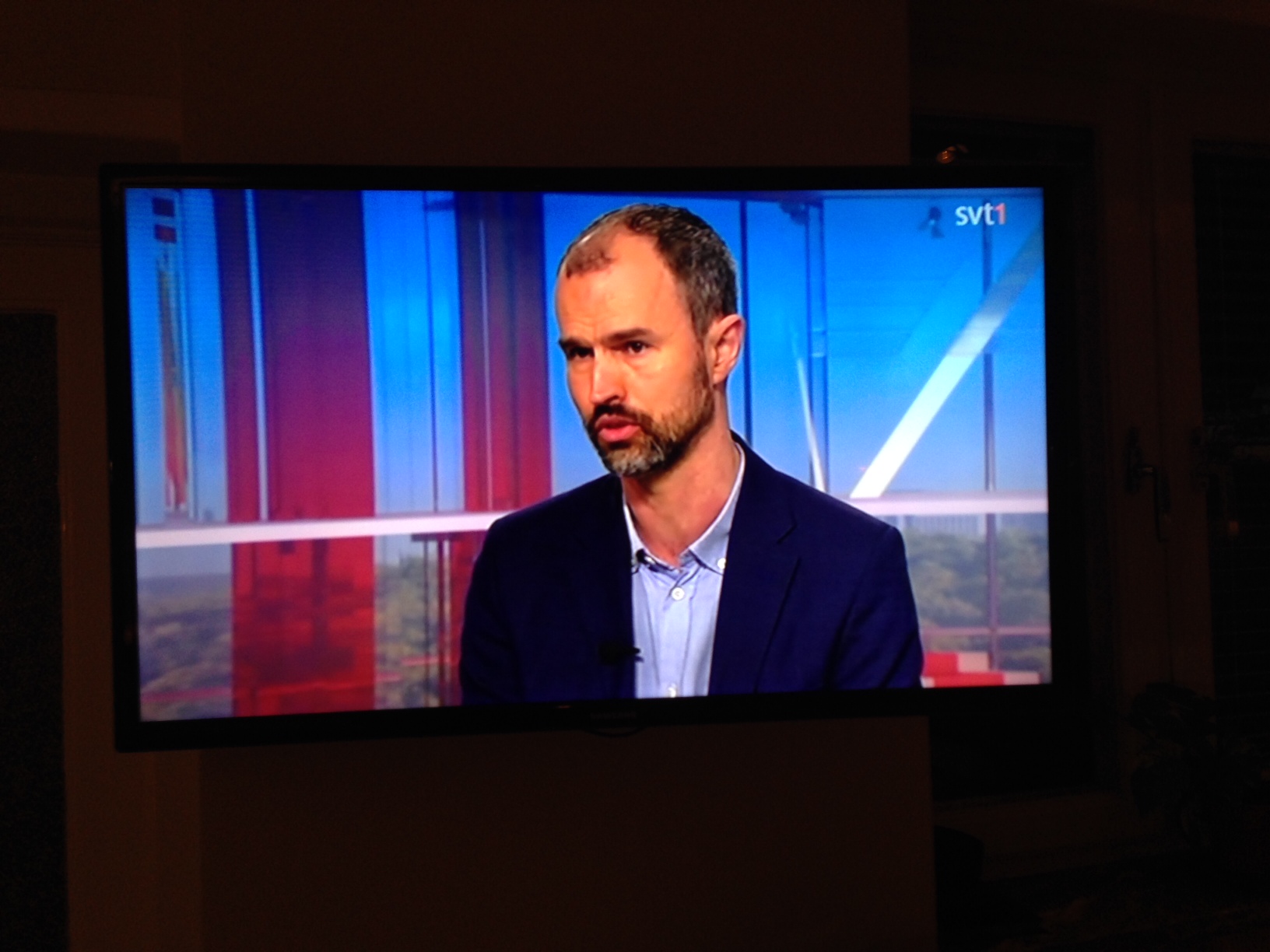
Idag talade bl a Volen Ivanov, Christian Rück och David Mataix-Cols som sjukligt samlande (hoarding) i P1:s Kropp och Själ som du kan lyssna på här: http://sverigesradio.se/sida/avsnitt/297465?programid=83

Även HSB:s psykosociala enhet med Sylvia Mårtensson och Christina Ahlström berättar om deras fantastiska verksamhet i programmet.

Grants from the Swedish Society of Medicine

We are happy announce that the Swedish Society of Medicine (Stiftelsen Söderström-Königska sjukhemmet) has given us two grants of 200000 SEK each for internetbased-CBT in BDD (dysmorphofobia) and DBS in OCD (with Diana Djurfeldt as PI), respectively.

Svårt att veta om det är patologiskt samlande?

Från och med i år ingår diagnosen patologiskt samlande i den diagnostiska manualen DSM-5. Många av de som stöter på patienter med diagnosen är dock ännu inte bekanta med hur diagnosen ska ställas och hur man kan kan urskilja patologiskt samlande från till exempel samlande som ingår i tvångssyndrom och autismspektrumstörning. Ett mycket användbart hjälpmedel i detta arbete är intervjuformuläret Strukturerad intervju för patologiskt samlande (SIHD) som utarbetats av Alberto Pertusa, Ashley E. Nordsletten, Lorena Fernández de la Cruz och KI:s nye professor David Mataix-Cols. Intstrumentet finns numer bland Rücklabs skattningsskalor och är fritt att användas för kliniker och forskare. Du kan läsa mer om instrumentet här.

New study: genetic variants in the monoamine system and CBT outcome in social phobia

In a collaboration between Karolinska Institutet and Uppsala University, we studied three genetic polymorphisms in the monoamine system (5-HTTLPR, COMT val158met, TPH2 G-703T) and outcome of cognitive behavioral therapy (CBT) in social anxiety disorder (SAD) in over 300 patients. This is one of the largest genetic studies ever made on adults with SAD and CBT outcome. Monoamine-related gene polymorphisms have previously been tied to amygdala reactivity, treatment efficacy and fear extinction processes and was hereby reasoned to influence the outcome of CBT. However, none of our polymorphisms were associated with CBT outcome at long term follow-up. In our subsamples we found contradictory significant effects immediately after treatment. Even though CBT is an effective treatment of anxiety disorders, many patients (25-50%) do not respond sufficiently. Therefore, there is a need to improve not only the treatments but also how patients are selected for treatment in order to optimize the efficacy. Therapygenetics attempts to explore the relationship between genetic variation and psychological treatment response. Ultimately, such knowledge could be used to tailor therapies based on patients’ biological markers, which in turn, could improve therapeutic outcome.

Image
Lead author Evelyn Andersson.

The secret life of scientists: freezers and why we fear them

The freezer hotel on a Saturday: Where is the party?

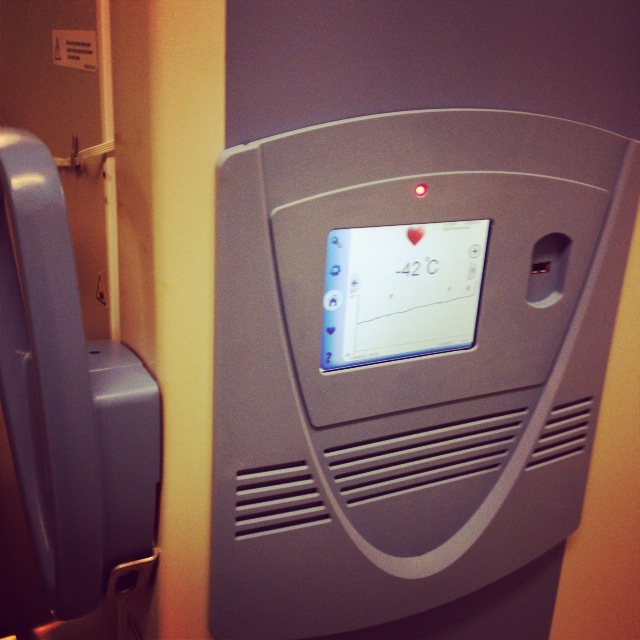
We have a lot of  DNA, RNA and plasma in our rather new – 86 C freezer. What we do not like is a breakdown of the freezer with thawing of the valuable treasures in the freezer as a result. That is why there is a temperature alarm in the freezer that goes to hospital staff that call or text us if the temperature is rising. So, in the middle of a normal Saturday I had to go check on our freezer since the alarm had indicated high temperature. With a sense of urgency normally only seen in thriller movies I rushed our samples to the spare freezer that will house our things until our freezer is behaving again. Good to know that our backup system works.

IMG_4898
Red heart = problemos.
IMG_4895
The spare freezer for emergencies.