World Congress of Psychiatric Genetics

Christian and Olly recently participated in the World Congress of Psychiatric Genetics (WCPG) in Montreal.

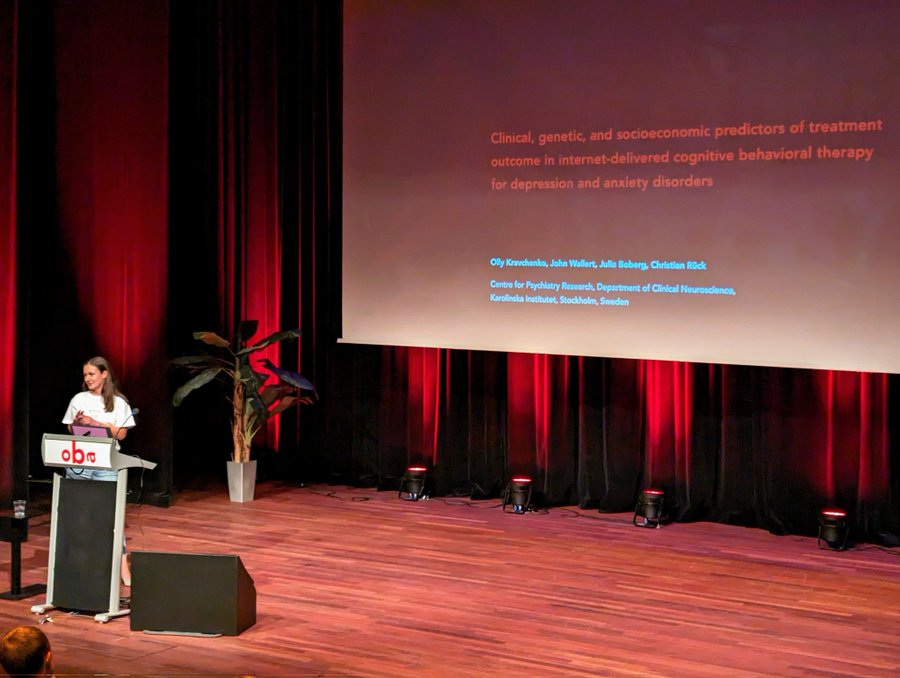
Rücklab closely collaborates with Psychiatric Genomics Consortium (PGC) within genetics of depression, anxiety disorders, OCD, suicide and ICBT treatment response. This year, Christian and Olly presented two posters highlighting their ongoing work in prediction of ICBT treatment outcome where polygenic risk scores are used as one of potential predictors.

Olly presenting one of the posters to curious conference attendees.

Here are some take away-points from the conference by Olly:

  • Larger sample sizes: Sample sizes are becoming larger, increasing the number of identified genetic risk variants associated with liability to psychiatric disorders. Multiple biobanks and clinical research groups combine their data with direct-to-consumer genetic testing companies, such as 23andMe, to generate and metaanalyze large case/control samples (n > 1 million) 
  • The need for more globally inclusive samples: The focus is now on increasing cross-population samples as European ancestry has been so far disproportionately overrepresented in the studies, hindering progress and more importantly, putting most of the global population at a disadvantage in terms of new health-related discoveries and potentially further widening health disparities.
  • Discoveries through non-western samples: PGC has a working group dedicated to cross-population analyses that has shown some advances in increasing data sourcing from African, East Asian and Hispanic ancestries. In one talk, it was demonstrated that Africa alone has over 3000 distinct genetic groups and some drug discoveries would be impossible without their data.
  • Whole-genome studies become more accessible: It appears that as sequencing is becoming more affordable, whole-exome and whole-genome analyses will take over the most widely used genome-wide association studies which are cheap and accessible but limited to common genetic variants.
  • Societal and clinical implications of genetic testing: Finally, there were many important discussions on the future and ethics of direct-to-consumer genetic testing. Scientific community realises its role in elevating public awareness of what these data can and cannot tell and how they can be acted on. There are many  potentially dangerous misinterpretation of e.g. polygenic risk scores versus absolute/relative risk.

Christian in the latest issue of Medicinsk Vetenskap

The latest issue of Medicinsk Vetenskap features an interview with research team leader Christian Rück on the evolution of the research focus over the years.

Rücklab research focus areas

As the research team has grown, the focus areas have become more diverse. From focusing on and showing good results for internet-mediated CBT for OCD, the research has evolved to include several OCD-related conditions such as dysmorphophobia, hoarding disorder, olfactory reference syndrome, trichotillomania and skin-picking disorder.

The group has also expanded to include research on stress and fatigue, novel treatments for PTSD and precision psychiatry, which means finding the right treatment for the right patient.

Finally, a relatively new focus for the group is suicide, a complex area in terms of risk factors and prevention. Click here to read more about the group’s ongoing projects.

Photo: Martin Stenmark

Introducing a multimodal cohort of patients with anxiety or depression treated with internet-delivered psychotherapy

Julia Boberg and colleagues recently published this paper on the MULTI-PSYCH- Swedish multimodal cohort of patients with anxiety or depression treated with internet-delivered psychotherapy.

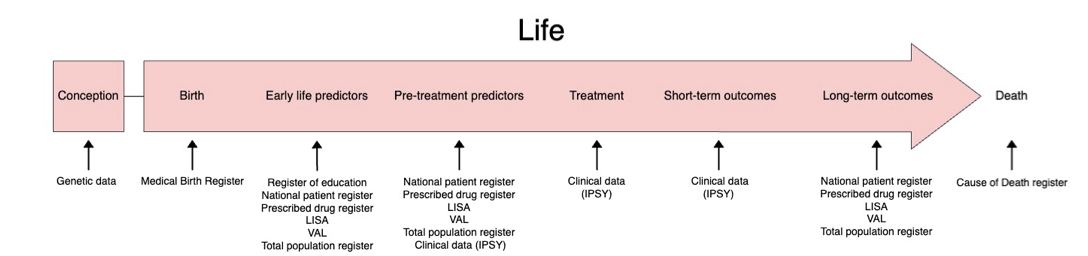
As the title indicates, MULTI-PSYCH is a cohort of patients with anxiety and depression who have been treated with internet-delivered CBT. It is multi modal in the sense that it contains clinical, genetic and nationwide registry data.

MULTI-PSYCH is well positioned for research collaboration. Using MULTI-PSYCH, researchers can improve risk stratification, outcome prediction and secondary preventive interventions. It provides a unique infrastructure to study not only predictors or short-term treatment outcomes, but also longer term medical and socioeconomic outcomes in patients treated with ICBT for depression or anxiety.

Data sources

Points about the cohort:

  • Includes 2668 clinically well-characterised adults with major depressive disorder, social anxiety disorder or panic disorder.
  • The patients are assessed before, during and after 12 weeks of ICBT.
  • All patients have been blood sampled and genotyped.
  • Clinical and genetic data is to several Swedish registers containing a wide range of variables from patient birth up to 10 years after the end of ICB. These variables include:
    • perinatal complications
    • school grades
    • psychiatric and somatic comorbidity
    • dispensed medications
    • medical interventions and diagnoses
    • healthcare and social benefits
    • demographics
    • income
    • more

Here is a link to the paper, where you can read more about the cohort and findings to date using the cohort.

Elin Lindsäter on fatigue as a transdiagnostic symptom dimension

There are many ways in which Elin Lindsäter’s research is relevant right now.

Last week, Elin and Dutch professor Hans Knoop discussed the current state of knowledge about fatigue as a transdiagnostic symptom dimension (in ME, CFS, post-COVID and multiple sclerosis) and the Swedish diagnosis of fatigue syndrome, in a seminar at KI.

Exhaustion disorder is one of the most common and costly mental disorders in Sweden, responsible for more long-term sickness absence than any other psychiatric or somatic disorder in the country. However, evidence for the validity of the diagnosis is limited and there are no evidence-based treatments. Recent research findings indicate that fatigue, the core symptom of exhaustion disorder, might better be conceptualized as a transdiagnostic symptom dimension rather than a disorder-specific pathophysiology. Fatigue severity across patient groups is primarily explained by transdiagnostic factors and the same moderators and mediators of treatment effect have been found across diagnostic samples.

The moderator of the seminar was Christian Rück.

This Sunday, Elin also talked about exhaustion in the podcast “I hjärnan på Louise Epstein”. Click here to listen at sverigesradio.se.

Erik Andersson wins major psychology prize

Today we would like to congratulate Erik Andersson who has been awarded the Grand Prize for Psychology 2023!

Once upon a time, Erik was Christian Rück’s first PhD student, working with enhancing cognitive-behavior therapy in the treatment of OCD. Since then, he has achieved a lot combining research, teaching and clinical work.

Congratulations Erik!

World Suicide Prevention day

Today is World Suicide Prevention day, a day launched by the International Association for Suicide Prevention (IASP) and the World Health Organization (WHO) to promote and highlight suicide prevention.

The research team is currently working on various projects related to suicide and suicide prevention.

Saving Lives – A project that aims to reduce suicides by improving prediction. We will build a nationwide multimodal suicide cohort through genetic and environmental data, discover different types of risk factors and ultimately develop predictive models for suicide through machine learning techniques.

Suicide and Compulsory Mental Care – A project aimed at supporting clinical decision-making in compulsory care decisions. This project will apply epidemiological methods with a national 40-year cohort (1973-2013) of registry data to investigate both the suicide risk itself and associated risk factors for compulsory mental care patients.

Lastly, Manne Sjöstrand is a new member of our group. He is working on ethical and clinical challenges for suicide prevention and suicide risk assessments.

Here’s a list of events taking place in Sweden today September 10th to recognise World Suicide Prevention day.

Olly on internet treatment conference

At the beginning of the month, Olly Kravchenko attended the European Society for Research on Internet Interventions (ESRII) conference in Amsterdam.

She talked about her work on predictors of outcome in internet-delivered CBT for anxiety and depression.

The story: She leveraged the unique data we have available (clinical, genetic and register-based) to potentially establish new predictors of treatment outcome. Then she tested: Do genetic and register data better explain variance in treatment outcome if compared to the clinical data readily available in routine care? – They did not!

Next step is to develop machine learning model and see if it performs better.

Thanks for looking into this Olly, we need to find out more!

Braining on Swedish Radio

In the latest episode of Louise Epstein’s podcast, together with Anders Hansen, we can hear Lina Martinsson talk about the Braining initiative!

Braining – training for the brain – is an initiative from Psychiatry Southwest, Huddinge Hospital where patients and staff exercise together. The project stems from the fact that we know that exercise is good for mental wellbeing and has an effect on depression, but it’s difficult to get patients to do it.

How much do you need to exercise to have an effect on mental health and how do you do it? Listen and learn. The podcast even includes a live clip from the hospital park in Huddinge.

Here is a link to the episode.

Psst…! Åsa Anger, Lina and colleagues published the first scientific article on Braining this summer, click here to read it.

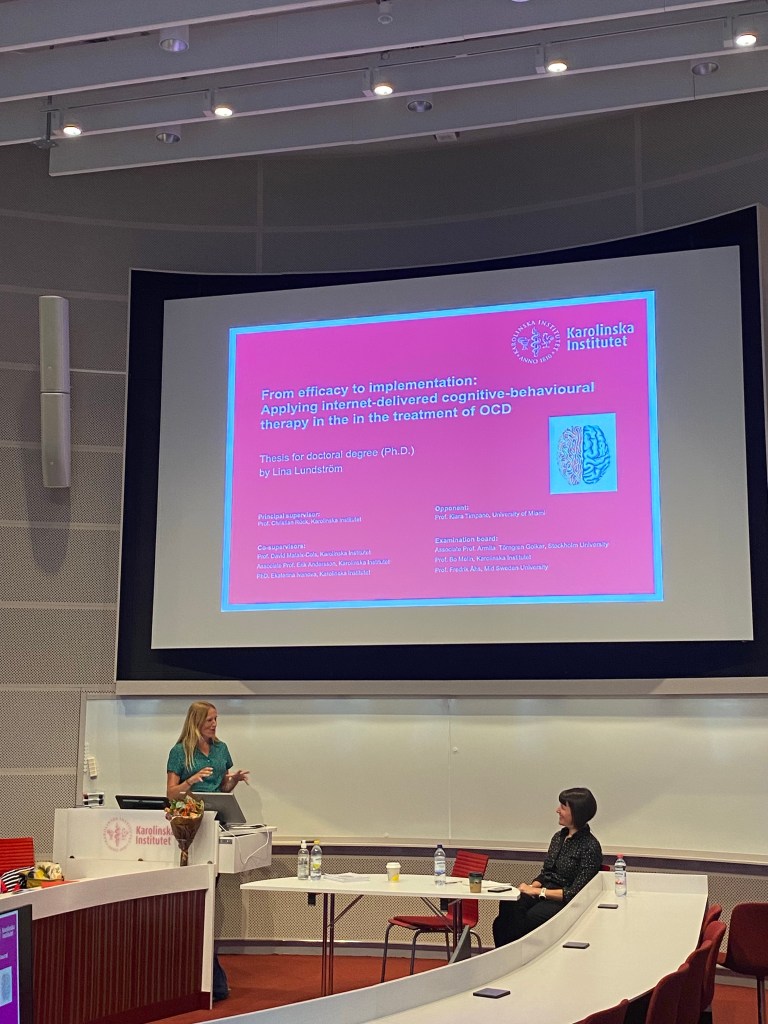
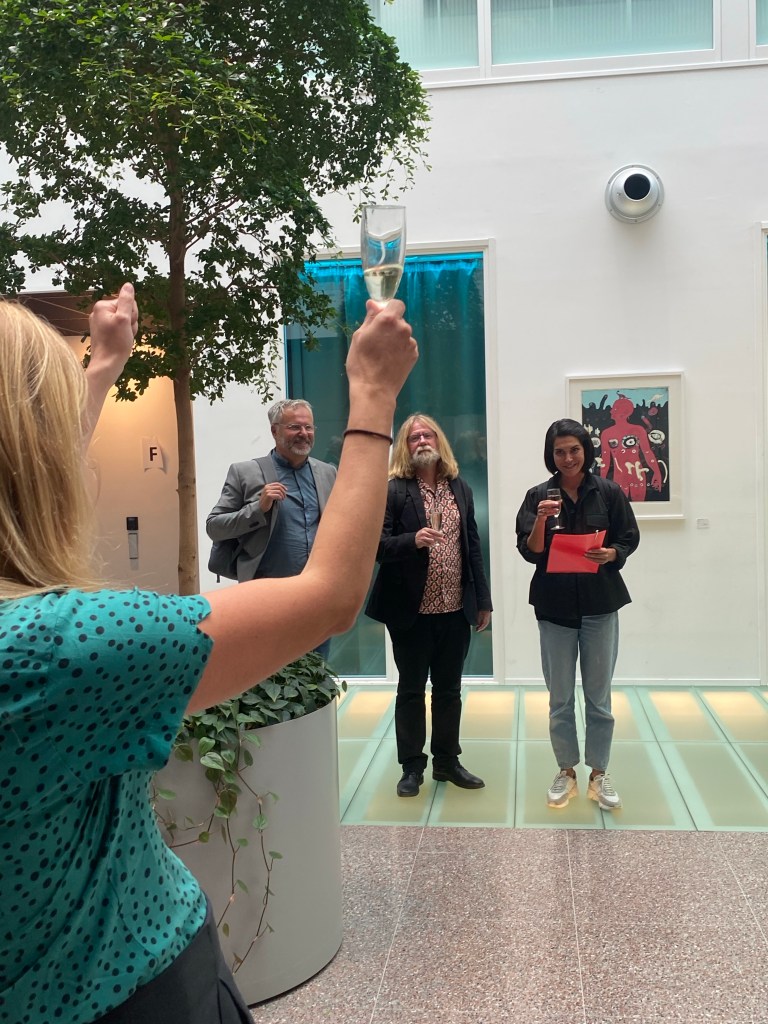
Lina’s dissertation 🎉

Congratulations Lina for a successful thesis defence!

Great discussion with the opponent, professor Kiara Timpano from University of Miami.

Members of the examination board were associate professor Armita Golkar (Stockholm university), professor Bo Melin (Karolinska Institutet) and professor Fredrik Åhs (Mittuniversitetet)

Lina’s supervisor Christian Rück and co-supervisors Katja Ivanova, Erik Andersson and David Mataix-Cols were very proud!

Elin in a podcast on Exhaustion disorder

Earlier this summer, Elin was a guest on the Hälsa för Livet podcast. She talked about Exhaustion disorder (Utmattningssyndrom in Swedish): the current state of research, myths and treatment.

Elin Lindsäter is a psychologist and PhD. Her research focuses on chronic stress, exhaustion and fatigue and on developing new evidence-based treatments for these conditions.

You can listen to the podcast here (in Swedish).

Read more about Elin’s project here.